
28 October 2026, 15:10
Loading...
Prices of critical minerals fell sharply last year as China’s dominance persisted

Lukáš Lepič
24 May 2024, 12:23
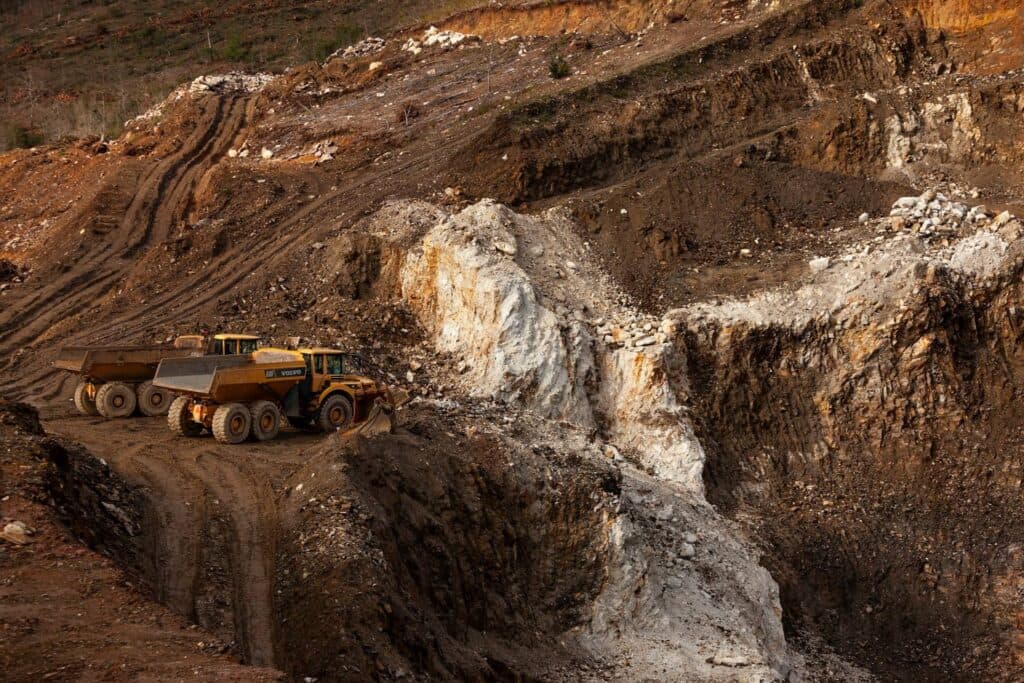
Prices of key minerals used in “clean” technologies, such as lithium, nickel and cobalt, fell sharply in 2023. This is shown by data in a new report by the International Energy Agency (IEA), which also highlights the need for greater and more diversified investment to help meet energy and climate goals. Investment is currently concentrated in a handful of countries, led by China and countries in Latin America.
In 2023, pressure eased on the market for minerals used in electric vehicles, wind turbines, solar panels and other “clean” technologies that are key to the energy transition. This group of minerals includes copper, nickel, cobalt and graphite, as well as lithium, which is probably the most talked-about of them all.
After two years of dramatic growth, prices of critical minerals fell sharply in 2023, returning to pre-pandemic levels. Materials used to make batteries saw particularly steep declines, with the price of lithium falling by 75% and prices of cobalt, nickel and graphite dropping by 30% to 45%. According to the IEA, this helped reduce battery prices by 14%.
The IEA says the main reason for this trend is that supply has outstripped demand. A sharp increase in supply in response to demand expectations in the short and medium term was precisely what drove the steep rise in mineral prices in 2021 and 2022.
Lower prices for critical minerals also affected total investment in the mining sector. Investment continued to grow at a reasonable pace last year, but volumes were down compared with 2022. Investment in critical mineral mining rose by 10%, while spending on exploration increased by 15%. According to the IEA’s calculations, around $800 billion in total investment will be needed by 2040 to achieve a scenario in which global temperatures are limited to a 1.5°C rise.
Today’s well-supplied market may not be a good guide to the future
The current market situation does not necessarily reflect future developments. In all the scenarios analysed in its report, the IEA expects demand for critical minerals to continue rising strongly, driven by the adoption of “clean” technologies. This trend is being fuelled, among other things, by policy goals and technological developments, and a change of direction now seems unlikely. The IEA therefore expects the combined size of the energy sector’s key mineral markets to more than double by 2040, reaching $770 billion. A broader economic slowdown could, of course, weaken this growth by affecting important drivers of demand, such as the expansion of electric mobility.
A detailed analysis of individual projects also suggests that announced projects would meet only 70% of copper demand and 50% of lithium demand in 2035 under a scenario in which countries around the world achieve their national climate targets. Markets for other minerals look more balanced, however—provided projects proceed as planned.
A 2022 analysis by consulting firm McKinsey also concluded that current projects may not be sufficient to meet market demand for lithium by 2030. It also assumes that battery production for electric vehicles will be the main driver of demand growth. There is frequent discussion today of alternatives in this area, such as sodium-ion batteries, which could in future ease demand for lithium and other metals in this sector of the economy.
China remains dominant as Latin America rises
In addition to developments over time, the IEA report examines energy security and the geographic concentration of critical mineral mining. Its analysis finds that announced projects do not change the high geographic concentration of supply. China is still expected to retain a very strong position in refining and processing.
“Secure and sustainable access to critical minerals is essential for a smooth and affordable clean energy transition. The world’s appetite for technologies such as solar panels, electric vehicles and batteries is growing rapidly—but we cannot meet it without reliable and expanding supplies of critical minerals,” said IEA Executive Director Fatih Birol.
Graphite, cobalt, rare earths and nickel currently face significant geopolitical risks. In the case of graphite in particular, the current distribution of projects suggests that suppliers outside the dominant player will be able to meet only 10% of total demand in 2030.
An analysis of new projects found that Latin America is set to lead overall mining, with a market value of approximately $120 billion by 2030. The sector will also grow rapidly in Indonesia, which is set to double its market value by 2030 as its nickel production expands.
By 2030, China will account for almost 50% of the market value of refining. China is also seeing an increase in the market value of mined materials as copper and lithium production grows, and it dominates the downstream and midstream segments of the global supply chain.
Translation disclaimer
This article is a machine translation of the Czech original and has not yet been fully reviewed. In case of any doubt, please refer to the Czech version.
Sdílejte článek prostřednictvím:
You might also like

28 October 2026, 13:08

28 October 2026, 11:10

28 October 2026, 09:08
