23 October 2026, 14:38
Loading...
Energy consumption in the EU declines slowly, still several percentage points short of target

Martin Voříšek
12 February 2018, 06:31
Primary energy consumption in the European Union was 4% above the target set for 2020 in 2016. Final energy consumption was 2% higher. However, both indicators are subject to considerable fluctuations and, despite the clear trend, it remains uncertain whether the target will be met.
One of the European Union's targets for 2020 is to reduce primary and final energy consumption by 20% compared with earlier projections. The targets, also known as the 20-20-20 targets, were adopted in 2007, when both measured indicators were close to their highest levels.
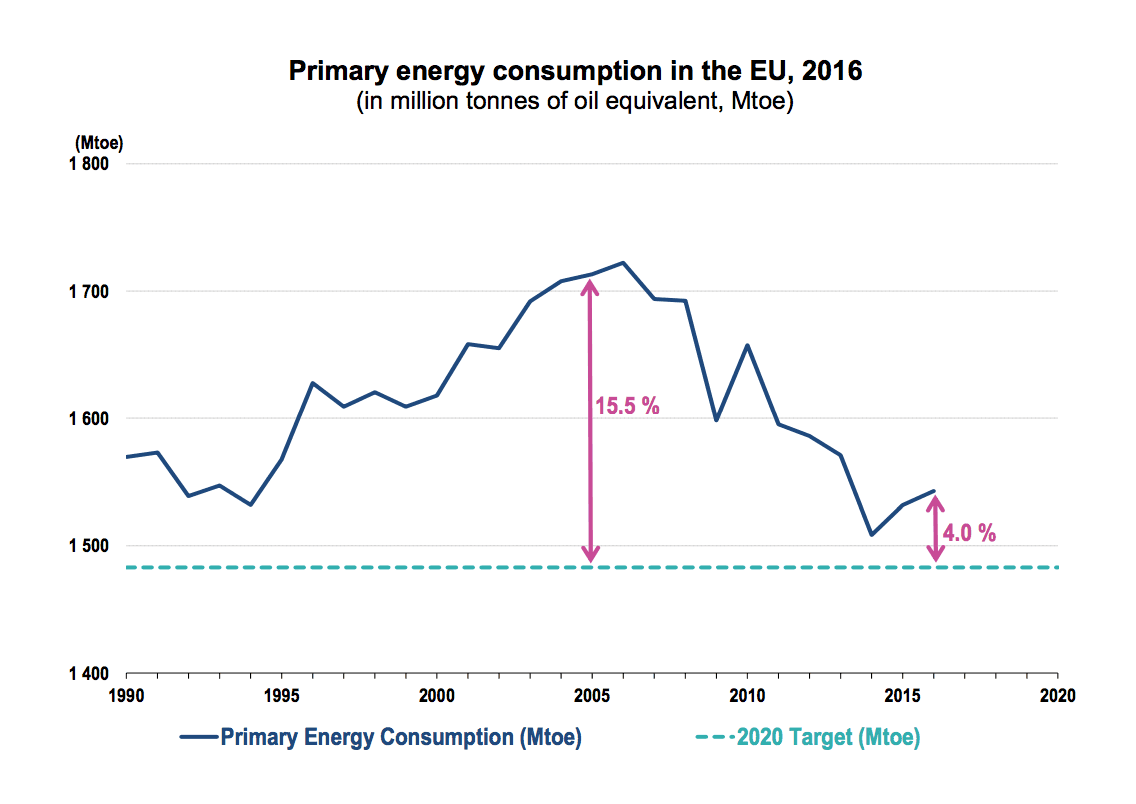
The target for primary energy consumption was set at 1483 Mtoe, while that for final energy consumption was 1086 Mtoe. Primary energy consumption fell by 1.7% compared with 1990 to 1 543 Mtoe. This figure remains 4% above the target that the European Union should reach in 2020.
Nevertheless, the graph below clearly shows that primary energy consumption in EU countries has been declining since 2006, when it stood at 1723 Mtoe. In 2006, primary energy consumption was more than 15% above the target.
Similar findings can be seen in the graph on final energy consumption. Its level is currently 2% higher than the target for 2020. Between 1990 and 2016, it rose by 2.1%, with final energy consumption peaking in 2006 (at approximately 10% above the set target).
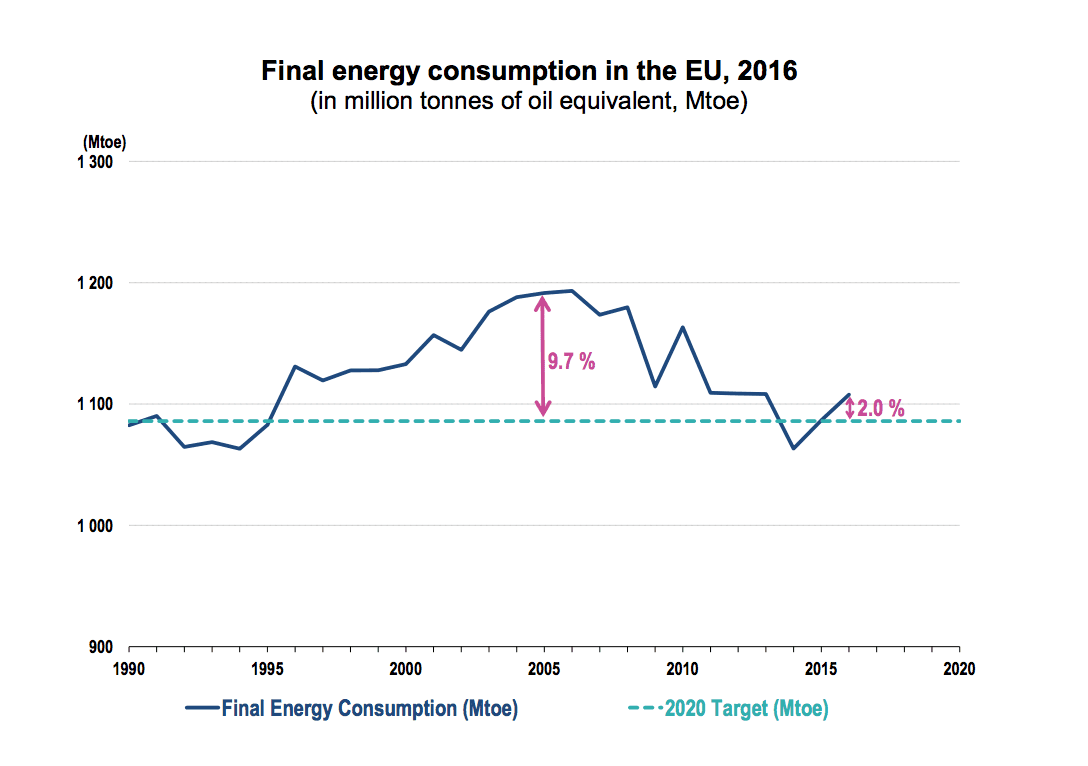
Final energy consumption was already below the EU target in 2014; however, it rose above the stated target level again over the past two years.
Since 2006, Greece, Malta and Romania have reduced consumption the most
While a total of 19 EU Member States increased their energy consumption between 1996 and 2006, only two countries did so in the following decade: Estonia and Poland.
Conversely, Greece, Malta and Romania reduced their energy consumption by more than 20%.
According to Eurostat data, energy consumption in the Czech Republic fell by 10.4%, whereas it rose by a full 8% between 1996 and 2006. However, despite the double-digit reduction in energy consumption, the Czech Republic ranked only 17th among other European countries.
Translation disclaimer
This article is a machine translation of the Czech original and has not yet been fully reviewed. In case of any doubt, please refer to the Czech version.
Sdílejte článek prostřednictvím:
You might also like
23 October 2026, 11:01
23 October 2026, 06:34