
22 September 2026, 14:20
Loading...
Expert: Czech state, not owners, should ensure renovation of energy-inefficient buildings
Klára Čeperová
20 April 2023, 14:26
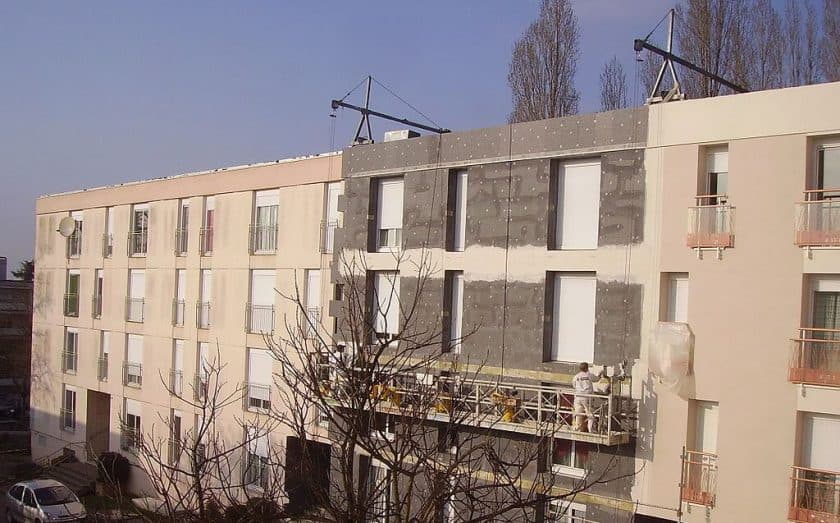
The European Parliament adopted a package of measures to accelerate renovations and reduce energy consumption and greenhouse gas emissions. However, some Czech politicians dislike the wording, and they are backed by Petr Holub, an expert on energy-efficient buildings, who says that member states, rather than building owners, must be responsible for meeting the targets of the directive on the mandatory renovation of old and energy-intensive buildings.
All new buildings should have zero emissions from 2028, while the deadline for new buildings occupied, operated or owned by public authorities has been set for 2026. All new buildings should be equipped with solar technologies by 2028, where technically suitable and economically feasible, while residential buildings undergoing major renovation have until 2032.
Residential buildings should achieve at least energy performance class E by 2030 and class D by 2033 on a scale from A to G, with these classes corresponding to the 15% worst-performing buildings in a member state's national building stock. Non-residential and public buildings would have to achieve the same ratings by 2027 and 2030, respectively.
Member states' position
Member states are to set out the measures needed to meet these targets in their national renovation plans. In Czechia, however, the proposal has triggered a wave of discontent among politicians, as Euractiv writes.
Politicians from the ruling conservative ODS party sharply condemned the directive, objecting mainly to the fact that it introduces various obligations. Opposition MPs from the ANO party were also critical. Former Environment Minister Richard Brabec said that owners of older, uninsulated houses would have to "invest hundreds of thousands (of koruna)" by 2030.
According to Petr Holub, director of Budovy21 and an expert on energy-efficient buildings, the directive is wrongly focused because the measures and sanctions target homeowners, whereas they should focus primarily on member states.
"Member states must focus on the worst-performing buildings and ensure their renovation. They must do so, for example, through advice for owners, low-cost loans and the like," the expert explained.
In his view, the wording chosen by the European Parliament is unfortunate. "Renovating buildings and focusing on the worst ones certainly makes sense," Holub said.
Who the directive applies to
For example, Article 9 gives the impression that the renovation obligation falls directly on building owners, whereas it is a task for member states, as they must transpose the directive into their national legislation. The key is to create conditions that support renovation.
Parliament's position will now "compete" with the Council's position, although according to Holub, member states have fundamentally different ideas about what they want to push through. National governments do not have such ambitious deadlines and do not want mandatory changes to energy standards for every single energy-inefficient building.
The aim of the proposed revision of the Energy Performance of Buildings Directive is to significantly reduce greenhouse gas emissions and energy consumption in the EU building sector by 2030 and make it climate-neutral by 2050. It also aims to increase the renovation rate of energy-inefficient buildings and improve the sharing of energy performance information.
According to the European Commission, buildings in the EU account for 40% of our energy consumption and 36% of greenhouse gas emissions. The European Commission had previously adopted a legislative proposal to revise the Energy Performance of Buildings Directive as part of the so-called "Fit for 55" package. The new European Climate Law had already enshrined the 2030 and 2050 targets in binding European law in July 2021.
Translation disclaimer
This article is a machine translation of the Czech original and has not yet been fully reviewed. In case of any doubt, please refer to the Czech version.
Sdílejte článek prostřednictvím:
You might also like
22 September 2026, 12:50
22 September 2026, 06:09
21 September 2026, 15:25