455 GW of batteries are stuck in connection queues. European distribution grids can’t keep up

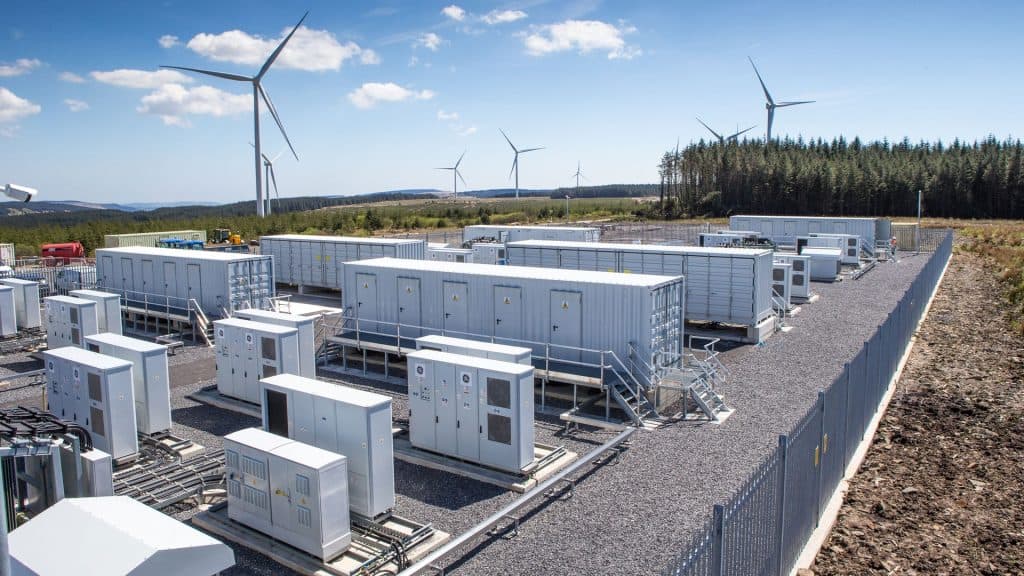
A new study by consultancy AFRY, prepared for the Beyond Fossil Fuels organisation, shows that around 455 GW of battery storage projects and another 375 GW of renewable energy projects are waiting in connection queues for Europe’s distribution grids. The value of these stalled clean energy projects exceeds €100 billion. The Czech Republic is among the eight markets covered.
The study, titled “Grid Expectations”, analyses the situation in Bulgaria, the Czech Republic, Italy, Germany, Poland, Greece, the United Kingdom and Spain, drawing on data available as of February 2026. The authors conclude that limited distribution grid capacity has become a structural barrier to the energy transition—comparable in scale to bottlenecks in the transmission system, but with far less regulatory transparency.
The study’s main message is that distribution system operators must move from being “gatekeepers” to active players in the transition. The bottleneck today is not just a physical shortage of lines and transformers, but increasingly the way queues are managed, development is planned and information is shared. This “software” side determines how quickly batteries and renewable energy projects that developers are ready and able to build can be connected.
The situation is worst in Germany and the UK
According to AFRY, battery connection queues are longest in Germany and the United Kingdom, where the volume of projects waiting in each country exceeds 100 GW. Across the eight markets, distribution system operators receive an average of more than 11,000 connection applications a year for renewable energy and storage projects above 1 MW, with around 70% involving solar PV.
Delays in bringing storage projects online increase costs for the entire energy system, the study says. Batteries are among the key tools for absorbing renewable energy surpluses, reducing curtailment and providing flexibility. When projects spend years in a queue, the system loses these benefits precisely when they are most needed.
Spain is one example: according to AFRY, delays are holding up projects worth around €7 billion, while a growing number of substations and connection points are reaching their capacity limits. The storage queue alone represents approximately 40% of Spain’s national storage target, suggesting that battery deployment is outpacing the development of the grid needed to connect it.
Six causes and a transparency problem
AFRY identifies six main causes of the growing queues: insufficient reinforcement of distribution grids, weak long-term planning, overly lengthy administrative and permitting processes, inefficient queue management, speculative projects reserving capacity without being realistically deliverable, and constraints in supply chains and the skilled workforce.
A lack of data is a separate problem. While transmission system operators generally publish detailed information on available capacity and pending applications, data from distribution grids are fragmented and inconsistent across countries. This complicates investment planning and increases uncertainty for investors. The authors therefore call on distribution system operators to significantly improve their management and administrative processes.
Czech context: 23 GW of reserved capacity, much of it unlikely to be used
The study’s findings broadly reflect the situation in Czechia. According to an earlier analysis by the Frank Bold expert group, around 23 GW of capacity in the Czech distribution grid is reserved for planned renewable energy projects. That is roughly twice the national target for 2030 and several times the currently connected capacity, which stands at around 5 GW. Experts say, however, that much of the reserved capacity is unlikely ever to be used—some projects have stalled due to legislative barriers, while others are speculative.
Sizing the grid to accommodate these unused reservations would mean investments worth hundreds of billions of Czech koruna, which would feed through into the regulated component of electricity prices. Frank Bold therefore proposes a package of non-investment measures—from dynamic grid tariffs and more rigorous checks on reservations to the regular publication of data on available capacity and waiting lists. Experts say such measures could free up tens of per cent of existing capacity without building a single kilometre of new lines.
Translation disclaimer
This article is a machine translation of the Czech original and has not yet been fully reviewed. In case of any doubt, please refer to the Czech version.