20 October 2026, 15:34
Loading...
Backing up critical infrastructure, or how to outsmart a blackout (Part 1)
Michal Klečka
9 September 2021, 13:37
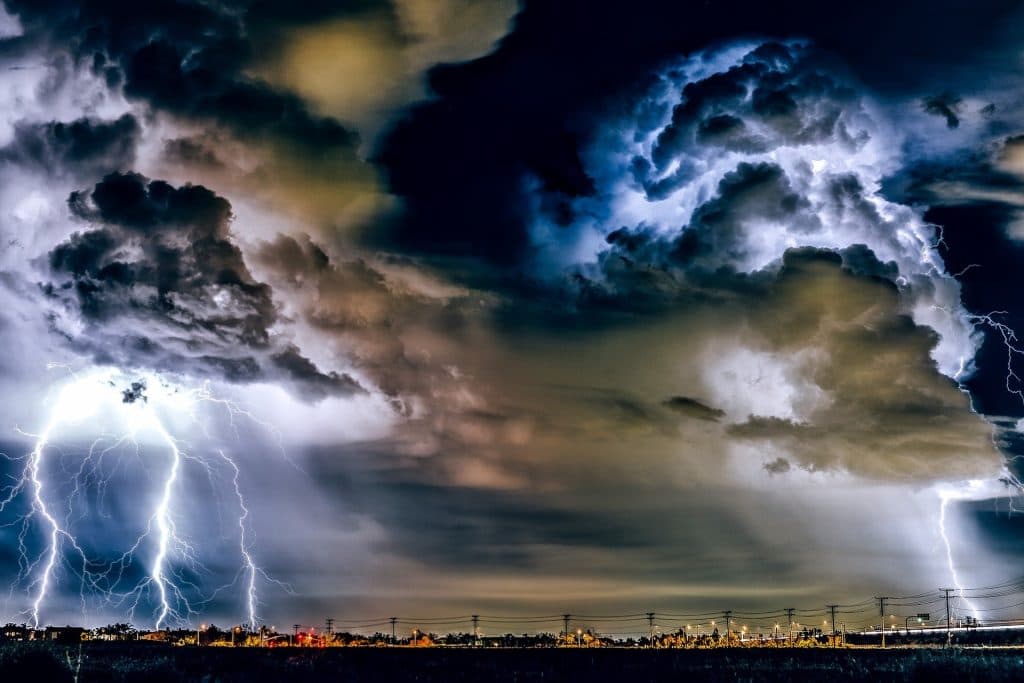
It is not a question of whether a blackout will come. It certainly will. We just do not know when, how long it will last, or how large an area it will cover. How our country and civilisation cope with it will depend on these three parameters. Reading Marco Elsberg’s book Blackout provides a very good idea of all the consequences of such a long-term, continent-wide power outage. The first instalment of this mini-series on backing up critical infrastructure therefore presents proven approaches to backup power in households and small and medium-sized businesses. The second instalment will focus on backup power in municipalities.
Why use backup power?
Is critical infrastructure protected against power outages? Surprisingly, it usually is not. Before the COVID pandemic, many of us assumed that the state’s emergency services were prepared for such events. That within a few hours, those responsible would pull prepared plans out of a drawer and the police, firefighters and army would begin distributing millions of respirators and protective items. We all saw the reality firsthand: for the first few months, we looked after ourselves, the stronger looked after the weaker, and at least we did not have to invent all the bans and orders—the state leadership provided plenty of those.
The same would happen in the event of a widespread power outage. Do not expect anyone to deliver food, petrol, diesel, a propane-butane cylinder or drinking water to your home. At best, you will hear on a battery-powered transistor radio that “flushing toilets is prohibited”.
Neither the internet nor mobile phones will work, because BTS base stations have backup power for only 4 to 12 hours of operation without electricity. Water will not flow from taps because, with very rare exceptions, neither drinking water treatment plants nor pumps have any backup at all. Sewage will flow through the streets, as wastewater pumping stations will also be out of operation. There will be massive die-offs of aquatic life as streams and rivers turn into sewage channels.
Shops will be closed: tills will not work and there will be no way to sell food. Refrigerated counters and freezers will be out of operation, so most food will spoil. People will be thirsty and begin drinking water from emergency sources, such as various streams (contaminated at that time), springs (dry at that time) or rainwater tanks (empty at that time). This will cause an epidemic of intestinal diseases and overwhelm healthcare facilities, which, with very rare exceptions, will also be out of operation.
It is important to realise that a long-term power outage in the distribution grid would bring society a disaster on a scale not seen since the end of World War II, compared with which the current COVID-19 pandemic is a walk in the park.
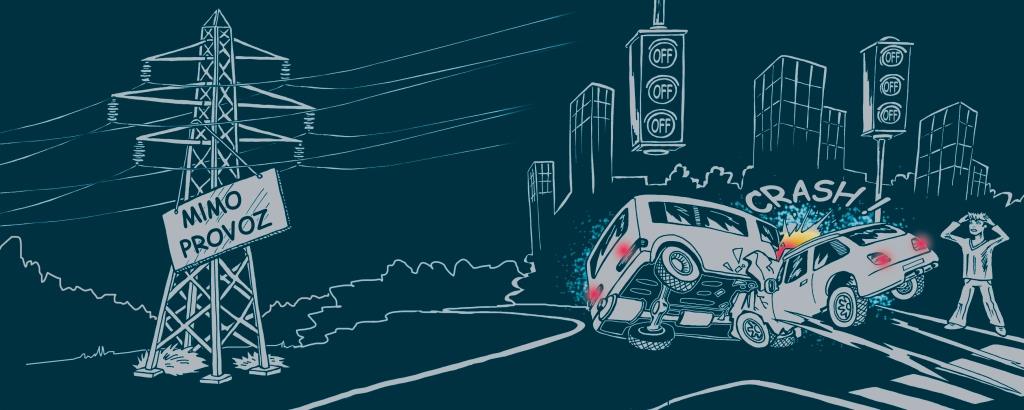
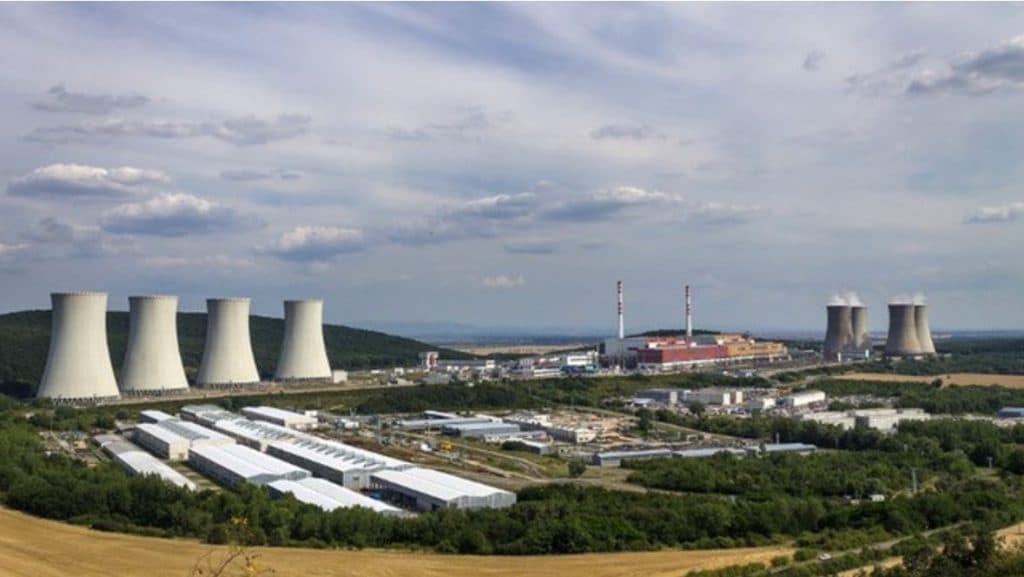
Illustrative blackout photo. Source: www.krizport.cz
Detached homes and larger households
Do you operate electrically powered equipment at home that is critically important? You probably do, but you do not “know” it. It is not for nothing that people say you only realise the importance of something once you lose it.
Most of us have a refrigerator and freezer at home—running on electricity, of course. Some people have a well or borehole and need a domestic waterworks system to pump water into their home plumbing. Even seemingly independent heating systems using solid fuels or natural gas cannot do without electricity—you need it to control the boiler, run the water system’s circulation pump or power forced flue-gas extraction.
Do you have a solar power plant?
Then you are almost set. Invest in batteries with adequate power and capacity so that you can power the refrigerator, domestic waterworks system or wastewater treatment plant from them. Think of your neighbours too—they will want to charge their electronics at your place. If you do not know how to choose the right battery, contact your local installation company and ask about high-performance LiFePO4 batteries capable of supplying at least 2 kW in island mode. Our mini-series “Before ordering a solar power plant for your home or business” here on our website may also be useful to you.
Buy a pressurised flow-through drinking-water tank with a capacity of at least 30 litres per household member, and connect it to the home plumbing so that its water is regularly replaced, while it serves as a reservoir in the event of a water supply interruption. Once again, a better plumbing company can help. Another option is special travel filters, originally designed for adventurers and expeditions—they can filter almost any water to drinking quality.
Do you live in a flat and/or do not have photovoltaic panels?
A standard UPS from a computer or electronics shop can back up only undemanding consumer electronics, and only for tens of minutes. The quality of the electricity produced is poor, so it cannot be used for larger appliances containing a motor (a pump, washing machine, etc.).
At least invest in a portable power bank that you can charge in your car or at neighbours with a solar power plant and carry home charged. Note, however, that most cheap portable electricity storage units have a maximum output of 300 or 600 W. Such a source is useless for anything other than a laptop or mobile phone. A genuinely usable storage unit has a maximum output of at least 1200 W and a capacity of at least 1 kWh. It can then actually power a refrigerator or a submersible water pump. Examples of good products include storage units from EcoFlow (Delta 1300) or Jackery (Explorer 1000).
At home, you will also certainly find use for at least one pack of drinking water per person (6 to 10 litres), candles, two camping propane-butane cylinders with a stove, and enough alkaline AA batteries for torches, a radio and similar appliances.
Backup power in small and medium-sized businesses
Do you run agricultural or food production, or a fuel filling station? Then you are on the front line. Backup power is a necessity for you, and no one will solve it for you. But entrepreneurs in less demanding operations (logistics, e-commerce, small-scale manufacturing, services) should also pay attention to the blackout scenario.
Buying a petrol generator may seem like an apparently satisfactory solution. However, today’s petrol containing ethanol cannot be stored long term; it degrades over time and forms deposits and sludge. A sensitive engine with electronic injection will therefore probably not start after standing for a year, or you may damage it. In a crisis, you will not be able to obtain fresh petrol—just as you could not get disinfectant, face masks or gloves when the COVID-19 pandemic began.
A petrol generator also cannot be operated indoors, and it is not always possible to place it outside without its emissions and noise disturbing the wider surroundings. In addition, most high-power appliances (heat pumps, water pumps, motors, blowers) do not work with a generator because they have excessively high starting currents.
We can manage without a lift, we can also open swinging doors manually, and the building will retain heat for many hours after heating is shut down. But there are appliances that must operate for safety reasons, without which no one can be allowed into office buildings or industrial facilities. These include, above all, all IT systems, fire protection systems, ventilation, lighting in underground areas and sewage pumping stations.
What does proper backup for a critically important electrical appliance look like?
- It uses industrial UPS systems or off-grid / hybrid inverters designed for continuous operation across a wide temperature range. Proven examples include hybrid transformer inverters from Victron Energy, which we have long supplied to our customers as accessories for LiFePO4 batteries. They operate reliably and have functions and features that are entirely unique on the market. By contrast, standard consumer UPS systems intended for computers and IT applications (APC, CyberPower, Eaton, AEG...) cannot be used.
- It uses industrial batteries, which have no self-discharge effect and can deliver high currents for a long time. That means not a starter lead-acid battery “from a petrol station” or Chinese energy storage assembled from small 18650 Li-ion cells. Such batteries have low output and, precisely when we need them, are discharged or have even completely reached the end of their service life and can no longer store or supply energy. For more than 12 years, our customers have found prismatic lithium iron phosphate cells from Elerix and Winston ThunderSky to be reliable.
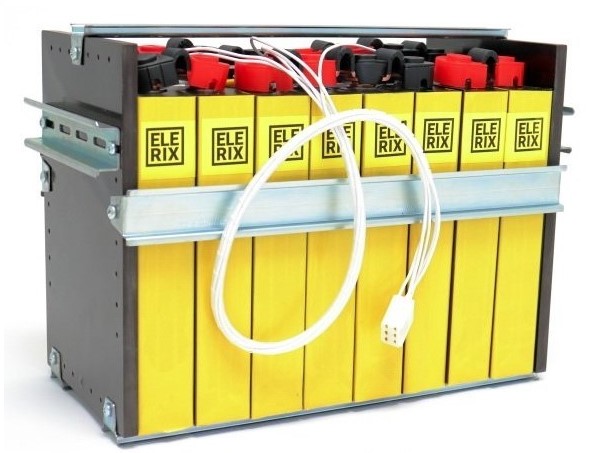
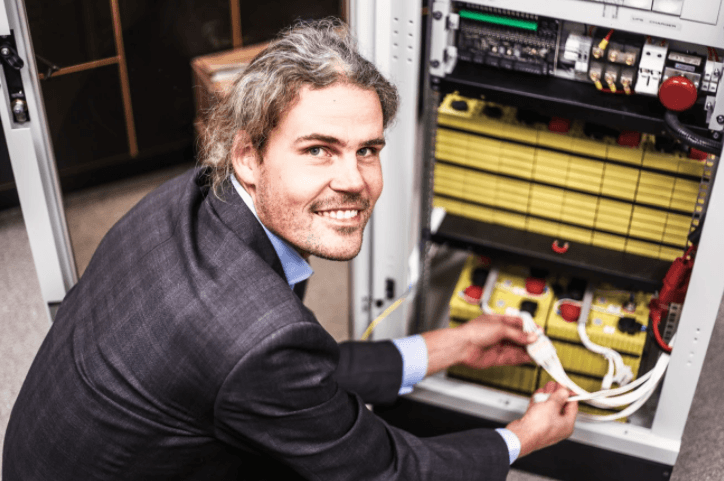
GWL Elerix batteries. Illustrative photo
- System operation is fully autonomous and does not rely on any external communication, commands or operators. Bear in mind that in the event of a blackout, it will not be possible to control the system via GSM or remote internet access. They will probably be out of service. “Live” operators will also likely have their hands full elsewhere and will not have time for manual operation, such as reconnecting cables, starting the generator, topping up oil and petrol, etc. Nevertheless, it is good for a backup system to have some monitoring and remote control for “peacetime”. Some intelligent hybrid inverters (e.g. Victron Energy) have this integrated and can track all parameters very accurately, especially battery state of charge, solar panel output, power draw of connected appliances and 230 V grid quality. From these values, they can calculate the remaining backup time and inform operators via a display, the GSM network or the internet.
The first instalment of the mini-series could therefore be paraphrased as: when a blackout comes, it is good to be prepared. Both photovoltaic power plants and battery storage can be very helpful to households and businesses in coping with a potential blackout. The next instalment of the mini-series will cover backup power for critical infrastructure in municipalities.
About the author
Michal Klečka is one of the founders of GWL a.s., currently Europe’s largest importer and seller of prismatic lithium iron phosphate cells. After leaving executive roles at the company in 2020, he has focused on raising awareness in the renewable energy sector, publishing and interesting projects in the field. He still represents GWL a.s. in the AKU-BAT association, is a jury member of the Czech Self-Sufficient House architectural competition, and co-author of the energy system for the Czech Island House and the iBATT.energy concept.
Translation disclaimer
This article is a machine translation of the Czech original and has not yet been fully reviewed. In case of any doubt, please refer to the Czech version.
Sdílejte článek prostřednictvím:
You might also like
20 October 2026, 12:55
20 October 2026, 10:49
20 October 2026, 06:13