20 October 2026, 15:34
Loading...
Backup power for critical infrastructure in Czech municipalities, or how to outsmart a blackout (Part 2)
Michal Klečka
24 September 2021, 07:00

The key question regarding municipalities’ critical infrastructure is: “Will a power outage shut down water supply systems and wastewater treatment plants?” The answer depends on the approach taken by the leadership of individual municipalities. Every mayor should identify in advance the critical infrastructure that will need backup power in the event of a prolonged electricity outage. When a blackout occurs, you will certainly have other concerns than drawing up a list and trying to remember what relies on electricity and what has stopped working where.
Water and wastewater – the two most important municipal infrastructure systems. Water supply systems are pressurised by electric pumps, while wastewater treatment plants are based on aeration using electric blowers and the pumping of wastewater between chambers. They cannot operate without pumps, blowers and chemical dosing equipment.
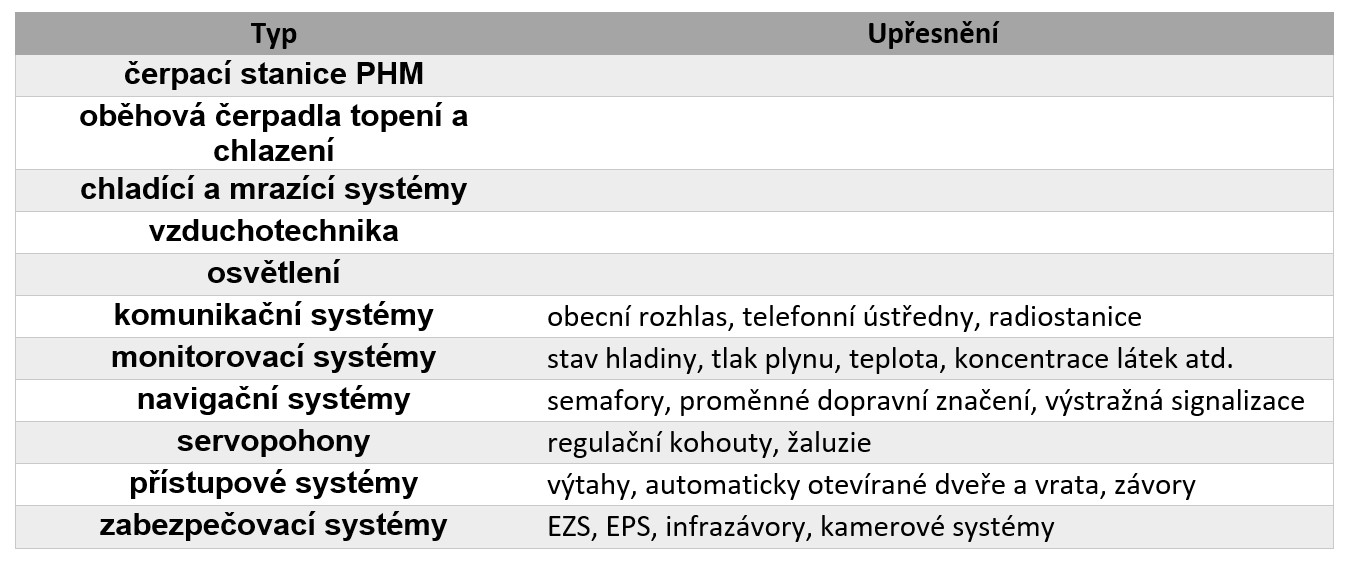
An overview of other critical infrastructure elements is shown in the following table:
The more self-sufficient your municipality is, the less assistance you will need from other municipalities and the state. Draw up a crisis plan for a blackout that does not rely on outside assistance. It should specify who will be responsible for what, what they will do and where they will obtain the necessary resources. Conduct regular municipal drills, which can be easily simulated in this case (unlike a fire or mass-casualty incident…), and evaluate the lessons learned.
The same applies to municipal backup systems as we stated in the previous article – do not rely (solely) on petrol generators or cheap UPS systems designed for computer equipment.
The beneficial combination of photovoltaics and batteries for savings and backup power
It is appropriate and advantageous to combine a solar power plant with a backup system. So-called hybrid inverters are used for this purpose (we again recommend Victron Energy, with which our customers have consistently been satisfied). Such an inverter is about the size of a banana box and can be installed virtually anywhere in a utility room. During normal operation, you do not notice it – it is connected to the standard 230 V grid and keeps the batteries connected to it charged. Using a so-called solar controller, it draws energy from the solar panels and thus reduces the building’s consumption. During a blackout, however, it switches to so-called island (or off-grid) mode and generates 230 V AC voltage from the batteries. How long for depends solely on you – or rather on the battery capacity and consumption in the building. If the sun is shining, it naturally powers the backed-up building and recharges the batteries from the solar panels as well.
You can order almost all components of such a backup system, together with the design for the entire system, from our company; alternatively, they are available directly from the Victron Energy importer, which can provide further advice on selecting an installation company.
Example of backup power for a municipal WWTP in Křišťanov near Prachatice
Investor’s brief
Provide backup power for the local wastewater treatment plant for at least 24 hours in the event of an electricity outage. The plant’s maximum power input is 4,2 kW, but due to the combination of five three-phase motors with potentially simultaneous starts, the system must be able to handle an inductive-load starting current of more than 70 A.
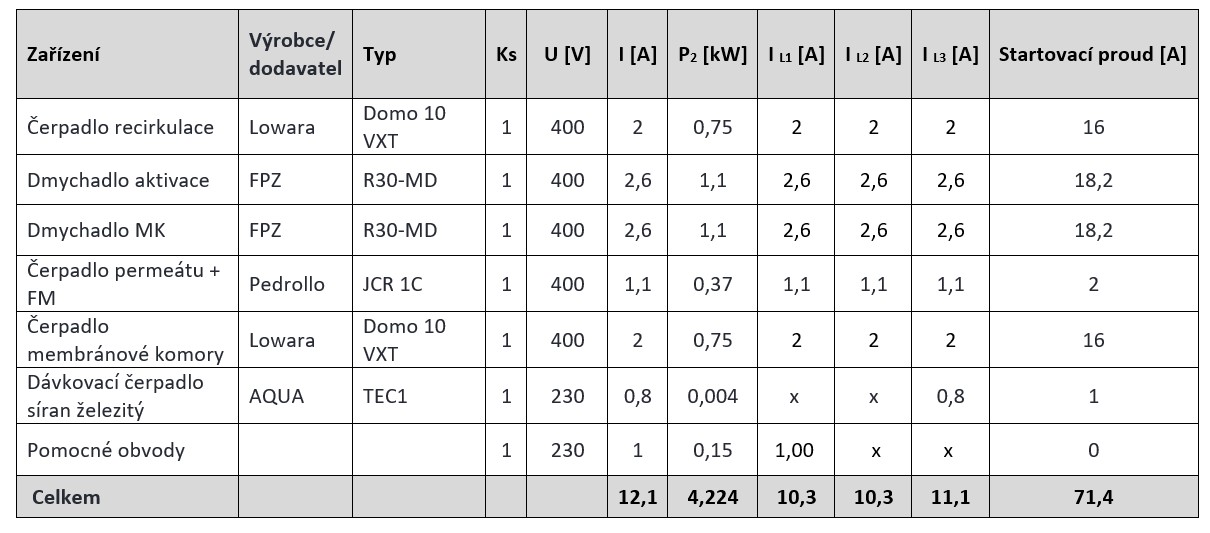
WWTP parameters
The investor also required maximum use of the 12 x 6 metre WWTP roof for solar panel installation, in order to reduce electricity consumption through their generation. The backup system will be prepared to power a charging station for e-bikes and small electronics (max. 1 kW), located in front of the treatment plant building.
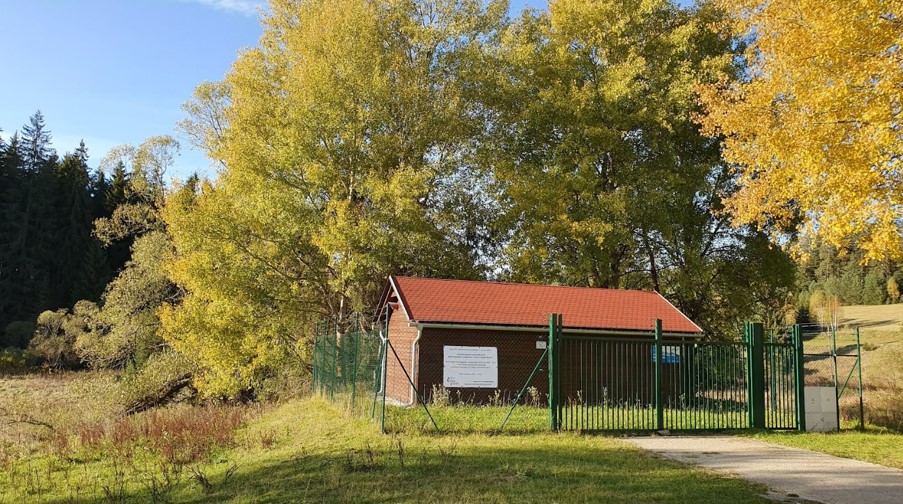
WWTP in Křišťanov near Prachatice before the backup power project was implemented. Source: GWL
Analysis and project preparation
Providing backup power for equipment with such a high starting current is not a trivial task and is almost impossible using conventional inverters. Therefore, it was first necessary, in cooperation with the WWTP technology supplier, to analyse whether adjusting the algorithm could limit simultaneous motor starts and switching. Fortunately, this was achieved. The motors also had to be fitted with frequency converters to limit inrush current when starting. Switchover to the backup source had to take place entirely independently of human operators and communications networks. The backup power source had to be capable of 100% reliable operation even at very low temperatures down to -30 oC.
Solution design
Due to the municipality’s limited investment funds, we did not use a Victron Energy hybrid inverter, because the price of a three-phase, fully asynchronous solution of this capacity is substantially (several times!) higher when using it than when using a dedicated UPS. For reference, a comparison of investment costs for both options is provided in the table at the end of this section.
Instead, we selected an industrial three-phase UPS with a pure sine-wave output and capacity of up to 15 kVA. It requires a battery voltage of >200 V to operate, so we used 64 industrial LiFePO4 (lithium iron phosphate) cells with a nominal capacity of 300 Ah and voltage of 3,3V. Together, they provide a capacity of 63 kWh and a voltage of 211 V.
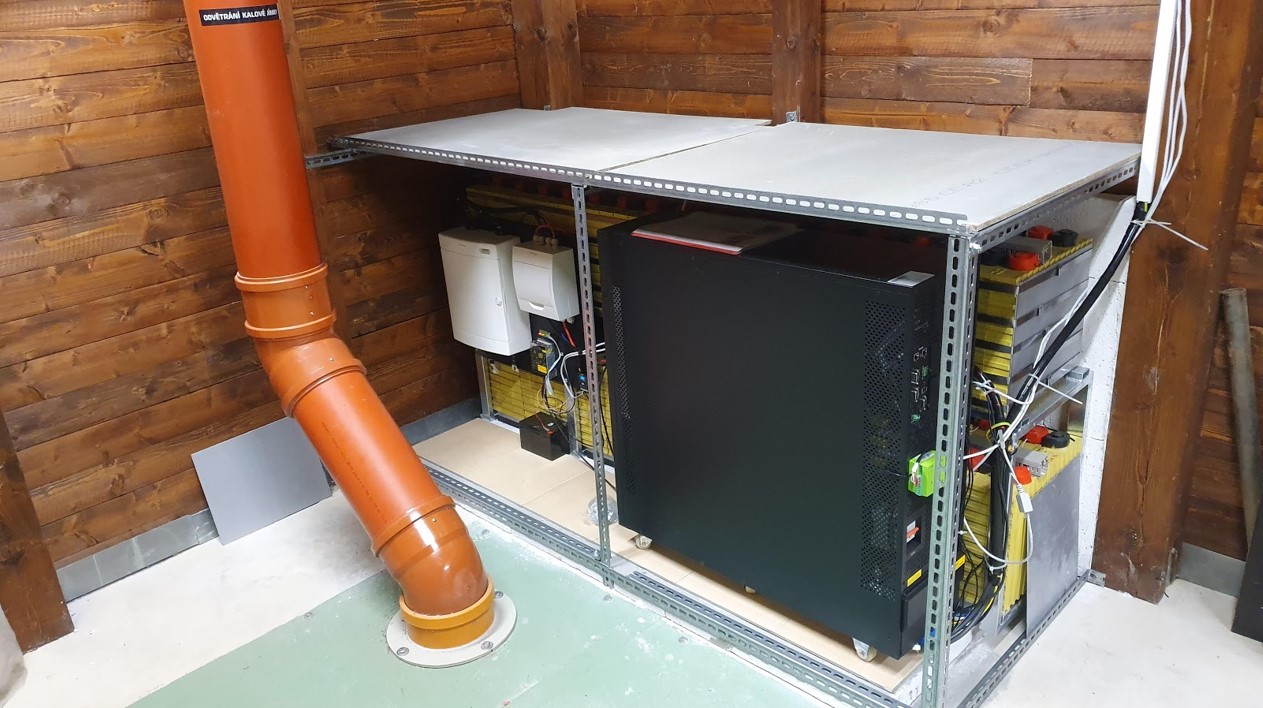
WWTP during installation. Source: GWL
The investor’s brief also called for savings in grid-supplied electricity through the installation of a solar power plant. We therefore installed 10 Elerix solar panels on the south-facing side of the WWTP building’s pitched roof, with a nominal output of 10 x 330Wp = 3,3 kWh. Energy from the panels is processed by three solar controllers and GF-SUN inverters located next to the switchboard inside the treatment plant building, which convert the DC voltage from the solar panels into AC.
Due to complex bureaucracy and the technical requirements of the electricity distribution system operator, we configured the inverters in a zero-export mode, so they supply only the WWTP’s own consumption or help recharge the batteries. In the event of excess solar energy, the controllers automatically start curtailing generation so that energy does not flow into the grid. In the event of a grid outage, the system automatically switches to island mode within a few milliseconds, and the entire WWTP is powered by batteries that last for at least 2 days of operation.
To control the system, we used a PLC module, the Wattrouter Mx from Czech manufacturer Solar Controls s.r.o., and a BMV-700H module from Victron Energy, which measures the battery’s current remaining energy. System information is transmitted to the municipality via GSM and internet communications. However, the system is fully autonomous and can operate without a functioning GSM/internet network.
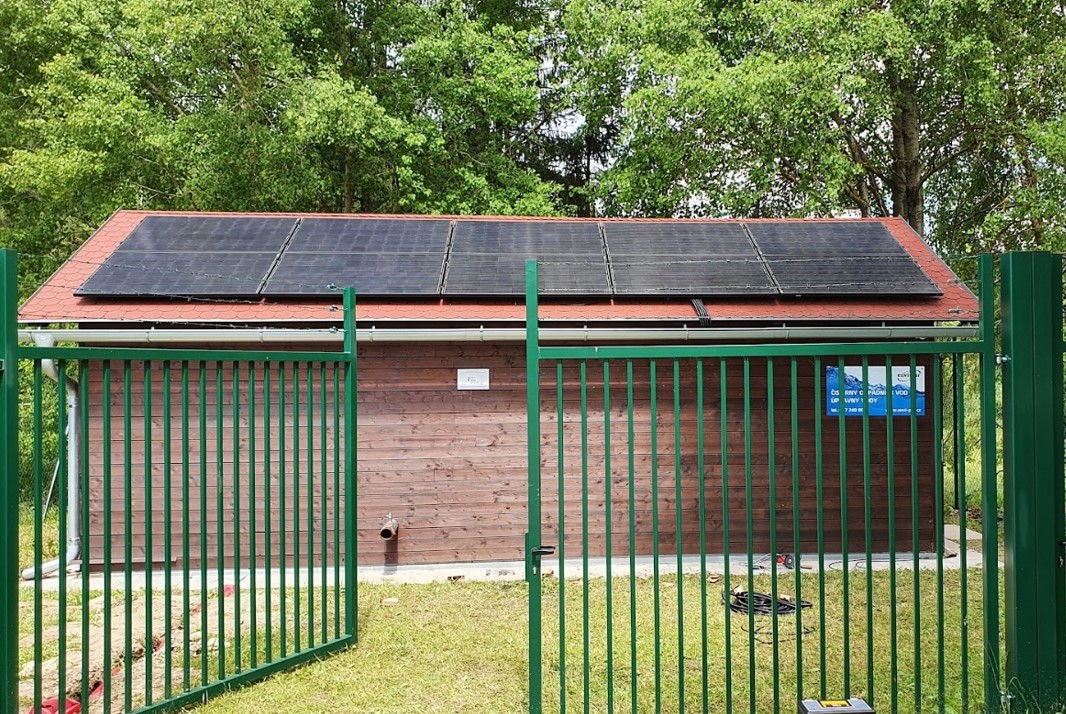
WWTP solar PV installation. Source: GWL
Summary and budget
The entire backup system has operated flawlessly from November 2019 to the present day (September 2021). It ensured residents could continue using the municipal water supply and sewerage system in full comfort even during electricity outages associated with Storm Sabine and Storm Yulia, which affected Central Europe in January and February 2020.
For virtually an entire week, the municipality was cut off from road transport because fallen trees blocked the only paved access road. If backup power had been provided by a petrol generator requiring refuelling, this would have been an additional concern. All nearby emergency services were operating at 200% capacity at the time, leaving no capacity for such minor matters as cutting up trees on the road or delivering petrol. Moreover, electricity would work for several hours and then be out again for many hours. A problem for a petrol generator, but ideal for batteries – during the intervals, they had enough time to recharge automatically.
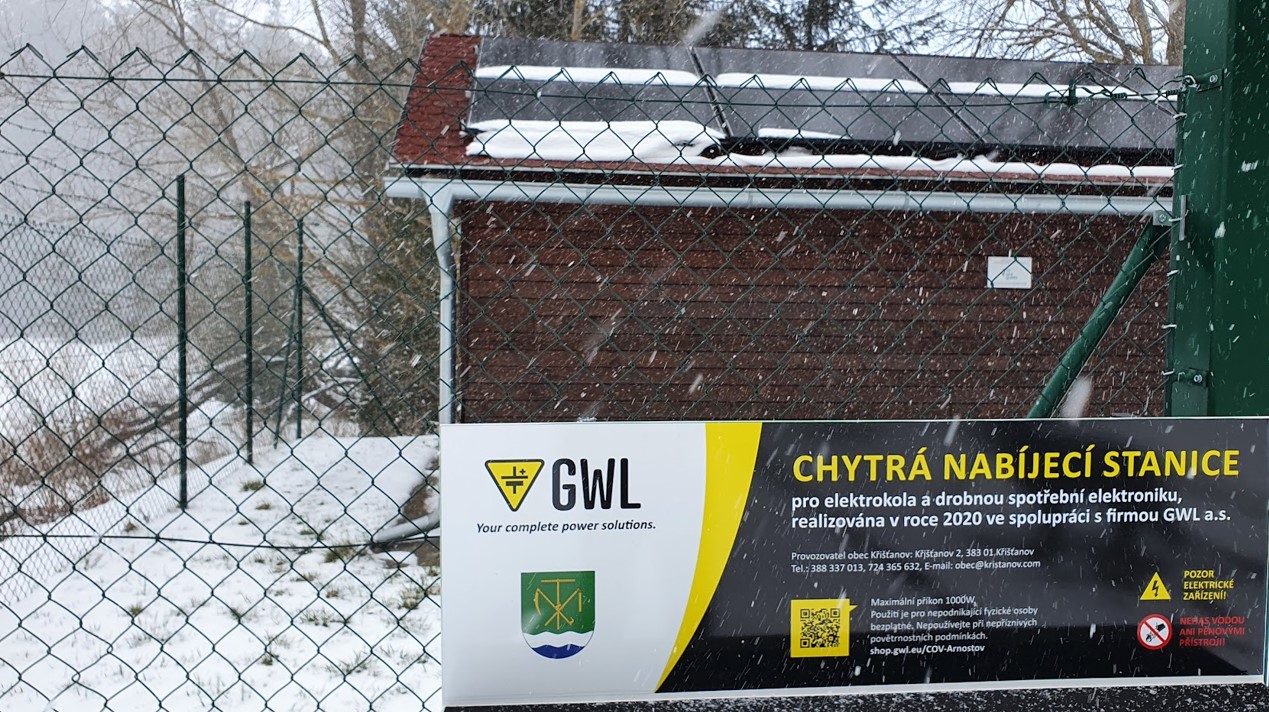
WWTP installation and e-bike charging station. Source: GWL
While a simple electricity outage in a municipality will not catch anyone off guard and can be endured long term with some loss of comfort, water and sewerage are indispensable.
Below, we provide a brief table that allows any entity to gain an approximate idea of the financial demands of a backup system for any piece of equipment, not necessarily only a WWTP. Prices are based on the 2019 market; today, an increase of approximately 15 to 20% must be expected.
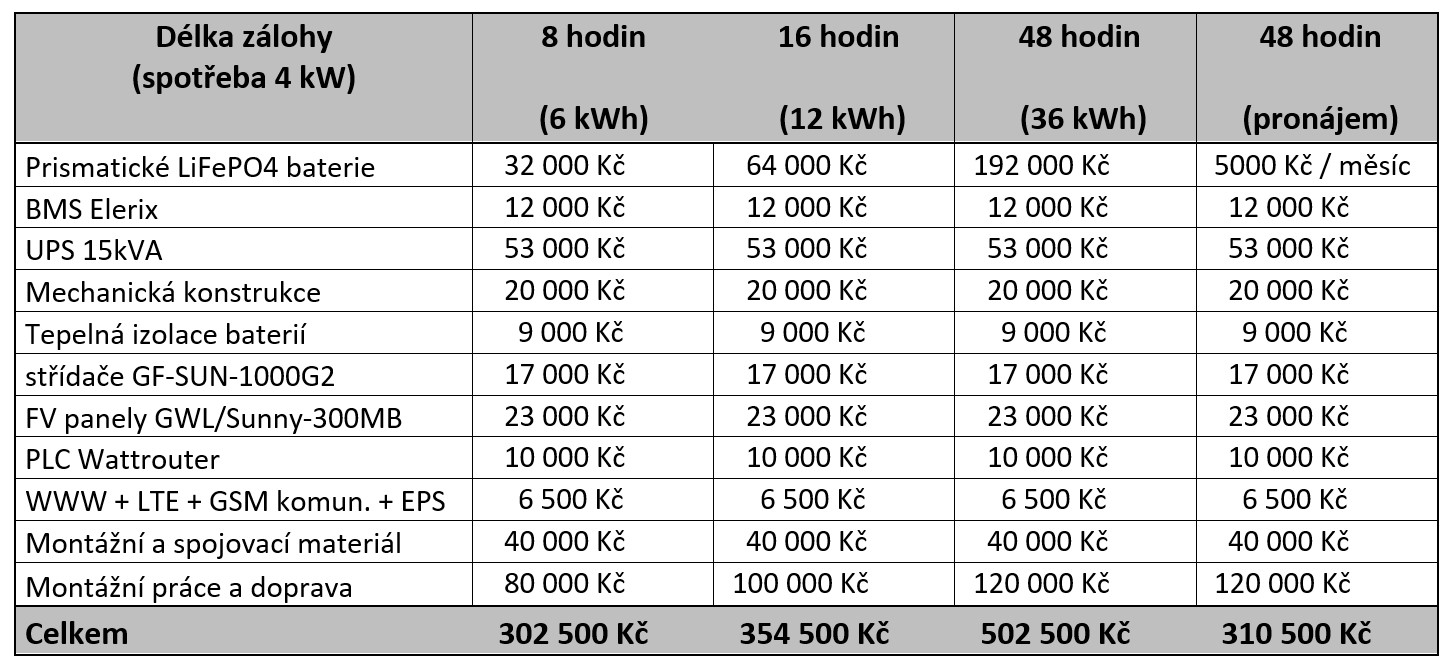
Financial demands of the WWTP backup power project.
About the author
Michal Klečka is one of the founders of GWL a.s., currently Europe’s largest importer and seller of prismatic lithium iron phosphate cells. After leaving executive roles at the company in 2020, he has focused on raising awareness of renewable energy, publishing and interesting projects in the sector. He continues to represent GWL a.s. in the AKU-BAT association, is a jury member of the Czech Self-Sufficient House architectural competition, and co-author of the energy system for the Czech Island House and the iBATT.energy concept.

Translation disclaimer
This article is a machine translation of the Czech original and has not yet been fully reviewed. In case of any doubt, please refer to the Czech version.
Sdílejte článek prostřednictvím:
You might also like
20 October 2026, 12:55
20 October 2026, 10:49
20 October 2026, 06:13