29 October 2026, 06:33
Loading...
Batteries in Australia are already displacing natural gas during the evening peak

Martin Voříšek
29 October 2026, 06:33
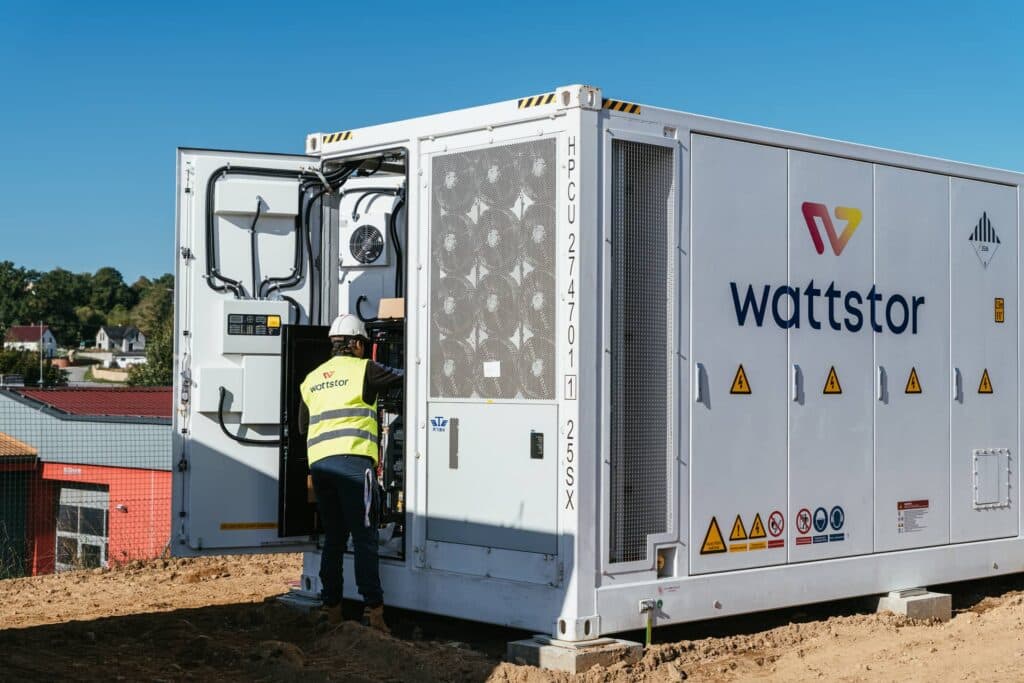
Large-scale battery storage on Australia’s NEM market supplied more electricity than gas-fired power plants during the evening peak for the first time in the third quarter. This is another consequence of Australia’s “battery boom”. The average wholesale electricity price fell 27% year on year to 63 AUD/MWh, the lowest level for a third quarter since 2021. The past quarter was positive for storage operators in at least one respect: the price spread on which their revenues depend stopped falling after a sharp drop.
The NEM covers eastern and southeastern Australia. Total large-scale battery capacity on the market exceeded 10 GW at the end of September, with a storage capacity of 23 GWh. In the past year alone, storage projects with a total output of 4 375 MW and capacity of 12 628 MWh began commissioning. Of this, 860 MW and 2 970 MWh were added in the third quarter alone. Total system demand in the third quarter was around 25.4 GW.
The volume of energy shifted over time by batteries more than tripled year on year. Storage facilities charged an average of 13.4 GWh per day during the day and returned 10.9 GWh to the grid during the evening peak, between 16:00 and 21:00. A year earlier, the figures were 3.7 and 3.2 GWh. Power records were also set: charging reached 4 414 MW on 19 September, while discharging hit 4 616 MW on 23 August.
Lower electricity prices during the evening peak, fewer negative prices and higher revenues for solar power plants, which were the only ones to record higher revenues than last year. Read on to find out how batteries are changing the way the electricity market works—and where, according to the Australian market operator, they are already reaching their limits.
As the regular report by Australian market operator AEMO notes, the most visible change is during the evening peak. Batteries covered 8.0% of generation during this period. Gas-fired power plants, whose output during these hours halved year on year, supplied just 5.1%. Over the entire quarter, gas-fired generators produced an average of 881 MW, the lowest level for a third quarter since 2000.
As volumes grow, so does the impact of batteries on price formation. Charging and discharging together set the price in 48% of five-minute intervals, compared with 18% a year earlier. Batteries are no longer setting prices mainly during expensive hours. For example, the average price when discharging fell from 185 to 102 AUD/MWh.
Lower evening prices, higher midday prices
As the regular report shows, wholesale prices gradually fell during the quarter, from 77 AUD/MWh in July to 47 AUD/MWh in September.
Home batteries are also affecting the evening peak. Households with solar panels and a battery consumed 74% less electricity during the peak than households with solar panels alone.
At midday, prices moved in the opposite direction. They rose slightly as higher consumption and battery charging outweighed the downward pressure from growing solar generation. This is largely good news for the grid, as Australia too has experienced a solar boom that has sent prices into negative territory, particularly around midday.
Negative or zero prices occurred in 14.4% of trading intervals, 4.5 percentage points fewer than a year earlier. Solar and wind generators typically set prices at negative levels, whereas batteries charging more often keep them above zero. Curtailment of solar power plants due to low prices fell by 54%, from 15.7% to 5.9% of their available output. Large-scale solar power plants were the only generation type to receive a higher average price than last year: 34 instead of 26 AUD/MWh.
Spreads stabilise as ancillary services dry up
The average difference between charging and discharging prices on the NEM fell year on year from 123 to 59 AUD/MWh. However, it edged up compared with the second quarter, when the spread dropped to 51 AUD/MWh. It nevertheless remains significantly below last year’s level, with spreads recording a sharp year-on-year decline for the second consecutive quarter. In addition, the data suggest that battery storage capacity on the Australian market will continue to grow.
The slight increase in price spreads does not mean that the continuation of the battery boom is risk-free. On the smaller Western Australian WEM market, the average spread fell from 51 to just 2 AUD/MWh. Revenues from arbitrage for storage facilities there plunged from 9.0 to 0.8 million AUD.
So far, however, this has not deterred investors. Projects with a total output of 80.9 GW are waiting to connect to the NEM, 55% of them standalone batteries. The share of longer-duration storage is also growing: 38% of battery projects have a discharge duration of three to ten hours.
BESS capacity is only just beginning to grow in Europe and the Czech Republic
Europe is at the start of a similar wave. Within a single week, five groups of projects with a capacity of 682 MWh were completed in Germany, Estonia, Belgium, Denmark and Bulgaria. In the Czech Republic, 318 MWh was added in the first half of the year. More projects are in the pipeline: Second Foundation is preparing more than 300 MW, while the Sev.en group is planning around 160 MW. Hundreds more megawatts, and possibly a few gigawatts, are also in development.
Australia shows two things. The rapid arrival of batteries can compress price spreads and revenues from ancillary services within one to two years. At the same time, however, after the initial shock the spread did not collapse to zero, and the focus of revenues shifted to exploiting price differences on the wholesale market.
It should be noted, however, that the Czech grid differs from Australia’s. Nuclear generation at Dukovany and Temelín plays a larger role in the Czech grid, as do strong interconnections with neighbouring markets, affecting both the depth of midday price drops and the height of evening peaks. For ČEZ and for the state, which sees nuclear power as the backbone of the grid, the question is how much flexibility the market will actually need and who will pay for it.
Translation disclaimer
This article is a machine translation of the Czech original and has not yet been fully reviewed. In case of any doubt, please refer to the Czech version.
Sdílejte článek prostřednictvím:
You might also like

28 October 2026, 15:10

28 October 2026, 13:08

28 October 2026, 11:10

28 October 2026, 09:08