Battery market consolidation. Swiss Alpiq buys key stake in British Harmony Energy

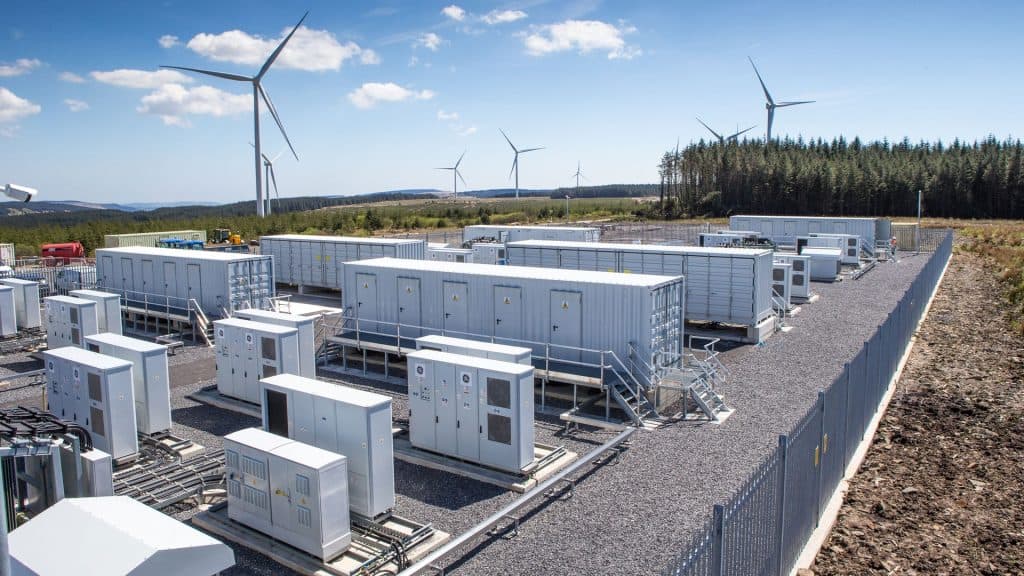
Swiss energy group Alpiq is acquiring a 90% stake in British battery storage developer and operator Harmony Energy. The deal gives it a platform with more than 700 MW of batteries in operation, around 400 MW of assets under construction and a project pipeline of more than 12 GW across the United Kingdom, Germany, France and Poland, with the aim of building a multi-gigawatt flexibility portfolio across Europe. The parties have not disclosed the value of the deal. The acquisition itself is a routine market announcement. But it fits into a wider consolidation of the European storage market, which is no coincidence: it follows directly from the way EU rules and the new market design increasingly reward flexibility.Harmony Energy was founded in 2010, employs around 90 people in four European countries and has so far completed 18 large-scale battery projects with a combined capacity of more than 700 MW, mostly in the United Kingdom. Around 400 MW of assets under construction are transferring to Alpiq, including a UK project expected to be connected to the grid as early as the third quarter of this year. The company will remain independent under its own brand, with co-founder Peter Kavanagh continuing as chief executive and retaining a 10% stake. Christoph Bellin, who heads battery storage at Alpiq, will join its management. This is not the first time the two sides have worked together: Alpiq previously bought two French projects from Harmony, including the 100 MW Cheviré battery near Nantes. Alpiq says it aims to become one of Europe’s leading players in battery storage and cover the entire value chain, from development and construction to operation. This is not an isolated move. Across the continent, large utilities and energy traders are buying up storage developers and operators to build their own flexibility portfolios. The question is why this is happening now, and why batteries in particular.
The EU market increasingly rewards flexibility
The answer is largely regulatory. The reform of the electricity market design adopted by the EU in June 2024 (Regulation 2024/1747 and Directive 2024/1711), which entered into force in mid-July that year, explicitly aims to integrate renewables at the lowest possible cost and attract investment in zero-emission flexibility, particularly storage and demand response. Alongside long-term contracts such as PPAs and contracts for difference (CfDs), it also introduces mandatory assessments of flexibility needs and a framework for flexible grid connections. A specific change to market design adds to this. Since 30 September 2025, the European day-ahead market has traded in 15-minute intervals instead of hourly ones, aligning it with the intraday market. This finer time granularity directly increases the value of fast-response resources: price differences between intervals are sharper, and batteries benefit most from them. At the same time, the share of renewables is growing: in 2024, they accounted for 47.5% of the EU’s gross electricity consumption, and by 2030 they are expected to exceed 60%. This brings more price volatility and more hours with negative prices, exactly the conditions in which storage makes economic sense. An integrated market divided into ever-finer intervals is therefore systematically shifting value towards flexibility. Consolidation is the industry’s response to this shift.
Scale and trading expertise as a ticket to entry
Unlocking the value of storage in an interconnected market traded in 15-minute intervals requires three things: sufficient scale, sophisticated trading and optimisation, and a strong balance sheet to finance and hold projects. This favours trading houses and large utilities with a pan-European reach, such as Alpiq, over standalone developers, which are therefore increasingly selling their assets or joining forces with larger players. Harmony, for its part, will continue to sell some projects to external investors. This is capital recycling, which enables faster growth. The need for Europe’s energy sector to achieve greater scale and attract more capital to compete internationally was also highlighted in Mario Draghi’s report on competitiveness. An apparent paradox adds depth to the story. Alpiq is Swiss and Harmony is British, meaning that both are based outside the EU’s integrated internal market. Switzerland is not yet part of European market coupling, as an electricity agreement with the Union has remained unresolved for years, while Britain left the internal energy market after Brexit. Yet the deal is centred on the integrated continental market. This points to an important paradigm: the integration of Europe’s electricity market is now also a legislative project. Through Harmony, Alpiq is also gaining a strong position in the British market, one of Europe’s most developed in terms of battery trading and ancillary services, along with experience it can apply across its European footprint. Integration is therefore advancing not only through directives, but also through capital and strategy. Czechia is part of the integrated market and is subject to the same reform and pressure to develop flexibility—from electricity aggregation and sharing to the EDC data centre and the ongoing boom in battery storage. Consolidation and the arrival of large pan-European players building their strategies around flexibility are also likely to shape Central Europe. Domestic developers may therefore increasingly find themselves acquisition targets or partners. A closer look shows that the acquisition of Harmony Energy is not merely a local deal. It can be seen as one part of a continental shift in which flexibility is moving to the heart of a market whose shape European rules are actively transforming.
Translation disclaimer
This article is a machine translation of the Czech original and has not yet been fully reviewed. In case of any doubt, please refer to the Czech version.