Battle for batteries: Europe is trying to catch up with Asia

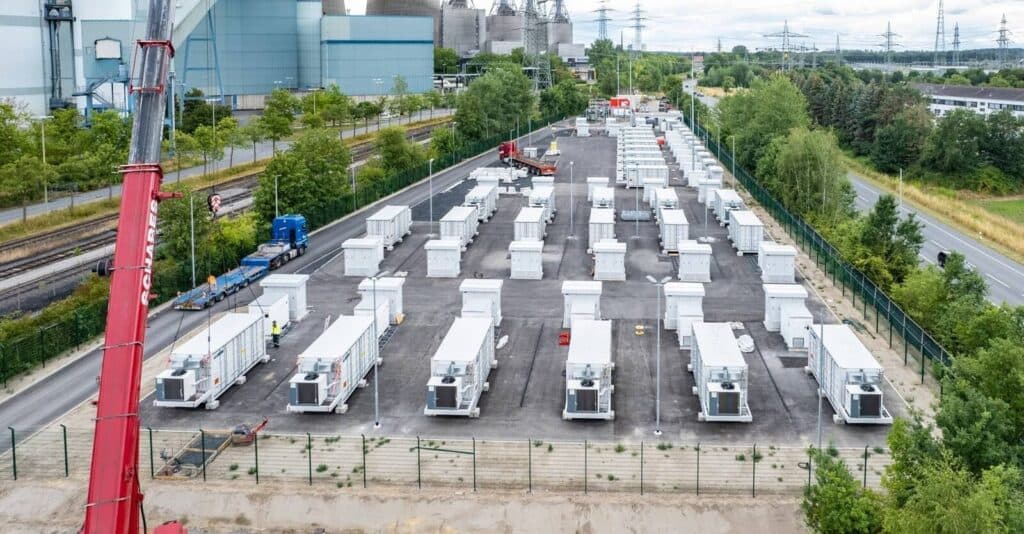
Many European battery manufacturers are postponing or scrapping plans to expand production amid uncertainty about future profitability. Yet battery production costs in Europe are around 50% higher than in China, which currently produces around 75% of batteries sold globally. This is according to an analysis by the International Energy Agency (IEA) published in early March.
According to the IEA, Europe’s battery storage supply chain ecosystem remains relatively vulnerable. One of the problems is the persistent shortage of specialist staff. The bankruptcy of European battery hopeful Northvolt only confirms the industry’s lack of competitiveness compared with Asian manufacturers.
The International Energy Agency has nevertheless said that there are still ways to build a more competitive battery industry in Europe. The first step should be strong domestic demand, which would give battery manufacturers certainty about sales and time to fine-tune production processes.
"Over the past two years, Korean manufacturers, which have long been the largest battery producers in Europe, have lost almost a quarter of their market share in the European Union, as it fell from nearly 80% in 2022 to 60% in 2024, partly as a result of the growing success of LFP batteries made in China," the IEA said, adding that some Korean companies have already started investing in LFP battery production in Europe to better withstand competition from Chinese manufacturers.
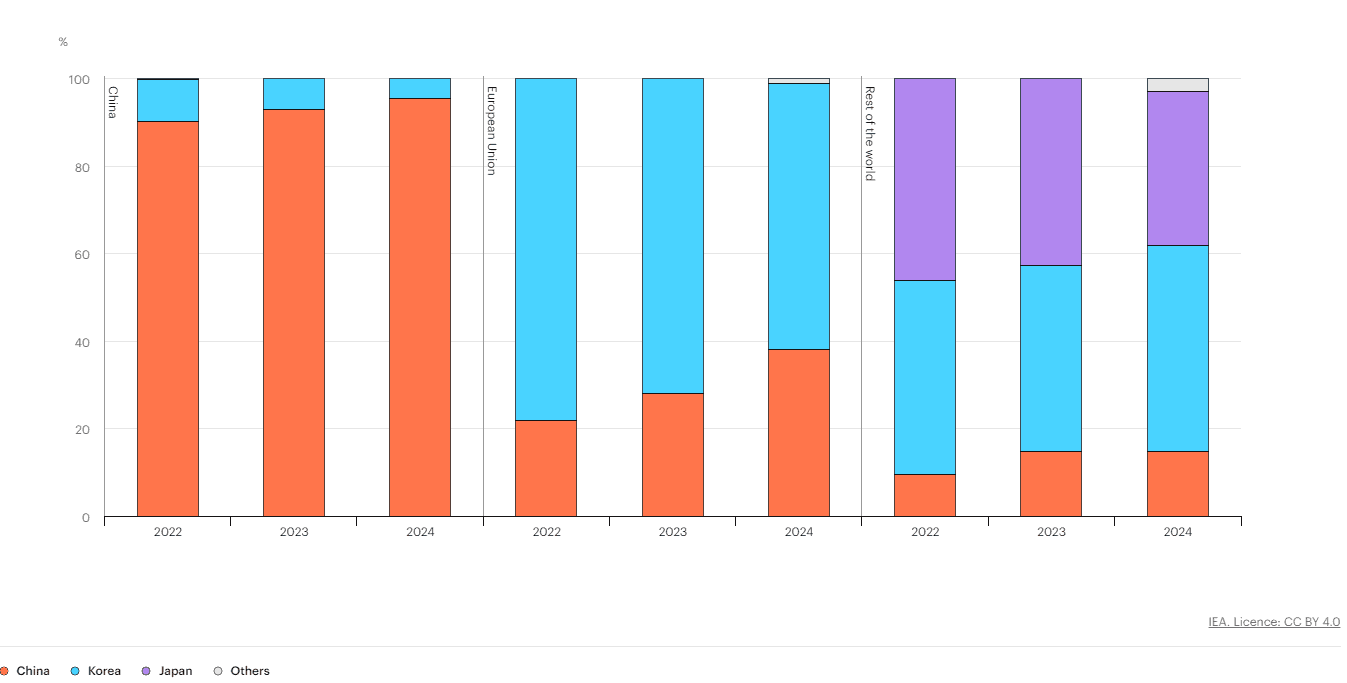
In the meantime, Chinese battery manufacturers are expected to increase their share of battery sales in Europe, including through new partnerships, the agency said. Projects such as the joint venture between Stellantis and CATL could accelerate the uptake of LFP batteries in the region, improve Europe’s battery ecosystem and potentially narrow the cost gap between Europe and China.
That gap is currently enormous. According to the IEA, battery production costs in Europe are currently 50% higher than in China, which benefits from its position as the global battery leader.
Reasons for China’s dominance
According to the IEA, China’s price advantage stems primarily from the enormous manufacturing expertise built up through the fact that more than 70% of all electric vehicle batteries produced to date have come from China.
"The integration of the manufacturing chain through acquisitions or close cooperation between the largest companies has accelerated innovation and reduced production costs, which have also fallen thanks to access to key minerals at below-market prices," the IEA said.
Another reason for China’s dominance, according to the agency, is that manufacturers there prioritised LFP batteries, which were previously considered unsuitable for electric vehicles because of their lower energy density. Today, these batteries are 30% cheaper than the alternatives while offering sufficient range for electric vehicles.
The development of China’s battery market has also been strongly influenced by intense domestic competition, stemming from the fact that China is home to nearly 100 battery manufacturers. To maintain or increase their market share, these companies had to reduce their margins and sell their batteries at lower prices.
"Price declines may nevertheless slow. Intense competition and shrinking margins are likely to bring an end to a number of Chinese battery manufacturers, while increasing the influence and pricing power of certain producers. Even so, China will remain the largest battery producer in the medium term," the IEA added.
Translation disclaimer
This article is a machine translation of the Czech original and has not yet been fully reviewed. In case of any doubt, please refer to the Czech version.