23 October 2026, 06:34
Loading...
Czech distributors have already received thousands of applications to connect standalone batteries to the grid

oEnergetice.cz, ČTK
18 December 2025, 12:47
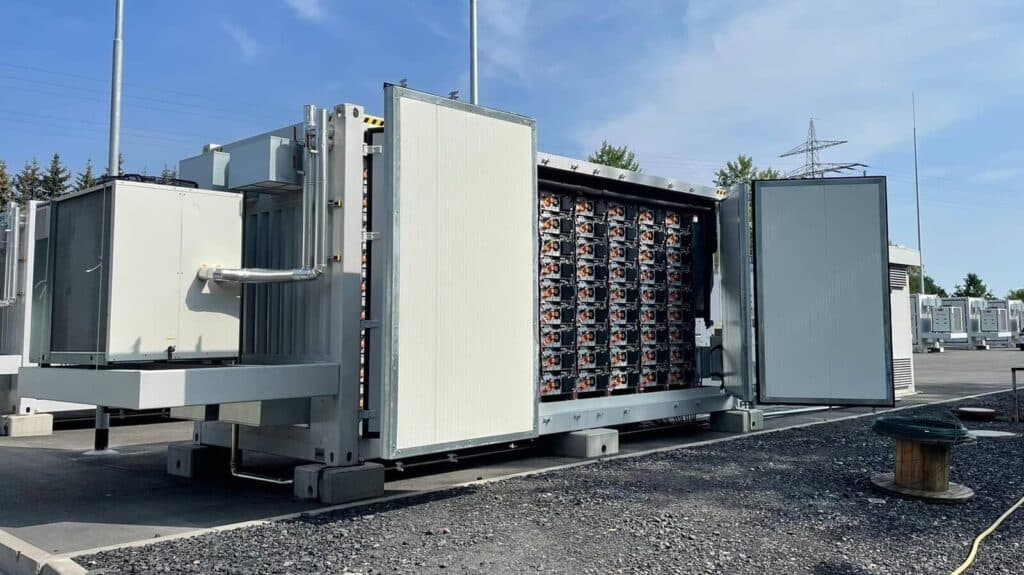
Energy companies are seeing strong interest in connecting standalone battery storage systems to the grid. Since September, they have received thousands of applications to connect storage facilities with a total capacity of hundreds of gigawatt-hours (GWh). Industry representatives say most applications come from just a handful of entities. They are therefore looking for ways to distinguish speculative applications with no real project behind them from genuine ones. This is according to a comment from the Czech Energy Storage Association AKU-BAT CZ and data from Czech distributors.
"This is partly the result of investment frenzy driven by historical data, when revenues from providing balancing services were very high. This often made it possible to recoup an investment within just two years. However, as supply grows and these services can be purchased from abroad, revenues are falling significantly, and many investments may no longer be worthwhile," said Martin Panáč, chairman of the board of AKU-BAT CZ.
According to him, a key problem is that connection agreements have become a commodity. The association says most applications are generated by just a handful of entities, probably using automated software tools. "We are currently looking for ways to distinguish so-called speculative applications from those backed by real projects. These projects could help us address any future mismatch between electricity generation and consumption," Panáč added.
Data from distributors also confirm strong interest in connecting standalone battery systems to the grid. According to ČEZ Distribuce, this became apparent as soon as it began accepting applications in September. "In just 12 days after the launch, we received more than 1,000 applications for reserved capacity totalling 7.5 gigawatts. By the end of November, the applications on our books were already requesting batteries with a total capacity of 258 GWh," said the company's CEO, Martin Zmelík.
"In recent months, we have seen exceptionally strong interest in connecting standalone battery storage systems to our distribution network," also confirmed a spokesperson for the distribution company EG.
D spokesperson Lubomír Budný. It covers distribution in the South Bohemian and South Moravian regions, as well as in the Vysočina Region and parts of the Zlín and Olomouc regions.
EG.D currently has contracts in place for more than 200 storage facilities with a total capacity of approximately 1.8 GWh. In most cases, these are batteries with a capacity of more than one megawatt-hour (MWh). "The total number of applications received is much higher, however, exceeding 2,000, with a combined capacity of around 38 GWh," Budný said.
Among the largest projects in the applications, he said, are storage facilities with capacities in the hundreds of MWh. "However, these projects often fall outside the distribution network because of their output and parameters, so we recommend that they submit their applications to the transmission system operator," Budný noted. So far, the largest project planned for the EG.D network for which the distributor has signed a contract is a facility with a capacity of 80 MWh.
The option of connecting standalone battery storage systems to the grid stems from the Lex OZE III amendment to the Energy Act, approved this year, which, after years of discussion, set out rules for energy storage, aggregation and flexibility in Czechia. Applications have been accepted since 19 September, and projects have been eligible for connection since October.
Translation disclaimer
This article is a machine translation of the Czech original and has not yet been fully reviewed. In case of any doubt, please refer to the Czech version.
Sdílejte článek prostřednictvím:
You might also like



22 October 2026, 10:45