
23 October 2026, 14:38
Loading...
Czech lower house approves measure to save state money on energy support

oEnergetice.cz, ČTK
5 March 2025, 07:01
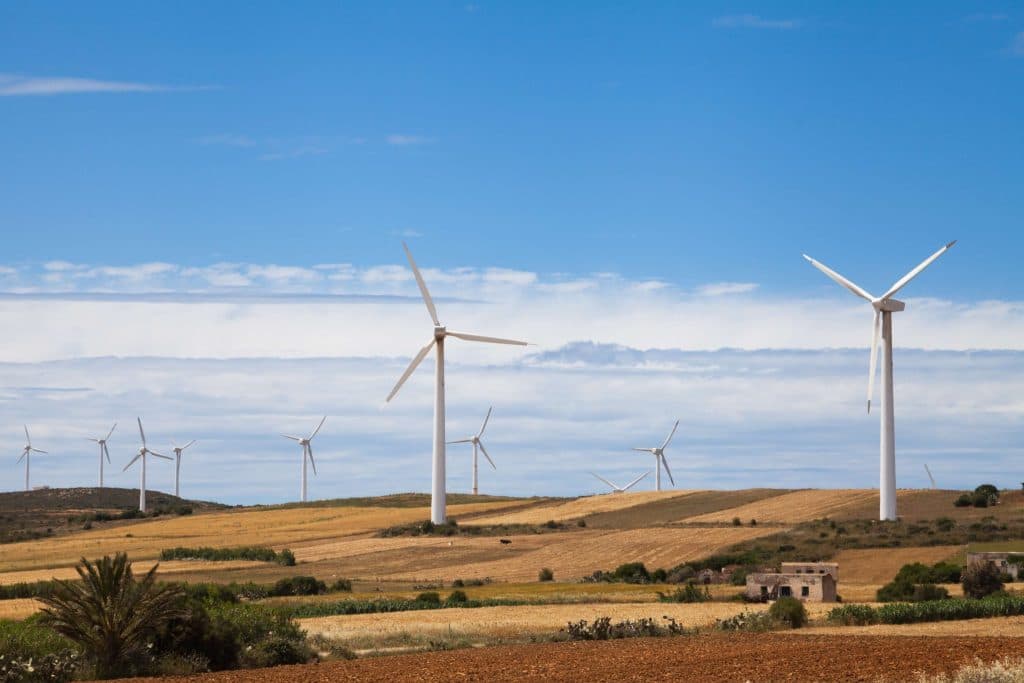
Solar power plants with a capacity of more than 30 kilowatts commissioned in 2009 and 2010 will be subject to individual profitability checks. The measure is intended to save the government money from the budget for support for energy sources. Today, the Chamber of Deputies rejected a Senate proposal to remove the provision from the Energy Act amendment under consideration. The bill, nicknamed Lex OZE III, which mainly regulates electricity storage and aggregation, will now go to the president for his signature.
The provision was added to the law in the Chamber of Deputies, based on an amendment submitted at the behest of Finance Minister Zbyněk Stanjura (ODS). Opponents of the measure say the change would alter the rules in the middle of the game, impose an administrative burden on power plant operators, potentially lead to arbitration and jeopardise the fulfilment of the Czech Republic’s climate commitments. The Senate adopted an amendment to remove the measure, but the Chamber of Deputies rejected it today.
A total of 102 MPs voted in favour of the Chamber’s version, one more than the required 101. They were joined by independent MP Ivo Vondrák, who was originally elected on the opposition ANO movement’s ticket. The opposition did not support the Chamber’s version. Consideration of this item brought today’s session of the Chamber of Deputies to a close. MPs will meet again on Wednesday morning.
The state plans to allocate 8.5 billion crowns to renewable energy sources this year, the same as last year. Prime Minister Petr Fiala (ODS) said last year that if support could not be reduced, the state would make up the difference this year. According to a statement he made a month ago, the amount is expected to be less than 20 billion crowns.
Operators of the solar power plants in question will, for example, have to inform the market operator each year by 15 December whether they will be entitled to support the following year. The return on investment in a renewable energy source will newly be calculated based on the equipment’s lifetime, rather than the duration of the entitlement to support. Under the law currently in force, the threshold for support is a return of between 8.4 and 10.6 percent. Minister Stanjura has previously said he is not concerned about possible arbitration. According to him, the state only wants to introduce the possibility of checks.
Miroslav Plevný (STAN), chair of the Senate’s Economic Affairs Committee, told MPs, among other things, that the proposal contravenes both an EU directive and the EU’s state aid approval. He also said it was questionable whether individual checks would actually be feasible.
Karel Havlíček, deputy speaker of the Chamber of Deputies and ANO’s shadow prime minister, described the Senate’s arguments as rational. In his view, they reflected the arguments made by ANO, which had opposed proposals to limit support. He said the measure could lead to arbitration with investors and damage investors’ trust in the state.
The amendment under consideration is primarily intended to introduce rules for electricity storage and aggregation into legislation. According to the Ministry of Industry, the development of storage—that is, the time-shifted delivery of generated electricity to the grid—is necessary in particular to increase the grid’s resilience to operational fluctuations, integrate renewable energy sources into the grid and support investment. The amendment also regulates flexibility. As described in the explanatory memorandum, flexibility is the ability to reduce or, conversely, increase electricity consumption and generation when needed, a service that can be used in the electricity market.
The Senate also wanted to remove the part of the bill that, according to senators, would abolish the option of setting spatial planning requirements for the location of buildings and infrastructure. This currently concerns Prague, Brno and Ostrava, which have already adopted their own building regulations. According to the senators, the legislation would prevent cities from setting requirements, for example, for the construction of underground utility networks, public lighting and overhead tram wires, or for tree planting.
Ivan Adamec (ODS), chair of the Chamber of Deputies’ Economic Affairs Committee, said today that this was a mistake that had made its way into the law when technical legislative corrections were being incorporated, and that it had not been intentional. He assured MPs that he was prepared to correct it in the next amendment to the Energy Act. That bill, which is intended to support gas-fired power plants, is due to be debated by MPs in its second reading.
Translation disclaimer
This article is a machine translation of the Czech original and has not yet been fully reviewed. In case of any doubt, please refer to the Czech version.
Sdílejte článek prostřednictvím:
You might also like


23 October 2026, 11:01


23 October 2026, 06:34