
23 October 2026, 14:38
Loading...
Czech self-sufficient house – part 1
Martin Špina
3 September 2021, 13:54
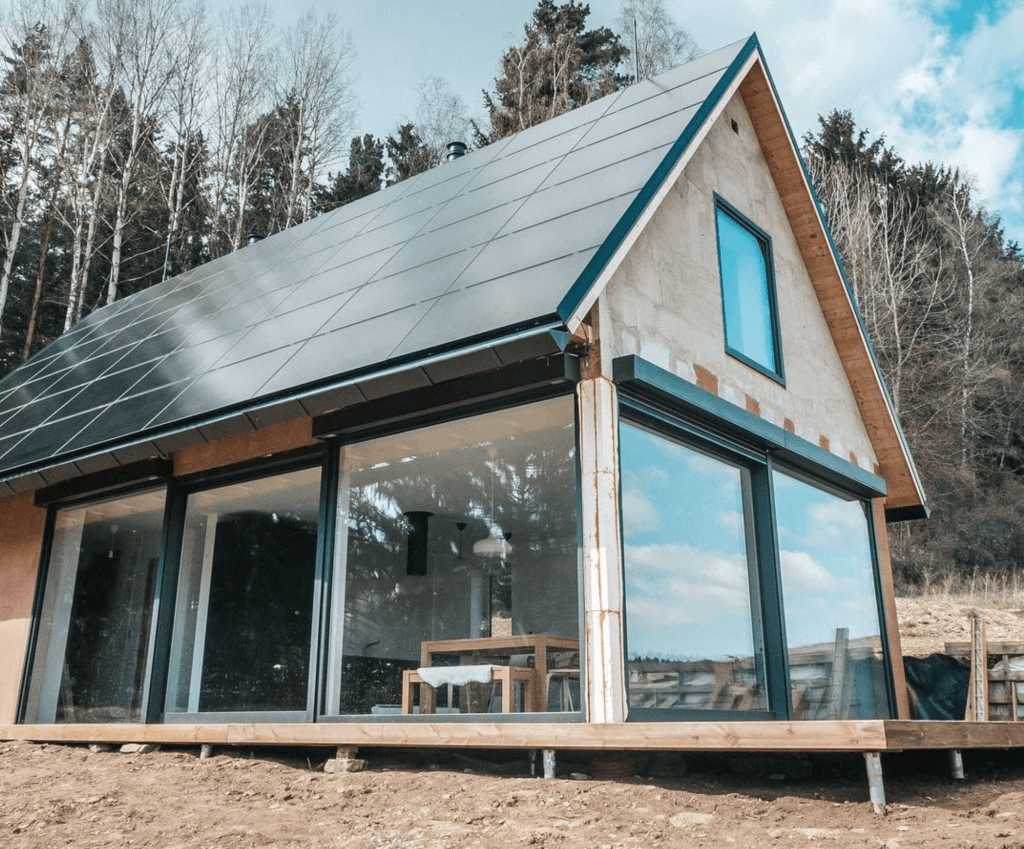
Sustainability is being addressed increasingly, and an interesting source of inspiration for taking housing self-sufficiency to a higher level is the Czech self-sufficient house project. Its aim is to show the public how to achieve maximum energy independence while also helping them build their own such house. The project’s creators plan to make all documentation for their off-grid house available free of charge.
Does it make sense?
At first glance, a fully self-sufficient house may seem unnecessary and unnecessarily expensive in Czech conditions. However, it is necessary to acknowledge that utility networks are not always available on a building plot. Building an electricity connection and other utility infrastructure can become a very costly undertaking. Moreover, due to the shortage of building plots and high demand, plots without utility connections are becoming an interesting alternative despite the higher cost of a self-sufficient building compared with a conventional house.
The upfront investment in technologies ensuring a house’s self-sufficiency is substantial, but subsidy schemes can bring the investment payback period down to a relatively short timeframe. The New Green Savings subsidy programme includes schemes for various measures that improve a house’s energy efficiency. These include, for example, photovoltaic power plants with electricity storage, heat-pump heating and home insulation.
What the Czech self-sufficient house can do
The self-sufficient house can do the following:
- Generate and store electricity for its own consumption and for charging an electric vehicle
- Generate, capture and recover sufficient heat for the entire house, ensuring thermal comfort for residents thanks to advanced heat management and high-quality insulation
- Capture, treat and use rainwater for flushing, watering and showering
- Use only a borehole well, rainwater and a wastewater treatment plant for all water management
The main advantages of such a house are:
- Independence from heat energy supplies
- Independence from electricity supplies; for most of the year, the photovoltaic power plant easily covers consumption. In winter, if there is insufficient sunshine, a 0.9 kW Stirling engine generator helps out
- Independence from water supplies. Rainwater replaces valuable drinking water in many uses, such as flushing, showering, watering and similar applications
- Lower greenhouse gas emissions. The house does not consume any fossil fuels. However, initial emissions from manufacturing the house’s technological equipment must not be overlooked; these are one-off emissions and do not increase over its lifetime, unlike in a conventional house that draws energy from external sources
- The ability to save money by being exempt from fixed and other charges paid to distribution companies for energy and services consumed. The savings arise immediately and offset the cost of the advanced technological equipment
The project is only just getting underway
The Czech self-sufficient house has already been operating for some time and is beginning to provide valuable data.
In the following instalments, we will look at the specific technologies used and the experience the creators have gained in building and operating this unique house.
Translation disclaimer
This article is a machine translation of the Czech original and has not yet been fully reviewed. In case of any doubt, please refer to the Czech version.
Sdílejte článek prostřednictvím:
You might also like
23 October 2026, 11:01
23 October 2026, 06:34