
23 October 2026, 14:38
Loading...
German transmission system operators are flooded with requests to connect batteries

Eduard Majling
31 October 2024, 06:32
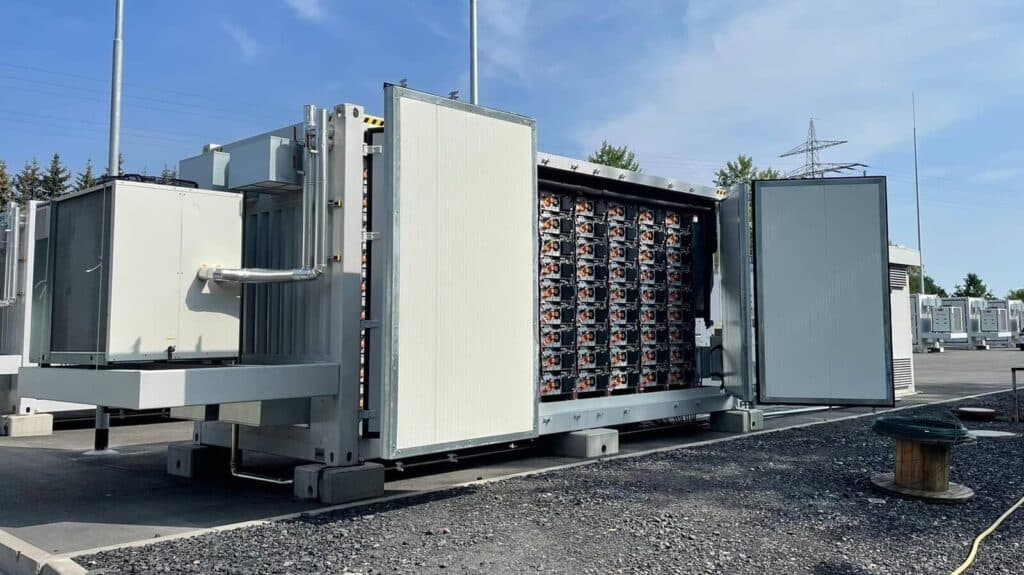
German transmission system operators have reported a sharp increase in requests to connect battery storage systems over the past two years. In addition to providing ancillary services to stabilise the grid, battery storage systems can also help stabilise electricity prices on short-term markets. Day-ahead electricity prices in Germany have fallen to zero or even negative levels hundreds of times this year.
The market for battery storage in Germany is still in its infancy when it comes to large-scale battery storage systems. According to data from the technical university in Aachen, their installed capacity currently stands at just 1.4 GW, the Montel news website reported. The volume of connection requests currently on record is enormous, at 161 GW.
"The first requests came in 2022, and we saw a sharp increase in 2024," said Joana Niggemann, spokesperson for Amprion, the transmission system operator in the southwest of the country."Since 2023, we can speak of a real boom, which intensified further in 2024," Kathrin Egger, spokesperson for Transnet, the transmission system operator in the south of the country, said, according to the website.
It is not yet clear how many of these potential battery storage systems will actually be built and connected to the German grid. The grid operators themselves say that it will not be possible to connect all of them, due to technical constraints. Amprion said it could theoretically connect 70 to 80% of the 36 GW requested in its part of the grid.
"For most of the requests, it is too early to say whether they will actually be carried out," Egger said.
However, large battery storage systems do not necessarily have to be connected directly to transmission grids. Around 900 German distribution grids could offer additional connection capacity.
Growing share of renewables drives battery storage development
The recent sharp increase in requests to connect large battery storage systems has gone hand in hand with the continued development of renewable energy sources. Their growing share in the energy mix, coupled with the phase-out of conventional nuclear and fossil-fuel power sources in Germany, is leading to greater price volatility. This is one of the conditions needed to ensure returns on battery storage projects connected directly to the grid.
Like other European countries, Germany is seeing a sharp increase this year in the number of hours with zero or negative electricity prices on the day-ahead market. While there were more than 300 such hours over the whole of last year, the number has already risen to nearly 500 this year.
Translation disclaimer
This article is a machine translation of the Czech original and has not yet been fully reviewed. In case of any doubt, please refer to the Czech version.
Sdílejte článek prostřednictvím:
You might also like


23 October 2026, 11:01


23 October 2026, 06:34