
23 October 2026, 14:38
Loading...
Historic milestone: More than 100 GW of new battery storage commissioned for the first time in 2025

Jan Budín
25 May 2026, 08:20
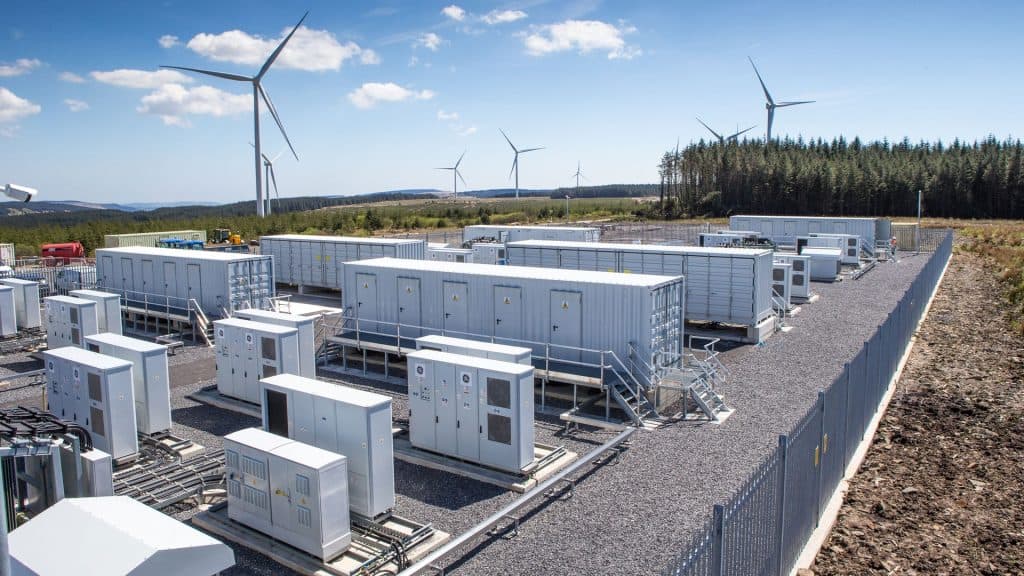
The global battery storage boom continued in 2025, when the threshold of 100 GW of newly commissioned installed capacity was surpassed for the first time. According to an analysis by researchers at BloombergNEF (BNEF), more than half of the new capacity was commissioned in China, followed by the United States with a 16% share.
Newly commissioned battery storage capacity reached 112 GW last year, representing year-on-year growth of 48%. The capacity of newly commissioned storage facilities amounted to 307 GWh.
According to BNEF researchers, the pace of battery system deployment has surpassed the historical pace of solar and wind power development. It took batteries only four years to increase annual additions from 10 GW to 100 GW. For solar power plants, this took eight years, and for wind power plants 15 years.

Newly commissioned installed capacity of battery storage. Source: BNEF
As in solar and wind energy, China also dominates the battery storage sector, accounting for a 54% share of newly commissioned capacity last year. The United States was the second-largest market, with a 16% share. According to BNEF, Australia also merits attention, as newly added capacity there rose almost sixfold year on year.
"Annual additions of battery storage capacity are slowly catching up with solar power plants. For every 6 MW of new solar capacity in 2025, there was 1 MW of new battery capacity. This represents sharp growth compared with 2016, when 1 MW of battery storage corresponded to 56 MW of new solar capacity," BNEF said, adding that it expects the ratio to fall to 4:1 in 2026 due to accelerating growth in battery storage and slowing growth in solar power plants.
BNEF expects the battery storage market to continue growing over the next 10 years, with annual capacity additions exceeding 300 GW by 2036. The outlook is based on the assumption of declining battery storage acquisition costs, a growing share of renewable energy sources and emerging requirements to install battery storage alongside new solar or wind power plants. Emerging applications, such as the use of batteries in data centres and electric vehicle charging infrastructure, are also expected to help.
“Investment in battery storage is not just about reducing costs – it is a strategic decision that enables companies to protect themselves against outages, stabilise cash flow and gain new revenue streams from the flexibility market,” says Patrik Pinkoš of Wattstor, commenting on the battery storage market.
Translation disclaimer
This article is a machine translation of the Czech original and has not yet been fully reviewed. In case of any doubt, please refer to the Czech version.
Sdílejte článek prostřednictvím:
You might also like

23 October 2026, 11:01

23 October 2026, 06:34