How safe is a home battery? LUNA2000 S1 passes extreme-situation tests and receives TÜV Rheinland's top rating
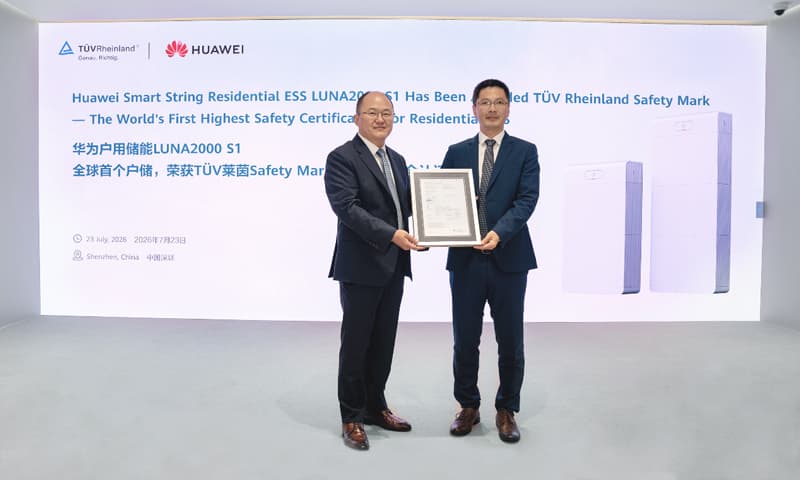
Households primarily acquire battery storage to increase the use of their own solar generation, reduce electricity consumption from the grid or provide backup power. Alongside capacity, output and investment economics, however, a parameter that is barely noticeable in normal operation is gaining importance: the system’s ability to respond safely to a technical fault or extraordinary event. This is precisely the area addressed by TÜV Rheinland’s Safety Mark assessment, the highest level of which has been awarded to Huawei’s LUNA2000 S1 residential battery storage system.
Huawei Digital Power and independent testing and certification organisation TÜV Rheinland completed safety testing of the LUNA2000 S1 system in July 2026. It thus became the very first residential storage system to receive the highest Safety Mark rating, known as Prime. The assessment is based on a three-tier classification that extends standard regulatory and technical requirements with tests of system behaviour in extreme situations.
Why meeting standards alone is not enough
Basic certifications confirm that a product meets the specified requirements for market entry and safe operation under defined conditions. For batteries, however, it is also important what happens in the event of a cell fault, insulation damage, an internal electric arc or exposure to high temperatures.
One of the main risks is so-called thermal runaway. This is a condition in which a battery cell begins to heat up uncontrollably, with the resulting heat further accelerating chemical reactions. From a design perspective, it is essential to prevent a problem in one cell from spreading to neighbouring cells and subsequently to the entire battery module.
TÜV Rheinland’s classification therefore distinguishes three levels. The Basic level covers fundamental safety requirements. In this part, LUNA2000 S1 passed, among other tests, UL 9540A:2025, which focuses on the fire and explosion behaviour of battery systems during thermal runaway. The system also meets the functional safety requirements of ISO 13849-1:2023, which also apply to redundant protection of critical safety functions.
The second level, Plus, imposes stricter requirements for mechanical, electrical, thermal and environmental resilience. It assesses, for example, the system’s ability to prevent a fire at the level of the entire battery pack. LUNA2000 S1 uses reinforced insulation protection and, according to the manufacturer, complies with the international IEC 62477-1 standard for the safety of power electronic systems. The aim is to reduce the risk of leakage currents and electric shock.
Twenty minutes of exposure to an external fire
The highest Prime level goes further still. It requires thermal runaway not to spread between cells and the system to protect people even during extreme events, including exposure to an external fire.
During testing, LUNA2000 S1 was exposed to an external fire for 20 minutes without exploding. Further tests included an internal electric arc and induced thermal runaway. According to the published results, the problem did not spread from the affected cell to other cells, and the tests concluded without fire, explosion or personal injury. The ability to contain a fault at its point of origin is one of the most important requirements of the highest certification level.
Safety as a property of the entire system
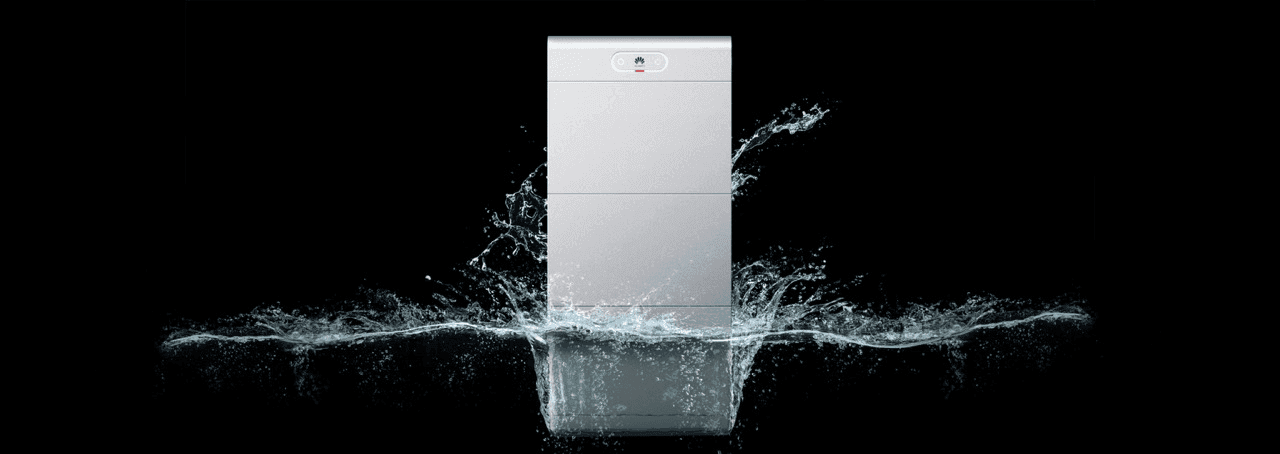
The safety of LUNA2000 S1 is based on five levels of protection: at the battery cell, electrical component, structural, active management and emergency mechanism levels. The system uses lithium iron phosphate (LiFePO4) cells and continuously responds to, for example, overcurrent, short circuits or abnormal voltage. Its IP66 rating protects the equipment against dust and powerful water jets, making the storage system suitable for both indoor and outdoor installation.
Modular design for changing consumption
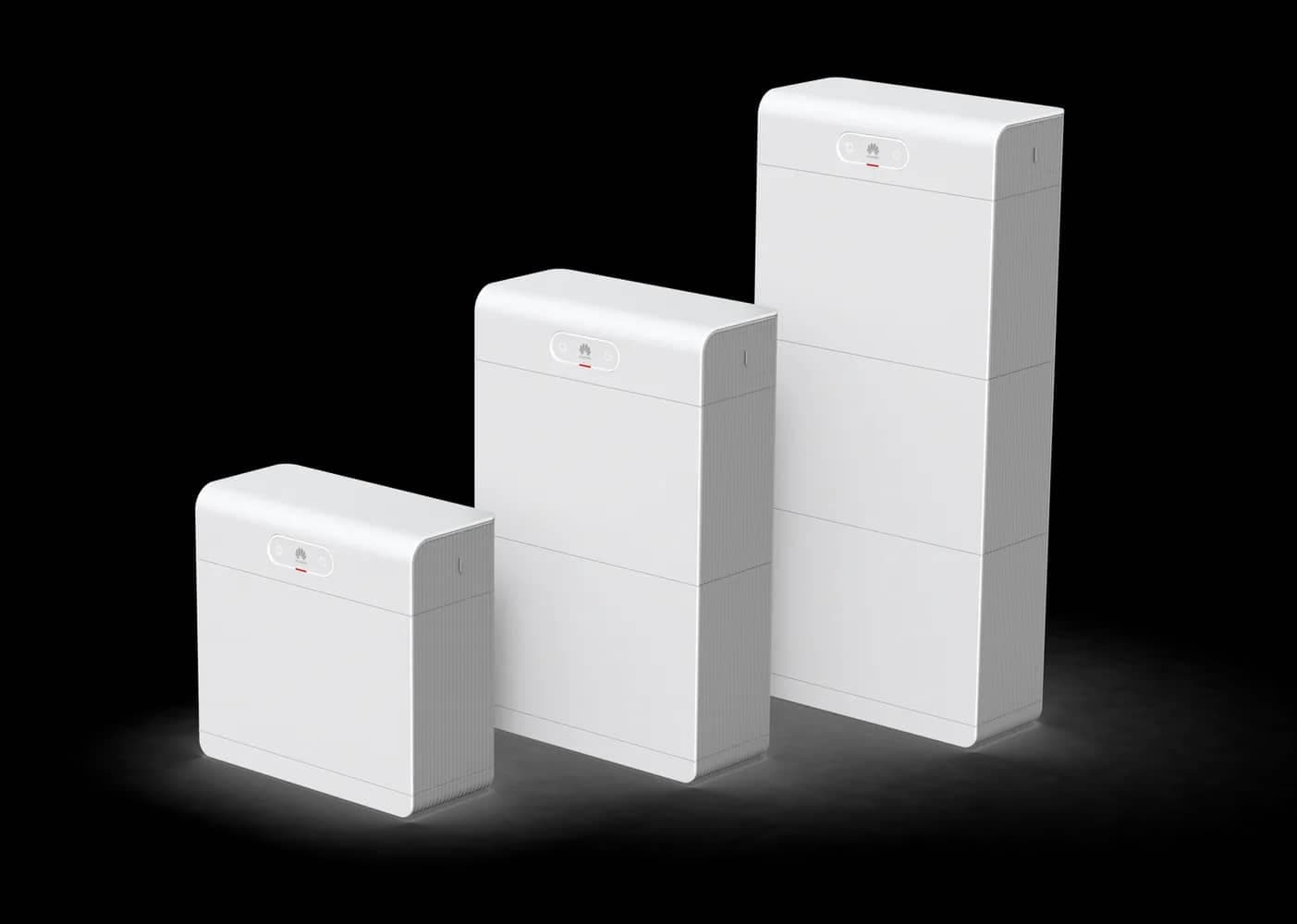
The system uses Module+ architecture, in which each battery module has its own energy optimiser. Modules with usable energy of 5 and 6.9 kWh are available, allowing nine configurations in a single tower: from 5 to 20.7 kWh. Capacity can be expanded later, for example when acquiring an electric vehicle, heat pump or expanding a solar power plant. Huawei’s internal tests show that independent control of individual modules can increase the amount of energy usable over the system’s lifetime by up to 40%.
Depending on the number of modules, maximum charging and discharging output reaches 3.5, 7 or 10.5 kW. The system operates at temperatures from −20 to +55 °C, at altitudes of up to 4,000 metres and at relative humidity of 5 to 95%. It uses natural fanless cooling, and its declared noise level is below 29 dB. The datasheet also specifies a 100% depth of discharge.
What certification means in practice
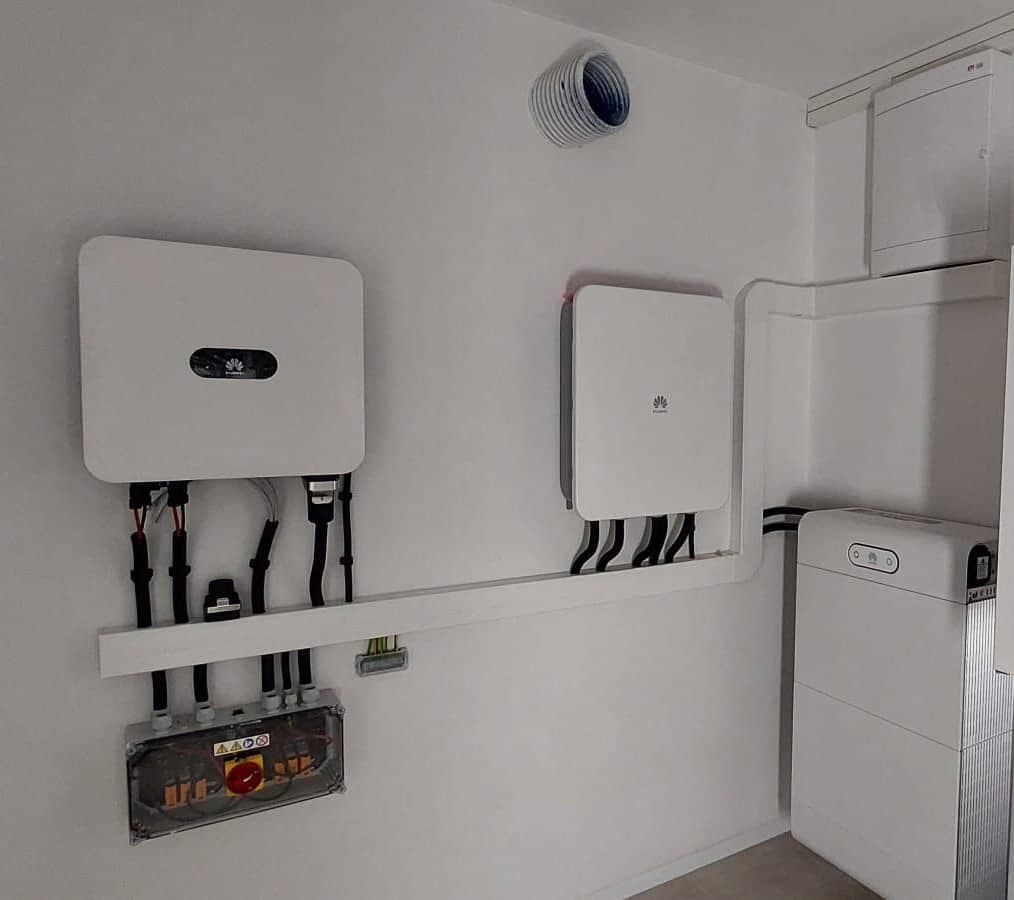
Safety certification alone does not replace proper design, professional installation or regular system inspections. The resulting safety of home storage also depends on appropriate placement, cable sizing and protection, compatibility with the inverter, the quality of commissioning and correct software configuration. Customers should therefore assess not only the battery brand and capacity, but the entire chain from design through installation to subsequent servicing.
The highest Safety Mark rating, however, provides independently verified information on how a specific system behaves in situations beyond normal operation. Tests involving an external fire, internal electric arc and thermal runaway propagation show whether the design can localise a fault and prevent it from cascading. The ability to contain an incident to a single cell may be more important for a home installation than marginal differences in nominal capacity or maximum output.
TÜV Rheinland’s new classification also indicates the direction of the sector’s further development: from verifying minimum compliance with technical standards to more detailed assessment of the entire system under real-world and extreme scenarios. For manufacturers, this means greater emphasis on design, functional safety and the ability to prevent fault propagation. For customers, designers and installation companies, it provides a clearer basis for comparing solutions in which long-term operational safety plays a decisive role alongside economics and performance.
Translation disclaimer
This article is a machine translation of the Czech original and has not yet been fully reviewed. In case of any doubt, please refer to the Czech version.