23 October 2026, 14:38
Loading...
Turning point: Global battery storage capacity surpasses pumped-storage hydropower

Jakub Malý
9 February 2026, 13:42
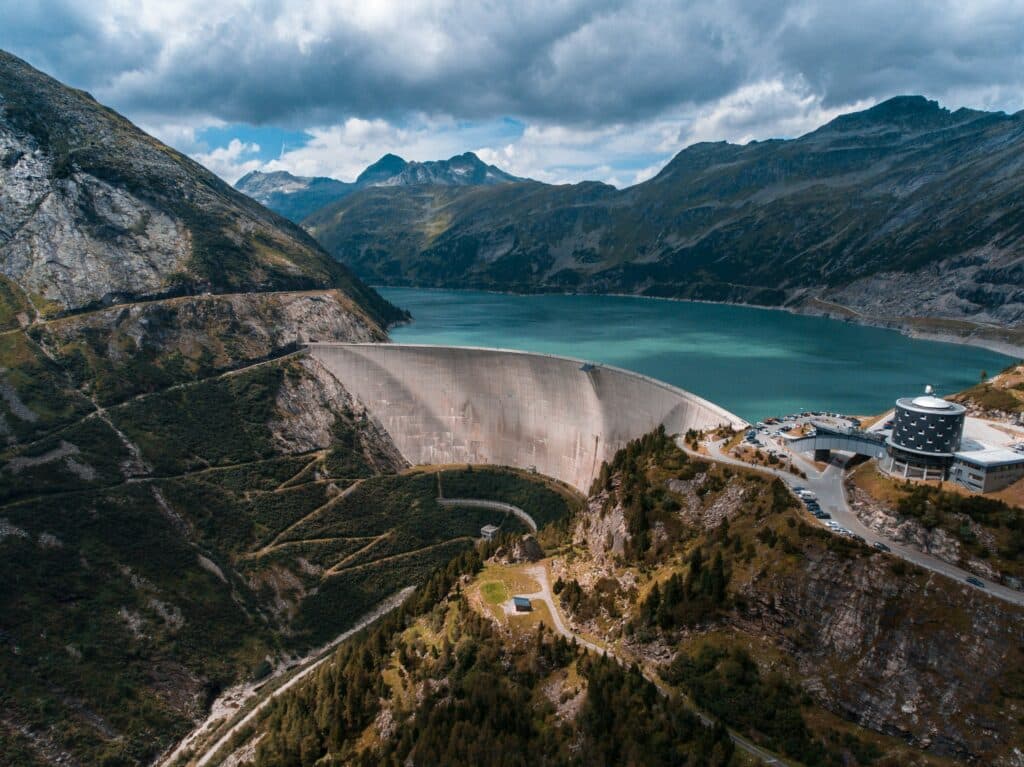
2025 marks an important symbolic turning point in energy storage. According to data from BloombergNEF and the 2025 World Hydropower Outlook published by the International Hydropower Association, global installed capacity of battery systems reached around 257 GW, while global installed capacity of pumped-storage hydropower plants stood at approximately 202 GW. Battery storage has thus surpassed, for the first time in terms of installed capacity, a technology that has dominated large-scale storage in power systems for decades.
This development is often interpreted as evidence of a rapid technological shift in favour of batteries. From a technical perspective, however, these figures need to be read with some caution. The comparison is made at the level of installed capacity (GW), rather than storage capacity (GWh), which is crucial for assessing actual energy storage capability.
The typical discharge duration of battery storage systems today is most often between one and four hours, whereas pumped-storage hydropower plants can supply energy for dozens of hours, in some cases even over multi-day cycles. From the perspective of system balance, pumped-storage hydropower therefore remains the most important source of long-duration energy storage.
Hydropower context and the role of pumped storage in a changing system
World Hydropower Outlook 2025 confirms that hydropower as a whole remains the world's largest renewable source of electricity, with installed capacity exceeding 1,440 GW and annual generation of around 4,600 TWh. In 2024 alone, approximately 24.6 GW of new hydropower capacity was commissioned globally, of which roughly one-third was pumped-storage hydropower. Total installed pumped-storage capacity is therefore continuing to rise modestly, although the pace of its development is significantly slower than that of battery systems.
The main reason for the differing pace is not the technical obsolescence of pumped storage, but a combination of geographical, environmental and permitting constraints. Building pumped-storage plants is capital-intensive, time-consuming and, in Europe, often encounters land-use planning and landscape protection restrictions. Battery storage, by contrast, benefits from modularity, short delivery times and the possibility of installation virtually anywhere on the grid, including close to demand or generation.
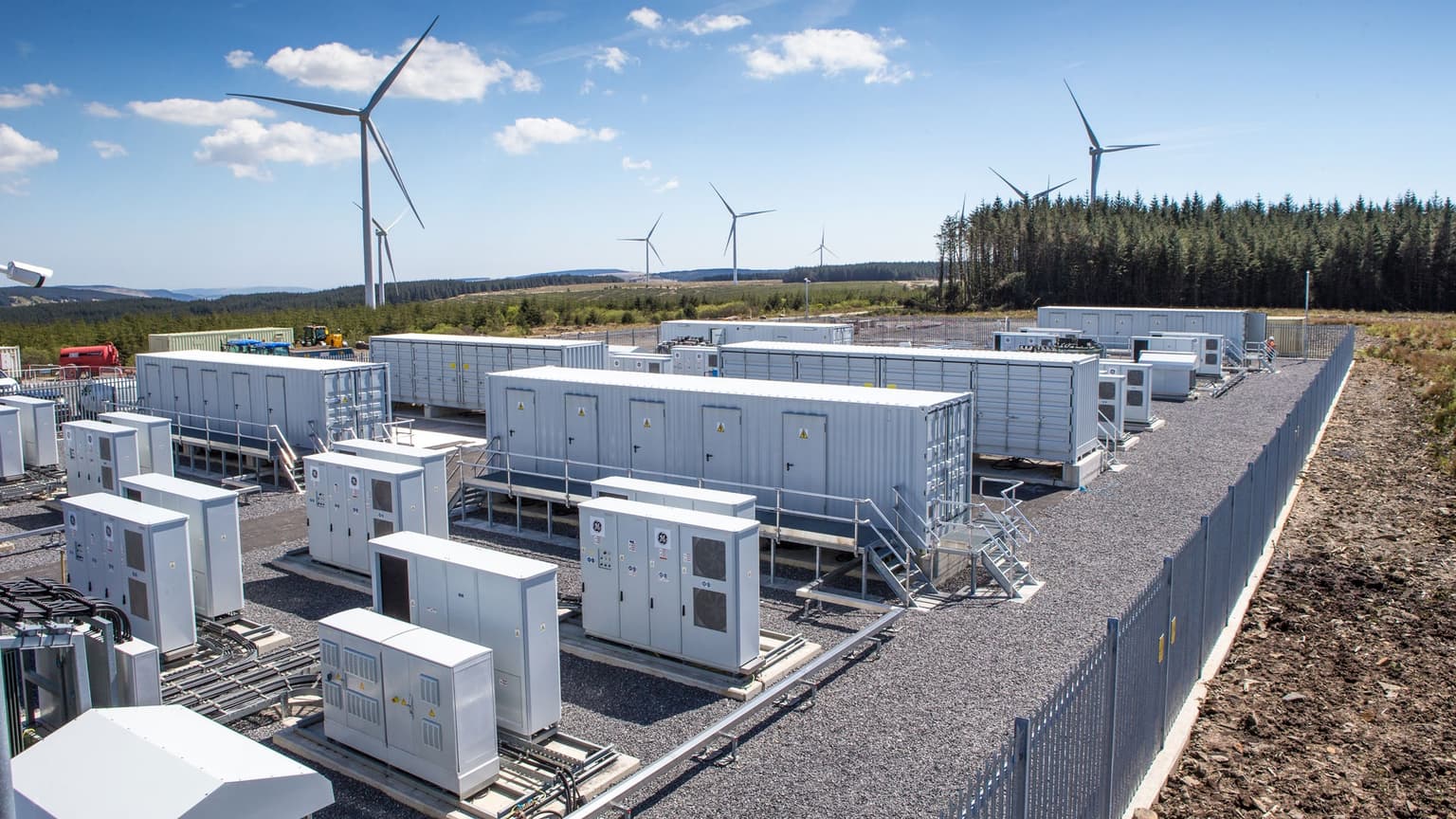
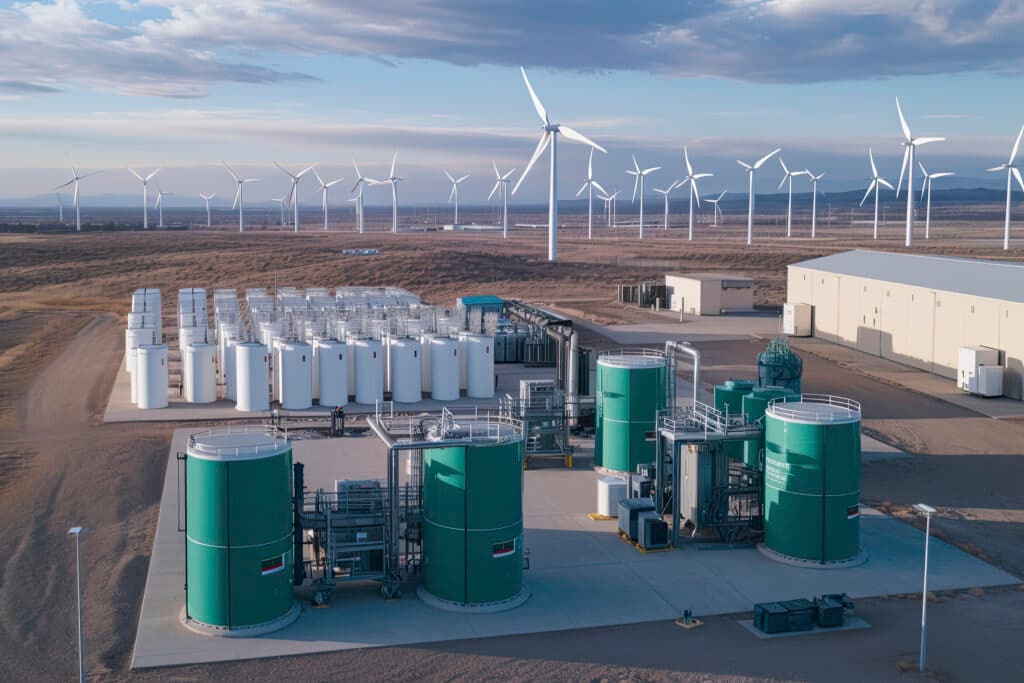
Wind power plant with battery storage. Source: Vattenfall
Current developments therefore do not mean that batteries are replacing pumped-storage hydropower plants, but rather that their roles are gradually becoming more specialised. Battery storage is becoming the dominant tool for short-term flexibility, rapid power regulation, the provision of ancillary services and local optimisation of grids with a high share of solar and wind power. Pumped storage, by contrast, remains a key element of long-duration storage, capable of balancing larger and longer-lasting mismatches between generation and consumption, with high operational reliability and a service life measured in decades.
From the perspective of the future design of power systems, including in Czechia and Central Europe, this trend is crucial. Data from 2025 clearly show that the energy transition will not rely on a single storage technology. Instead, a hybrid model is emerging, combining the rapid flexibility of battery systems with the robust long-term stability of pumped-storage hydropower plants and, gradually, with new long-duration storage technologies. The ability to combine these tools appropriately will be one of the key prerequisites for the secure operation of power systems with a high share of variable renewable energy sources.
Translation disclaimer
This article is a machine translation of the Czech original and has not yet been fully reviewed. In case of any doubt, please refer to the Czech version.
Sdílejte článek prostřednictvím:
You might also like
23 October 2026, 11:01
23 October 2026, 06:34