25 September 2026, 09:51
Loading...
Alan Svoboda: New emissions standards will cause sudden shutdown of system-critical Czech power plants

David Vobořil
6 April 2018, 08:32
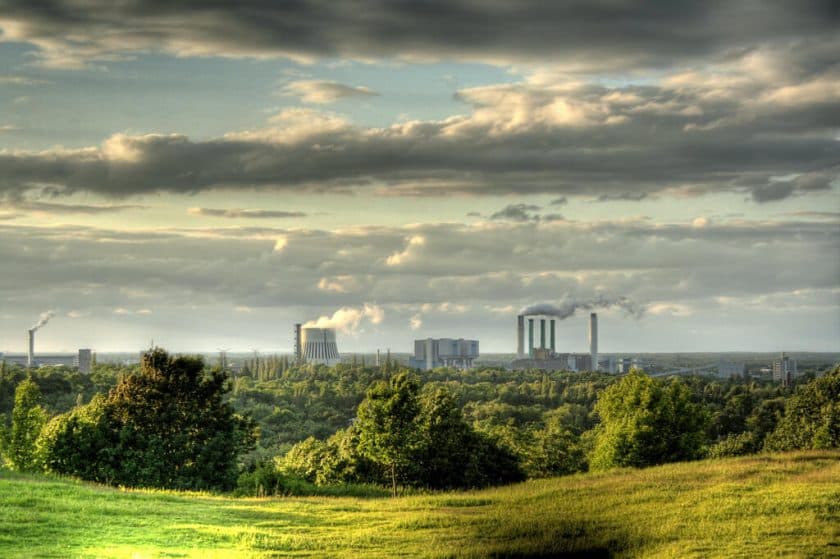
Alan Svoboda, CEO of international holding company Seven Energy, said two weeks ago that if the European Union’s new emissions standards for large combustion plants (Large Combustion Plants BAT reference documents – LCP BREF), which are due to take effect in 2021, remain in their current form, this will mean the shutdown of a large number of thermal power plants critical to the system „on a single day“.
Seven’s generation director, Luboš Pavlas, said the company supported Euracoal’s objection to the revised air quality standards. In November last year, Euracoal, together with several German operators of lignite mines and lignite-fired power plants, including Leag, owned by EPH, filed a lawsuit against the revised LCP BREF standards for nitrogen oxides and mercury.
The Czech Republic opposed stricter limits for nitrogen oxides, sulphur dioxide, particulate matter and mercury in the final vote on the revised standards.
„The limits for nitrogen oxides and mercury are too ambitious. We have no objections regarding sulphur or particulates. It is also a question of how the government will implement the decision. The technologies are available, but they are very expensive. That is why we are joining Euracoal in calling for the NOx and mercury limits to be eased,“ Pavlas said.
Svoboda added that the regulation was not designed to shut down coal-fired power plants „by brute force on a single day“.
„BREF should ensure that everything newly built has the best possible parameters, while ensuring that assets are modernised at reasonable cost. This philosophy is sound. But turning it into a weapon against coal by advocates of alternative sources would be wrong; it would take a large number of system-critical power plants out of service, including plants in Germany,“ Svoboda said.
NOx limit in particular threatens system-critical power plants
Particularly controversial is the limit on average annual NOx emissions of 175 mg/m³ for coal-fired power plants with a thermal input of 300 MW and above, with fluidised-bed boilers commissioned before 7 January 2014 or pulverised-fuel boilers burning lignite. This standard will likely require the installation of equipment to reduce NOx content in flue gas at a number of lignite-fired power plants.
The most threatened plants are in Central and Eastern Europe, where around 25 GW of installed lignite-fired capacity exceeds the NOx limits. In Germany, an estimated 10 GW of installed lignite-fired capacity does not have NOx emissions control equipment, of which 2.8 GW will be transferred to the lignite reserve.
Svoboda said thermal power plants still play an essential role in grid stability, especially in southern Germany, but also in the UK, Italy, Benelux and Spain, markets which Seven is targeting under its acquisition strategy for coal- and gas-fired power plants.
„It is essential to distinguish between various NGOs and opinion-makers, who often speak about the energy system without much knowledge, and the people responsible for energy systems. Their view is very different. They see that conventional power plants are needed and will have to be kept in the system. Look at Germany’s costs for redispatching and reserve capacity. They are growing exponentially; last year they exceeded EUR 1 billion. Costs will only continue to rise if further power plants are shut down,“ Svoboda said.
Seven’s strategy differs from that of most European players
Owners of conventional assets are meanwhile splitting up, selling or closing facilities, as their strategies move towards decarbonisation and renewable energy sources.
„The combination of both [conventional and renewable sources] does not appear viable for a number of energy companies. It is a strategic decision to reduce complexity and focus on one category of assets. Most are opting for renewable energy sources; I understand why that is so attractive, but on the other hand there is the role of consolidator of conventional assets,“ Svoboda said.
Seven Group now hopes to emulate the strategy of rival holding company EPH, whose majority owner became Daniel Křetínský last year. By acquiring conventional assets, EPH is entering an area that most European companies are leaving. An example is its purchase of German lignite assets from Sweden’s Vattenfall.
„This is not a strategy forever, but as long as these assets are needed in the system, we believe there is a way to make use of them,“ Svoboda said.
„I admit it is opportunistic; there is no way this category of assets can deliver a return on its original investment costs. Those times are over. But if the power plants are needed, there will be a way to cover operating costs, as well as periods of volatility when a higher margin can be achieved,“ he said.
In addition to coal-fired power plants, Seven is also focusing on peaking gas-fired power plants, biomass power plants and combined heat and power sources.
Featured photo: Chvaletice power plant, author: Martin Vonka
Translation disclaimer
This article is a machine translation of the Czech original and has not yet been fully reviewed. In case of any doubt, please refer to the Czech version.
Sdílejte článek prostřednictvím:
You might also like
24 September 2026, 11:23
24 September 2026, 10:30
24 September 2026, 06:56