
28 October 2026, 15:10
Loading...
Brussels accelerates energy transition: New rules for auctions and renewable energy acceleration areas
Veronika Jurcová
21 May 2024, 06:53
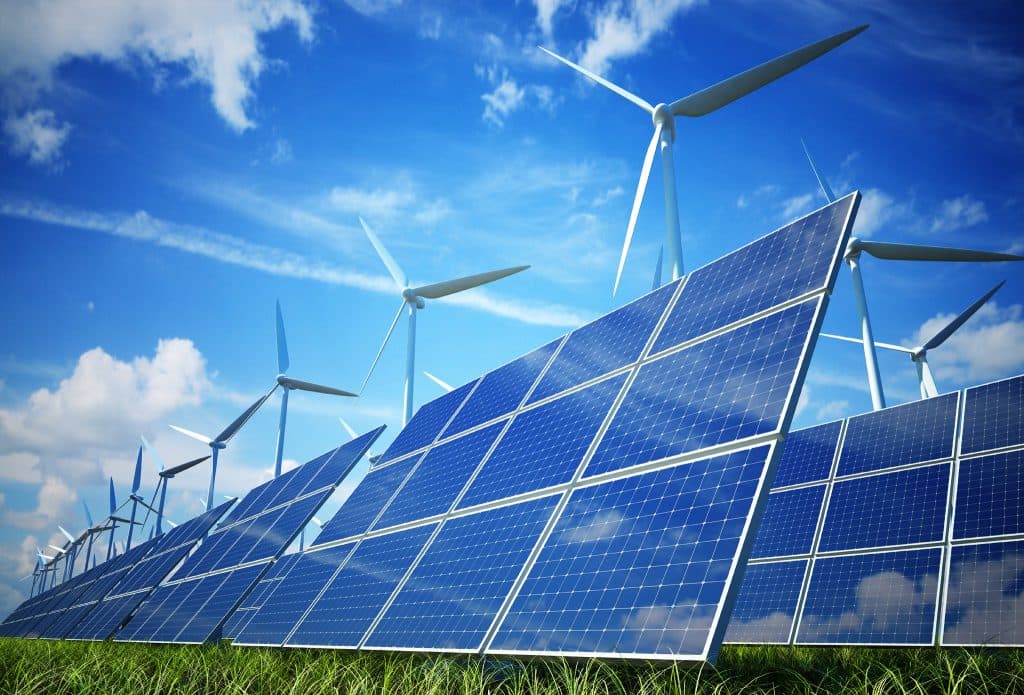
Almost two years after the adoption of the REPowerEU plan, the European Commission is providing additional support to member states to accelerate the development of renewable energy sources. The Commission has adopted a series of new and updated recommendations to improve and streamline permitting procedures and auctions Euractiv reports. The development of acceleration areas for renewable energy projects is now getting underway in Czechia, too.
Renewables zones – faster and simpler permitting
The REPowerEU plan, presented in May 2022, aims to end Europe’s dependence on Russian fossil fuels by 2028 in response to Russia’s invasion of Ukraine. The plan includes diversifying import routes, as well as ambitious targets for biogas and hydrogen, alongside more pragmatic targets for renewable energy and energy savings.
One measure to accelerate this process is the introduction of renewable energy source (RES) zones, where all permitting procedures will be fast-tracked. Under the revised Renewable Energy Directive (RED III), national authorities have 12 months to approve or reject new solar and wind power plants in so-called “go-to zones”. Outside these zones, the process should take no longer than 24 months.
The Commission is now providing new guidance for EU member states on how to select areas where wind and solar projects can be deployed quickly. Each country must designate at least one such site by February 2026. The updated permitting guidance includes examples of best practices for granting permits more quickly and simply.
These areas are selected so that the deployment of RES projects does not have a significant environmental impact, allowing for accelerated procedures and the rapid deployment of specific technologies. Key to selecting these areas is the use of digital planning and mapping tools, along with the availability of data on potential RES capacity and potential environmental impacts.
Czechia approves development of acceleration areas
As part of the implementation of RED III, the Czech government approved a procedure on 24 April 2024 for designating acceleration areas for renewable energy projects. In these zones, it will be possible to obtain a building permit for large photovoltaic or wind power plants within 12 months.
Faster permitting in acceleration areas will include, for example, simplified environmental impact assessments. These areas will typically be designated in industrial zones, so-called brownfields, or at former mining sites, while they will be prohibited in Natura 2000 sites, national parks, and the first and second zones of protected landscape areas.
"We are mapping the Czech landscape using around 60 different constraint maps to ensure compliance with nature and landscape protection, the Czech Republic’s spatial development policy, transport infrastructure projects and other constraints," said Environment Minister Petr Hladík.
The aim is to facilitate the construction of large RES projects, which currently account for around 19 percent of gross final energy consumption, with a plan to increase this share to at least 30 percent.
Improved auction design
The Commission is also providing national governments with a set of recommendations on how best to use non-price criteria in auctions for RES support. More than half of renewable energy capacity is built through regular government tenders, which play a key role in the deployment of renewable energy when well designed.
After years of requests from European industry, which is seeking to compete with lower-cost suppliers from outside Europe on price alone, EU countries can now include these non-price criteria in their auctions. Alongside price, they can also include criteria such as quality, the ability to deliver a project on time, responsible business conduct, cybersecurity, data protection, contribution to resilience, environmental sustainability, and innovation. This means that companies with more resilient supply chains will also receive preferential treatment.
“With today’s initiative, we are helping European businesses accelerate their investment in renewable energy and increase its deployment across Europe. By introducing non-price criteria in auctions, we are giving our industry the chance to prosper at home and compete on a level playing field,”said Maroš Šefčovič, Executive Vice-President for the European Green Deal.
The Commission has also updated the Union Renewable Energy Development Platform, an online system where member states will publish basic information about their auctions. This information should include the timing and frequency of auctions, the RES capacity offered, the planned budget and eligible technologies, as required by the Renewable Energy Directive. The platform will provide companies with a single information point for all renewable energy auctions planned across the EU.
Translation disclaimer
This article is a machine translation of the Czech original and has not yet been fully reviewed. In case of any doubt, please refer to the Czech version.
Sdílejte článek prostřednictvím:
You might also like

28 October 2026, 13:08

28 October 2026, 11:10

28 October 2026, 09:08
