
23 October 2026, 14:38
Loading...
Czech energy association: Current EU rules disadvantage nuclear and gas and must change

oEnergetice.cz, ČTK
6 March 2026, 10:52
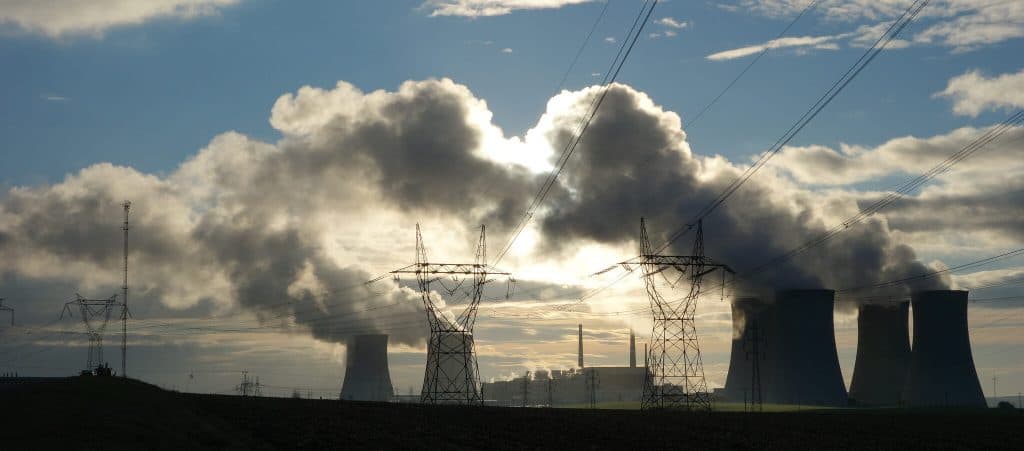
The current EU rules governing energy sources threaten a safe transition to cleaner energy sources, according to Czech energy companies. They say the so-called taxonomy disadvantages nuclear power and natural gas by setting conditions that cannot be met. The companies say this deters investors from key projects. The Czech News Agency (ČTK) was told this today by the Czech Energy Association. It is therefore calling for a revision of the rules.
According to the association, the current rules complicate the planned shift away from coal without jeopardising electricity supply security or grid stability. In this context, it drew particular attention to the classification of nuclear energy as a temporary source and the unrealistic deadlines for gas-fired power plants.
"While the announcement by the Sev.en group is accelerating the closure of coal-fired power plants in Czechia, their low-emission replacements in the form of new gas-fired and nuclear sources are still only at the planning stage. One of the main obstacles to implementing these projects is the current form of the taxonomy, which ignores legislative deadlines, economic realities and market capacity. We want to negotiate with the European Commission to update the taxonomy conditions so that financing can be secured for new nuclear units and gas-fired power plants," said Josef Kotrba, executive director of the Czech Energy Association.
Blahoslav Němeček, a member of innogy’s board of directors, also confirmed that the taxonomy requirements were complicating planned investments. "Probably no investor would take on the risks of tight deadlines, successive changes to the conditions and, ultimately, investments that are highly uncertain or even loss-making," he said.
In the case of gas, which under Czech plans is expected to serve as a transitional source at least until new nuclear units are built, the association wants to change in particular the 2030 deadline for obtaining building permits for new sources and the 2035 deadline for fully replacing natural gas with low-emission alternatives such as hydrogen or biomethane.
"The current deadlines are impossible to meet, given the length of permitting processes and the realistic availability of component supplies. These are facts that investors cannot influence, just as they cannot influence the availability of hydrogen and biomethane in the quantities needed. Until the market has developed sufficiently in these areas, the use of natural gas is unavoidable," Kotrba explained.
For nuclear energy, which according to government plans should be a key source in the Czech energy mix, the association wants to secure either its permanent classification as a sustainable investment or a 20-year extension of the current deadlines. The rules currently set 2040 as the deadline for drawing up a plan to bring a deep geological repository for nuclear waste into operation, and 2045 for obtaining a building permit and securing financing.
The current rules are also disadvantageous for the Czech Republic, according to Michal Macenauer, strategy director at consultancy EGU. "The taxonomy completely disregards its declared technological neutrality, ostracises nuclear energy and proposes deadlines—for example, for replacing natural gas with hydrogen—that are at the very least absurd, if not outright laughable. It was clear from the outset that this classification would have to be changed or scrapped altogether," Macenauer said.
Industry and Trade Minister Karel Havlíček (ANO) recently also announced efforts to change the EU taxonomy. He said nuclear power must be considered a long-term source in the future.
Translation disclaimer
This article is a machine translation of the Czech original and has not yet been fully reviewed. In case of any doubt, please refer to the Czech version.
Sdílejte článek prostřednictvím:
You might also like


23 October 2026, 11:01


23 October 2026, 06:34