
23 October 2026, 14:38
Loading...
Industry pushes for faster recognition of low-carbon nuclear hydrogen in Czechia
Veronika Jurcová
25 November 2024, 10:41
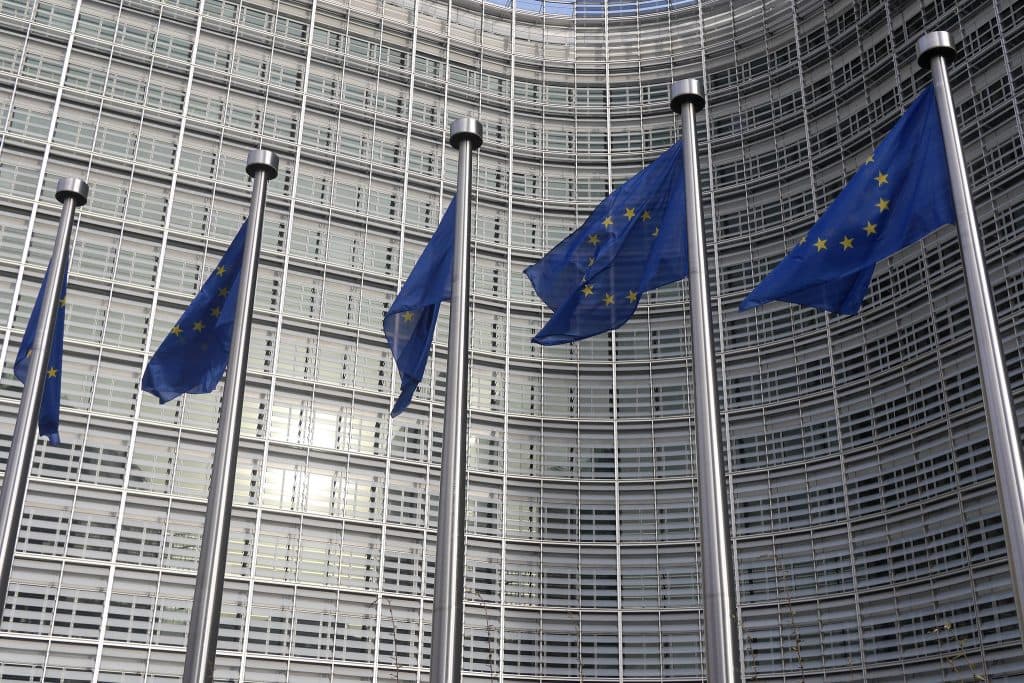
At the end of September, the European Commission presented a draft legal act defining the criteria for classifying hydrogen as “low-carbon” and including an assessment of emissions across its entire life cycle. However, the proposal postpones a decision on whether hydrogen from nuclear energy qualifies until 2028, prompting criticism from industry, which is calling for the process to be accelerated to support investment and meet the EU’s climate targets for 2030, reports Euractiv.
At the end of September, the European Commission published for public consultation a draft legal document, known as a “delegated act”, setting out the criteria for officially classifying hydrogen as “low-carbon”.
The act is part of the updated EU legal framework for the hydrogen and gas markets, adopted over the summer. It defines low-carbon hydrogen fuels as those that achieve at least 70% CO2 emissions savings compared with fossil fuels.
The European Commission said the proposal, published on 27 September, complements the existing rules for renewable hydrogen and introduces a life-cycle assessment approach to evaluating overall greenhouse gas emissions savings. Under the proposal, the methodology for calculating greenhouse gas emissions from low-carbon fuels must include emissions across the entire life cycle and indirect emissions associated with the use of inputs in their production, as well as methane emissions and the effective carbon capture rate.
The proposal has drawn criticism from nuclear energy advocates because it postpones until 1 July 2028 a decision on whether hydrogen produced exclusively using nuclear energy can be considered low-carbon.
This also affects the Czech Republic, whose updated hydrogen strategy envisages using surplus electricity from both renewable sources and nuclear power to produce hydrogen.
Hydrogen produced using nuclear energy would require producers to sign an energy supply contract, known as a “nuclear PPA” (Power Purchase Agreement), with a nuclear power provider.
A PPAis a long-term agreement for the direct sale of electricity between a producer (often a renewable energy producer, in this case a nuclear power generator) and a buyer (for example, a company purchasing electricity for its own consumption). It can be a physical PPA involving the delivery of electricity, or a virtual PPA that works as a financial instrument to hedge against price fluctuations. PPAs often support the construction of new energy sources by securing stable revenues and covering investment costs.
Industry pushes for an earlier deadline
Four sources from European industry and policymaking circles confirmed that the sector would welcome moving the review forward from 2028 to early 2026. They said this step is crucial to meeting the EU’s hydrogen production target for 2030.
“Such a measure would help prevent delays to key investment decisions for industrial projects dependent on low-carbon hydrogen,” one source told Euractiv.
Fortum, Finland’s largest energy producer, called for earlier recognition of nuclear PPAs in its response to the European Commission’s public consultation and proposed speeding up the process by launching the relevant study as early as 2025.
In France, for example, Gravithy, a company focused on producing “carbon-free” iron, expressed serious concerns about the proposed delay in making a decision.
“Europe will be nowhere near achieving its target of installing 40 GW of electrolyser capacity by 2030,” French electrolyser manufacturer McPhy also warned in its feedback on the consultation.
Antoine Bizet, EDF’s deputy director for European affairs, suggested that instead of waiting until 2028, the period could be used to establish a “regulatory sandbox” to allow nuclear PPAs to be tested and their benefits subsequently analysed.
A source from the energy sector in Brussels proposed an alternative approach. The Commission could keep the current timetable for the delegated act while ensuring that nuclear PPAs are recognised in 2025 or 2026 through another legislative instrument, such as the hydrogen strategy or a new clean industrial deal.
Legal uncertainty holds back investment
One of the key problems is a lack of legal certainty. The European Commission’s Directorate-General for Competition (DG COMP) may introduce additional criteria for hydrogen to qualify as low-carbon and be eligible for state aid.
“Legal uncertainty is seriously harming industry, especially at a time when a stable environment for its development needs to be created,” Antoine Bizet warned.
The European Commission plans to revisit the draft delegated act after the public consultation is completed and the new College of Commissioners is assembled. This could happen as early as 1 December, if the European Parliament approves the confidence vote on 27 November.
Translation disclaimer
This article is a machine translation of the Czech original and has not yet been fully reviewed. In case of any doubt, please refer to the Czech version.
Sdílejte článek prostřednictvím:
You might also like


23 October 2026, 11:01


23 October 2026, 06:34