
23 October 2026, 14:38
Loading...
Will the European Commission scrutinize Czechia's Dukovany project? Leading lawyers debated in Brno
oEnergetice.cz
28 July 2025, 09:51
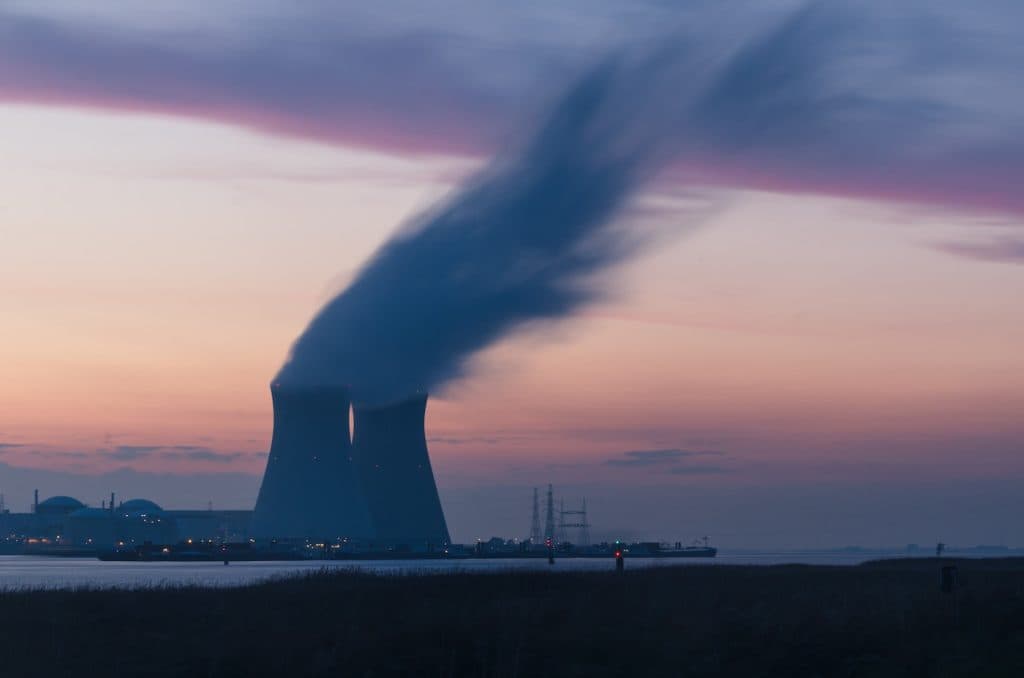
Faculty of Law at Masaryk University hosted the 2nd Energy Law Colloquium at its premises in June, opening an important debate on the future of nuclear energy in the European Union. The expert programme focused on key legal, economic and political issues accompanying the development of nuclear energy in the EU – including opportunities to finance new projects, the application of the Foreign Subsidies Regulation (FSR) and the legal framework for building and operating nuclear facilities. The discussions confirmed that nuclear energy remains a crucial issue in European energy policy – and that the law will play an important role in shaping it.
Václav Trejbal from the Ministry of Industry and Trade spoke at the colloquium, focusing on the changing status of nuclear power – from a technology that had long been controversial and often sidelined in European energy policy to today’s approach, which once again sees nuclear energy as a key tool for achieving climate goals and strengthening the Union’s energy security and technological sovereignty. He discussed in detail the inclusion of nuclear energy in the European taxonomy for sustainable finance and its recognition as a strategic technology under the Net-Zero Industry Act. He also outlined European Commission measures aimed at gradually ending dependence on supplies of Russian nuclear fuel and related services.
The colloquium’s first panel focused on Regulation (EU) 2022/2560 on foreign subsidies distorting the internal market (Foreign Subsidies Regulation – FSR). The issue is highly topical in Czechia amid the tender to build new units at Dukovany, in which the Czech government favored the bid by South Korean state-owned company KHNP over that of France’s EDF. EDF has long argued, however, that the unlimited guarantees offered by KHNP – covering any project cost overruns – would not be possible without backing from the South Korean state. The European Commission has therefore begun consultations with the Czech and South Korean sides, and a formal investigation into the Dukovany tender could be the next step.
Petr Solský from the Czech Office for the Protection of Competition explained the reasons for the regulation’s adoption, its main mechanisms, including notification obligations, and the European Commission’s powers. “The FSR was created to address a significant gap in legislation: while subsidies granted by EU member state governments to companies in the EU are strictly controlled under state aid rules (Article 107 TFEU), subsidies granted by governments in third countries had not been subject to oversight, creating an uneven playing field,” Solský explained.
The regulation defines the term “foreign subsidy” very broadly. “It covers any direct or indirect financial contribution from a public authority in a non-EU country that confers an advantage. This includes not only grants, but also interest-free loans, unlimited state guarantees, capital injections, debt forgiveness, special tax exemptions and even the provision of goods and services at below-market prices,” said the Czech competition authority’s vice-chairman.
The figures: if at least one bidder has EU turnover of 500 million euros or more and the participating companies have together received at least 50 million euros from non-EU countries over a three-year period, the parties must notify the European Commission for an investigation.
A bidder must also notify the Commission if it has received at least four million euros from a third country when the value of the public contract exceeds 250 million euros.
The regulation gives the European Commission very extensive powers. “In terms of legislative quality, the FSR is a robust tool. Failure to meet obligations under the regulation can result in fines of up to 10 percent of an entity’s global turnover. In addition, the Commission can prohibit participation in a procurement procedure or impose remedial measures. The FSR is therefore not only a monitoring tool, but also a punitive one. Its importance is likely to grow in the future as geopolitical tensions increase,” European law expert Jan Exner previously told Seznam Zprávy.
Veronika Křivánková (EP Industries and EP Group) outlined the regulation’s practical effects from a business perspective at the colloquium, focusing on questions raised by the FSR in the preparation and implementation of energy projects. Jan Kupčík (Schoenherr Attorneys at Law) discussed practical aspects of applying the FSR in the context of the planned construction of a new nuclear unit at Dukovany. The discussion highlighted that the FSR is not merely a new tool for protecting the internal market, but also a significant challenge to maintaining a predictable legal framework.
Translation disclaimer
This article is a machine translation of the Czech original and has not yet been fully reviewed. In case of any doubt, please refer to the Czech version.
Sdílejte článek prostřednictvím:
You might also like


23 October 2026, 11:01


23 October 2026, 06:34