
23 October 2026, 14:38
Loading...
Capacity payments without the dirtiest power plants? Major players agree

Martin Voříšek
25 September 2017, 12:45
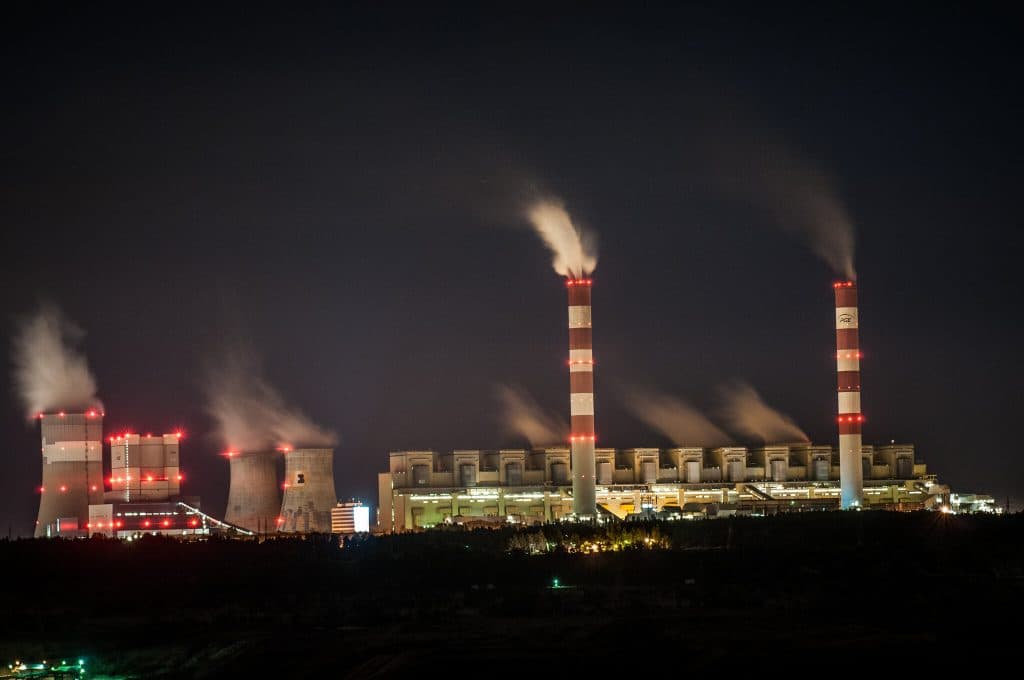
A group of major energy companies, led by firms such as Shell, Iberdrola and Statoil, has backed preventing capacity payments from being paid to the most emissions-intensive power plants. Capacity payments are currently approved in the UK and France, but are also being considered in Poland.
As part of European regulation and efforts to prevent financial support for the most emissions-intensive power plants, the European Union has decided to propose limits for power plants that could receive support through capacity payments. The restrictions would apply to facilities with emissions higher than 550 g CO2 per kWh of electricity generated. Such plants would automatically be ineligible for support.
As indicated by a letter reported by Reuters, several dozen major energy companies have backed the proposal. In a statement, they said that „emissions-intensive sources should not be supported through electricity charges, particularly when cleaner and more flexible technologies are available on the market“.
Capacity payments could therefore primarily be granted to gas-fired sources that meet these requirements, as they are not only „cleaner“ in terms of CO2 emissions than coal-fired power plants, but also more flexible. This allows them to complement renewable sources, whose output is variable.
Poland in particular opposed the proposal, as it would disrupt plans to support its extensive coal industry. Given Poland's dependence on coal-fired electricity generation and the importance of this economic sector in the country, these concerns are more than understandable.
{„country“:“PL“,“type“:“AREA“,“from“:“2017-08-01″,“to“:“2017-08-20″,“caption“:“Electricity in Poland is generated largely from coal.“,“url“:“https://energodock.cz/energodock/get_online_generation_data.php“,“source“:“shortcode“,“start_date“:“2017-08-01″,“end_date“:“2017-08-20″}
This regulation is likely to apply not only to capacity mechanisms, but to generation subsidies in general. If the limits are approved, measures such as those introduced by Germany last year may no longer comply with European legislation. Germany introduced regular payments for the dirtiest power plants in exchange for their gradual closure from 2019.
Are capacity mechanisms still relevant?
The key question for the future remains whether capacity mechanisms are still a relevant solution to the energy sector's current problems. Wholesale electricity prices, especially in Central Europe, are rising significantly, and this trend can be expected to continue given declining generation capacity.
The main purpose of capacity mechanisms is to support electricity generation at power plants that are essential for system operation but are not economically viable to operate. The existence of capacity payments therefore depends primarily on the economic viability of operating conventional power plants.
Translation disclaimer
This article is a machine translation of the Czech original and has not yet been fully reviewed. In case of any doubt, please refer to the Czech version.
Sdílejte článek prostřednictvím:
You might also like
23 October 2026, 11:01

23 October 2026, 06:34