23 October 2026, 14:38
Loading...
Czech developers under pressure. All buildings must have zero emissions by 2050
Ekonews.cz
30 October 2022, 12:38
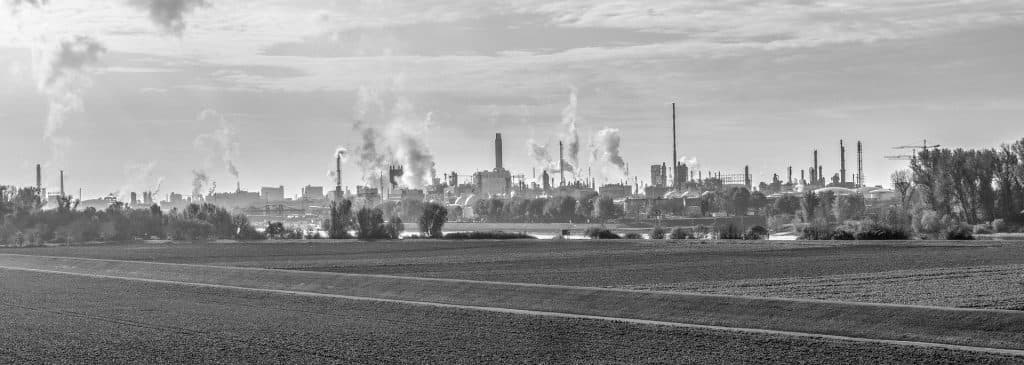
The key Fit for 55 package of legislation, a set of measures aimed at cutting carbon emissions by 55 percent by 2030, also includes requirements for lower emissions from buildings. Both new and old. Developers and construction companies must therefore consider every project from this perspective and seek to reduce its energy demand as much as possible.
Newly built houses and buildings must be zero-emission from 2030, European Union representatives agreed yesterday. From 2029, all buildings must also be able to accommodate solar panels. This requirement will apply to office and other non-residential buildings from the end of 2026.
Buildings account for around 40 percent of energy consumption in Europe and contribute roughly 35 percent of greenhouse gas emissions. Heating, cooling and hot water preparation account for 80 percent of the energy consumed by EU households.
“How do we achieve carbon neutrality? We can only push consumption down to a certain physical limit, and we have already reached that point in office buildings; there is nowhere further to go. So we have to clean up the energy we put in, and that is where we run into problems,” Jiří Cihlář of CEVRE Consultants said at Tuesday’s Bold Future conference.
A detailed framework for what buildings should look like in energy and carbon terms is set out in the Energy Performance of Buildings Directive. Among other things, it sets out how emissions from both new and old buildings should fall.
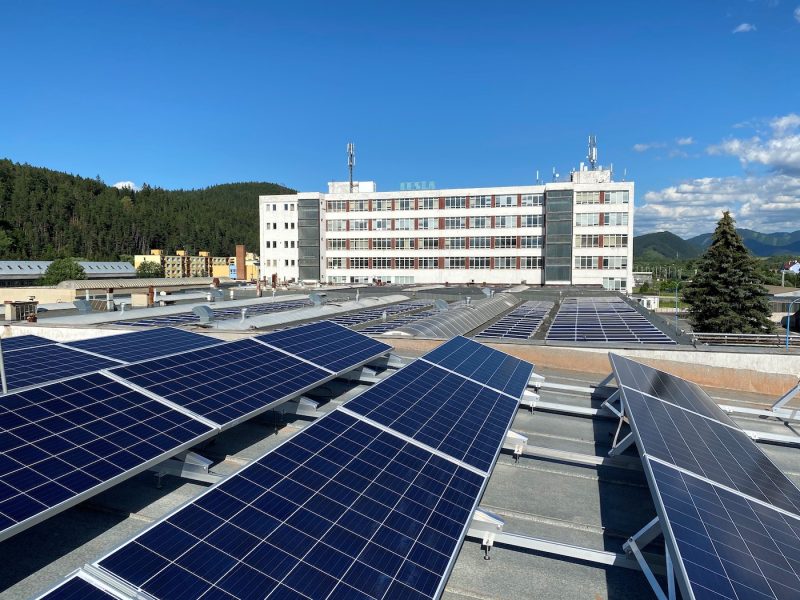
According to Cihlář, this may not always be easy to achieve. There are several solutions, but they must be combined. One option is to install photovoltaic panels on a building’s roof; another is to establish renewable energy communities and develop community energy. However, this is still not possible in Czechia, so an amendment to the Energy Act is awaited.
Wood has a quarter smaller footprint than concrete
The final, but largest, item in terms of CO2 emissions savings is addressing heating and water heating. The simplest and most effective option is to use district heating produced from a waste source, although this is not possible everywhere.
“When you have the option of connecting to district heating, you connect to it. Not using heat that is waste heat from a power plant would be an outrage against common sense. When it is not available, we try to replace it. For example, in the Čertův vršek project, as well as elsewhere, the gas boiler that was there was supplemented with solar thermal panels,” Miroslav Kobera, an environmental protection specialist at Skanska Residential, explained last week when presenting the new Radlický Dřevák project. Skanska wants to use it to test another way of reducing its carbon footprint.
Skanska aims to become carbon neutral by 2045. By 2030, it wants to halve emissions in so-called Scope 3 compared with 2020. These account for more than 90 percent of all CO2 emissions (direct emissions in Scopes 1 and 2 are minimal, author’s note). Category 3 includes the carbon footprint of the houses and buildings constructed by Skanska.
Scope 3 is most heavily affected by a building’s energy demand and the materials used. This is also why the company, which has Swedish roots, now wants to test a building with an above-ground timber structure; its foundations are concrete. According to figures cited by Skanska, wood has a carbon footprint up to 25 percent lower than conventional concrete.
According to Skanska experts, the difference is calculated solely against the use of emissions-intensive concrete. The calculation does not include the fact that, during its lifetime as a tree, wood absorbed a certain amount of carbon, which will be “locked” in the building until it is demolished. This figure would have to be reduced by the period by which the tree’s life was shortened, and thus its further carbon absorption.
Everything must be tested on a small scale
“When we manage to validate the trials, we will roll them out widely, including heat recovery from wastewater, from grey water. We have to test everything on a smaller scale before we can bring it to a larger one,” Kobera of Skanska said of the Dřevák pilot project. However, the construction company is already dealing with the fact that some innovations within buildings conflict with one another. For example, a green roof helps prevent overheating and retains water, but it cannot fit on the roof together with photovoltaics and solar thermal panels.
Solar thermal panels are crucial in terms of reducing the carbon footprint. “In terms of impact, it is more important for us to focus on how the house is heated and how water is heated there, which is provided by solar thermal technology. Heating and water heating are two fundamental areas we need to focus on in the long term in order to meet our targets,” said Petr Michálek, chairman of the board of Skanska Residential.

Like Skanska, the family-owned company NOHO from Hradec Králové is considering the construction of flats, or rather an entire district. Its Cihlovka project includes photovoltaics, its own transformer substation and batteries for energy storage. “I see operations as crucial, which is why we are counting on community energy. We want to bring together ourselves, clients and an energy partner so that it is beneficial for everyone,” Tomáš Vrbický said on behalf of NOHO at the Bold Future event. He also mentioned the possibility of timber construction, but said that the Hradec community was not yet ready for it.
The amendment to the Energy Act is currently with the Ministry of Industry and Trade. At least the sharing of savings from photovoltaics on an apartment building is to be enabled by a decree of the Energy Regulatory Office. It has been prepared but has not yet been finally approved. It should take effect from January next year.
Republished from the online portal EkoNews.cz, a website covering business and sustainability.
Translation disclaimer
This article is a machine translation of the Czech original and has not yet been fully reviewed. In case of any doubt, please refer to the Czech version.
Sdílejte článek prostřednictvím:
You might also like
23 October 2026, 11:01

23 October 2026, 06:34