23 October 2026, 14:38
Loading...
Czech state raises billions from emissions allowances, but little goes to the environment
Ekonews.cz
28 October 2022, 09:11
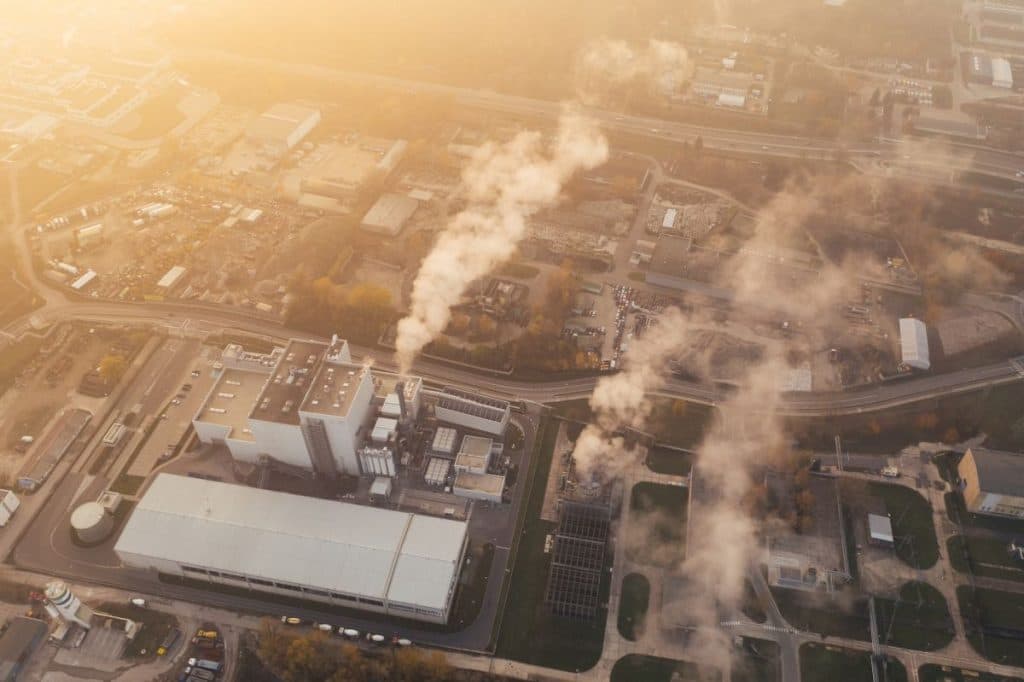
According to experts, revenue from the sale of emissions allowances, which power plants and large industrial facilities buy in order to emit greenhouse gases, is often “dissolved” into the state budget. The EU is preparing stricter rules.
The Act on the Conditions for Trading in Greenhouse Gas Emission Allowances states that around eight billion crowns a year should go towards climate measures. Half should go to the Ministry of Industry and Trade and half to the State Environmental Fund, which is administered by the Ministry of the Environment. The original amount was 12 billion crowns, but the money was needed “elsewhere”. Yet the ministries in question do not receive even those eight billion.
More funding could help not only from an environmental perspective, but also in addressing the energy crisis. Through the New Green Savings programme, people are purchasing heat pumps and photovoltaic systems or insulating their homes. Rather than receiving funding earmarked for “environmental purposes”, the programme is being funded from the National Recovery Plan. The plan is for the continuation of New Green Savings to be financed by the Modernisation Fund, which was originally intended for projects of key importance in the transition to green energy.
Moreover, revenue from the sale of allowances under the European Union Emissions Trading System has risen in recent years. In 2019, it exceeded 15 billion crowns, and the year before last it even approached 20 billion crowns. “However, everything above eight billion is effectively dissolved into the state budget. Revenue is increasing, but the share of money going towards the green transition is paradoxically declining,” says Jan Svoboda, an analyst at the non-governmental non-profit Association for International Affairs (AMO). He notes that applications under the New Green Savings programme alone have amounted to 11.2 billion crowns since last October.
It will not happen without a tough EU mandate
“The threshold for earmarked funding should be raised above 12 billion crowns. The money could then be used, for instance, for a climate dividend like in neighbouring Austria,” Svoboda suggests. A climate dividend is essentially a universal payment to people intended to compensate for increased costs associated with carbon taxation. However, according to the analyst, there is currently no political will for it in Czechia.
An even greater problem is that the Environment Ministry does not receive the four billion crowns in question that are “earmarked” for a specific purpose. According to a statement from the ministry’s press office, it received 2.15 billion crowns in 2020, 1.35 billion last year and 150 million this year, with an additional 300 million crowns expected.
“The only way to improve the situation is a tough EU mandate requiring 100% of emissions revenue to go towards climate action. Until that happens, the money is available to the state, and given the energy crisis and the need to mitigate social impacts, it cannot be expected to simply give it up,” says a market source who wished to remain anonymous.
Svoboda also objects to the fact that the public has no idea what the state does with the additional “unearmarked” funds above eight billion crowns. “It is completely non-transparent,” he says, adding that while individual countries report their approach to the European Commission, virtually nothing can currently be enforced against them.
“The law indeed stipulates that revenue from the auctioning of allowances up to eight billion crowns is state budget revenue and is earmarked for a specific purpose. However, this earmarking applies only on the condition that another law does not stipulate otherwise, and the State Budget Act is also regarded as such a law,” said Šimon Blecha from the Finance Ministry’s communications department.
“Funds from revenue from the sale of emissions allowances in the Ministry of Industry and Trade’s budget chapter are used every year for subsidies supporting renewable energy sources. Funds were also allocated to the Ministry of the Environment’s budget chapter for the New Green Savings programme, taking into account the high volume of so-called claims from unspent expenditure in previous years that this budget chapter had reported over the long term,” Blecha added. He did not explain by the deadline for this article why the Finance Ministry would not reconsider its approach when demand for New Green Savings is growing rapidly.
Funding for climate measures should increase
Meanwhile, the situation has partly improved for the Environment Ministry because, thanks to an amendment to the law, part of the revenue from allowances was transferred to the Modernisation Fund, giving the ministry greater control over the funding. “The use of funds from the Modernisation Fund is a guaranteed way of ensuring they are used for climate purposes and do not become state budget revenue without earmarking,” the ministry says. However, it does not explain what happens to the four billion crowns it should receive regularly.
According to Svoboda, from a technical perspective this involves transferring nearly 111.5 million allowances to the Modernisation Fund under Article 10c of the EU ETS Directive. “Lower-income states have the option of allocating some allowances (free allocation) that a given state received as part of its auctioning allocation to certain electricity producers for modernising the energy sector. Czechia decided to transfer the 111.5 million allowances in question to the fund in this way,” Svoboda explains. “The Environment Ministry is in effect saying that the relative percentage of revenue going to climate measures should remain the same. That is not the case – it should increase wherever possible,” the expert concludes.
Czechia has access to the Modernisation Fund as a country with a major need to transform its energy sector, alongside nine other European countries facing similar challenges. It is financed by two percent of emissions allowances auctioned between 2021 and 2030. In total, it comprises revenue from the sale of more than 640 million emissions allowances, with around 193 million allocated to Czechia. As the price of emissions allowances rises, so does the volume of money in the Modernisation Fund. It is expected to eventually reach at least 300 billion crowns, but AMO experts say it could reach 500 billion crowns at an average price of €100 per emissions allowance.
Modernisation Fund has swelled and is tempting politicians
Czechia will thus have more than 300 billion crowns available for green investments. The fund plans to invest in, for example, modernising district heating, reducing industrial emissions and community energy.
AMO experts therefore do not much like the Environment Ministry’s plan under which 55 billion crowns from the Modernisation Fund would go to households through New Green Savings, with a new branch of the fund created for this purpose. “There is no reason to raid the fund. An amendment to the Emissions Allowances Trading Act and raising the earmarking cap would be a better route,” Svoboda believes.
However, ministry officials believe that, in order to “ensure the stability” of the New Green Savings programme, it was necessary to find additional sources to cover the enormous interest in subsidies, particularly for installing photovoltaic systems and heat pumps, which is likely to grow further in the coming months.
The previous government had already wanted to tap the Modernisation Fund to “mitigate the consequences of the energy crisis”. The current government would also like to take 50 billion crowns from it, according to the current draft of the Czech Republic’s 2023 State Budget Act.
Republished from EkoNews.cz, a website focused on business and sustainability.
Translation disclaimer
This article is a machine translation of the Czech original and has not yet been fully reviewed. In case of any doubt, please refer to the Czech version.
Sdílejte článek prostřednictvím:
You might also like
23 October 2026, 11:01
23 October 2026, 06:34