12 October 2026, 22:01
Loading...
Energy Brainpool: Electricity prices will rise, but volatility will increase in particular

Martin Voříšek
16 August 2017, 06:56
According to the Energy Outlook 2050 by the Energy Brainpool institute, we can expect ever greater volatility in electricity prices. Wholesale electricity prices should also rise significantly, primarily due to higher carbon allowance prices and electricity demand.
In today’s relatively dynamic energy landscape, any forecast for several years ahead is fairly risky, yet energy institutes very often undertake this task. One of the latest forecasts has been released by the German institute Energy Brainpool, which focused in particular on electricity prices and the factors influencing them.
According to the institute, coal-fired generation will gradually disappear from the generation mix, while natural gas generation will take its place.
Nuclear power is also expected to see a modest decline, with it and coal together covering only one-tenth of electricity consumption in 2050. Since generation from lignite and hard coal is cheaper than that from natural gas, this change in the generation mix will also affect electricity prices.
Electricity prices will also be affected in particular by the rising price of EU ETS emission allowances, which is expected to start rising significantly from 2020 and could head towards as much as EUR 70 per tonne of CO2 in 2030. The institute also expects a modest increase in the price of natural gas, driven by growing demand from the energy sector.
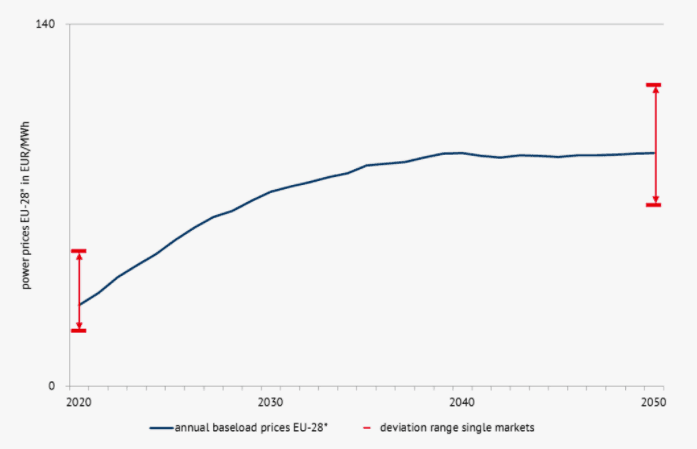
In addition, higher electricity demand is expected, particularly due to the partial transition of the transport sector to electric propulsion, which naturally affects electricity prices. If the EU were to complete the transition to electric mobility by 2050, this would mean an increase in electricity consumption of 830 TWh per year.
With regard to electricity prices and their volatility, it is important that the share of stable sources (see the institute’s report for more details) is expected to gradually decline from 50 % to 30 %. This is an important signal for electricity markets, particularly because in the coming years we will encounter negative prices, or conversely significantly higher electricity prices (100 EUR/MWh and more), much more frequently on day-ahead markets.
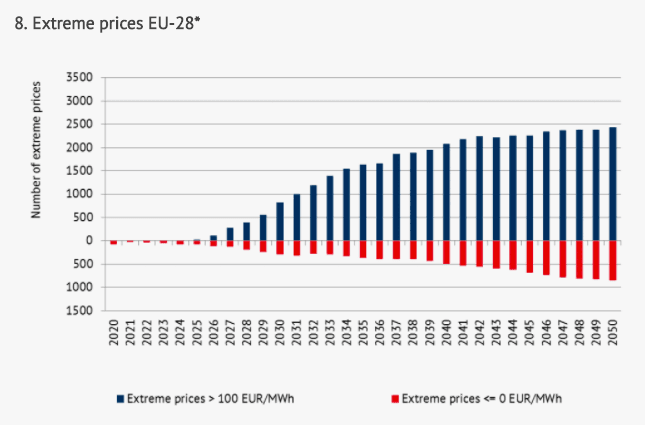
Signals pointing to this trend can already be observed in the EU, although so far individual countries have experienced separate extremes rather than both extremes within one country. Negative prices in neighbouring Germany already occur relatively frequently during sunny and windy weather. Conversely, exceptionally high electricity prices have hit the United Kingdom several times, with prices reaching as much as £1,250 per MWh.
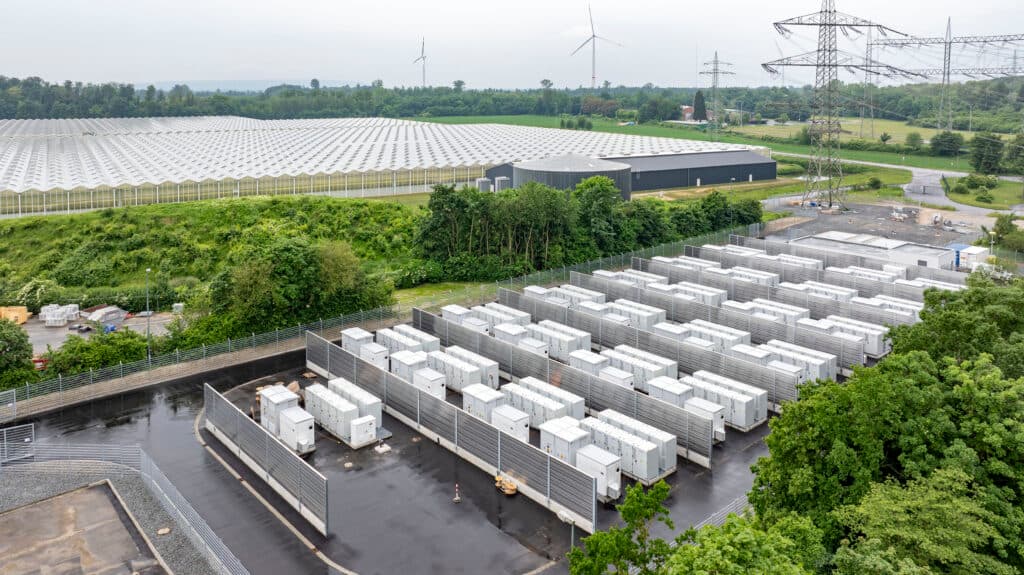
According to Energy Brainpool, rising price volatility is creating opportunities for new flexible technologies, such as energy storage systems. According to the forecast, more pronounced price volatility is expected to start emerging from 2026.
Translation disclaimer
This article is a machine translation of the Czech original and has not yet been fully reviewed. In case of any doubt, please refer to the Czech version.
The article continues for subscribers
Premium content
The rest of this article is available to premium subscribers only. Get access to all premium articles on oEnergetice.cz.
Best value: annual subscription
Monthly option 4 € / month
3.25 €/ month
You might also like
12 October 2026, 12:20

12 October 2026, 10:27