3 October 2026, 13:01
Loading...
EU to free up funds to tackle energy crisis, but only under strict oversight

oEnergetice.cz, ČTK
3 June 2026, 14:40
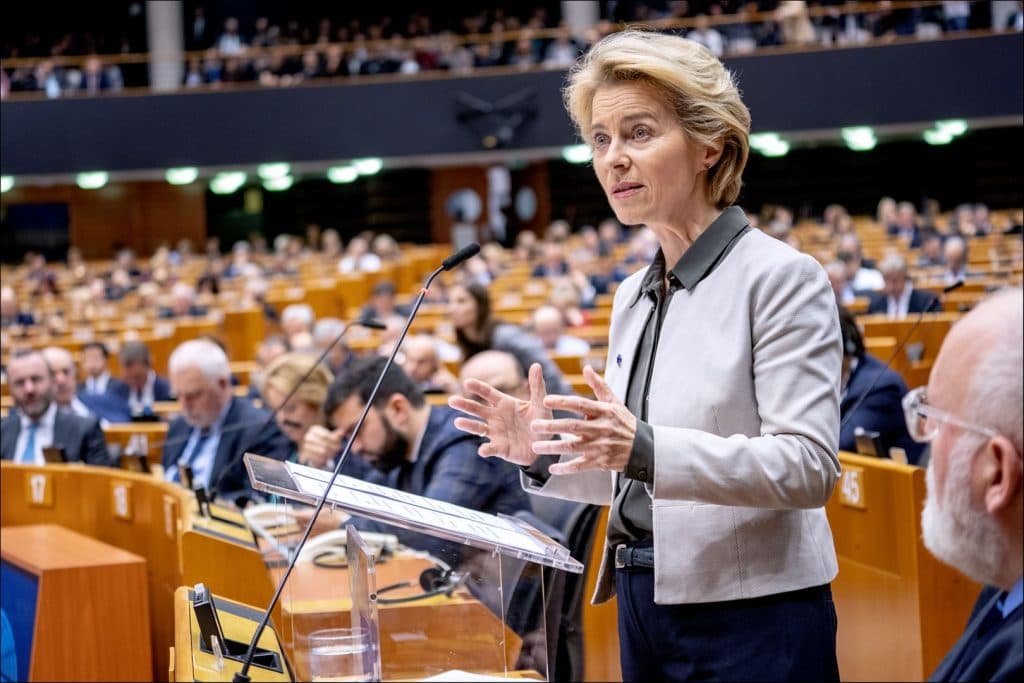
Brussels, June 3 (CTK correspondent) - The European Commission announced today that it is prepared to ease European budget rules slightly, but under strictly defined conditions, to help EU countries cope with the energy crisis linked to the conflict in the Middle East. Brussels will allow member states to spend up to 0.3 percent of gross domestic product (GDP) annually, but no more than 0.6 percent in total by 2028, on measures aimed at reducing dependence on fossil fuels. European Commissioner for the Economy Valdis Dombrovskis announced this in Brussels today.
Eligible spending incurred since February this year—for example, support for replacing boilers, installing heat pumps or solar panels, or incentives for buying electric cars—will be treated similarly to defense spending, AFP reported. Such spending is already subject to a special regime intended to make it easier for European countries to finance the strengthening of their defense capabilities.
Today, the European Commission published the so-called European Semester spring package, which it prepares every year, including after assessing the regular national strategic documents submitted by member states. The European Semester aims to support economic growth, achieve sound public finances and prevent excessive macroeconomic imbalances in the EU.
"The European Commission is presenting its spring package at a time of geopolitical instability and uncertainty, when global competition is becoming increasingly fierce," Dombrovskis said.
"The European economy remains resilient, even as it faces a series of crises," he added. The package sets out policy guidance for member states, focusing in particular on strengthening the EU's competitiveness, strategic autonomy, and economic and social resilience and cohesion, while maintaining fiscal sustainability. "We cannot afford not to act; that would mean a weakened Europe," the European Commissioner for the Economy added.
The spring package also includes analytical reports on individual countries (Country Reports), as well as recommendations for the EU's 27 member states on how to address key challenges. Among other things, the Commission recommended that Czechia reduce barriers preventing parents from returning to work.
The limited easing of budget rules proposed by the Commission is a setback for Italian Prime Minister Giorgia Meloni, AFP noted. Meloni had called for all exceptional measures adopted by member states in response to the energy shock to be completely exempted from the budget rules. Italy, for example, cut fuel taxes in an effort to curb increases in petrol and diesel prices. This measure will be taken into account when calculating the public deficit.
Since the outbreak of the conflict in the Middle East, the European Commission has rejected any across-the-board easing of the rules, and Dombrovskis reiterated today that it recommends countries adopt only "temporary and targeted" support measures.
According to the Euractiv website, today's announcement marks a major shift in Brussels' position. Until now, it had denied that the current crisis—which the International Energy Agency has called the largest in history—warranted an easing of the rules. The move comes less than two weeks after the European Commission cut its EU growth forecast for 2026 from 1.4 percent to 1.1 percent and raised its inflation outlook from 2.1 percent to 3.1 percent.
According to Dombrovskis, the EU executive's proposal essentially allows "member states to extend the scope of the national escape clause for defense to include measures supporting a shift away from dependence on fossil fuels." The Commissioner also said that all member states, including those that have already activated the national escape clause, will have to formally ask Brussels in advance for approval to increase spending on measures related to energy resilience.
He also added that countries that have already fully used the additional fiscal space available under this clause could be allowed to exceed the 1.5 percent of GDP limit as well. However, this would be subject to an additional assessment of public debt sustainability by the European Commission. So far, 17 member states, including the Czech Republic, have activated the national escape clause.
Translation disclaimer
This article is a machine translation of the Czech original and has not yet been fully reviewed. In case of any doubt, please refer to the Czech version.
Sdílejte článek prostřednictvím:
You might also like
3 October 2026, 07:43

2 October 2026, 21:55
2 October 2026, 15:14