
23 October 2026, 14:38
Loading...
Europe is slowing cement decarbonization: outdated standards threaten the industry's future

Marek Kršák
23 October 2024, 06:57
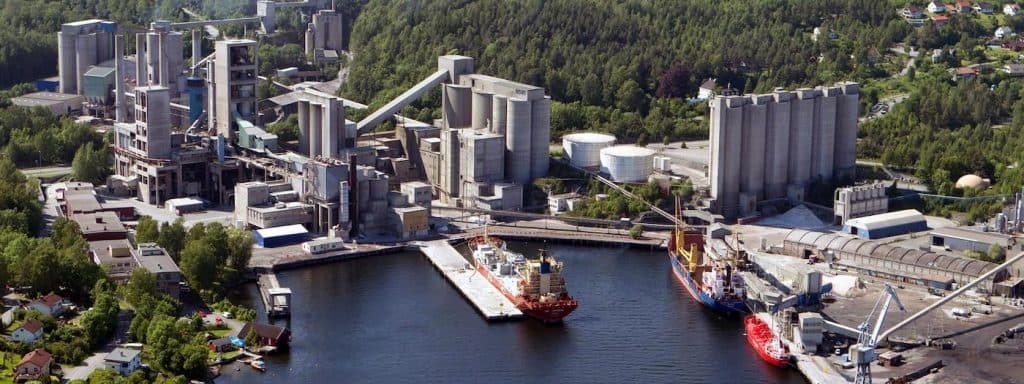
According to the Alliance for Low-Carbon Cement and Concrete, Europe is lagging behind other regions in decarbonizing cement production. The reason, it says, is outdated industry standards. The result is an uneven playing field and severely limited market access for innovative low-carbon technologies. Euractiv reported on the issue.
The European Union aspires to achieve carbon neutrality in sectors such as transport and heating, but according to the Alliance for Low-Carbon Cement and Concrete, favorable conditions have yet to be created for something as essential and integral to our lives as concrete production. The alliance says it aims to accelerate the decarbonization of cement in Europe. However, it faces various obstacles, particularly in the form of outdated European standards.
Alliance representatives also claim that Europe is lagging behind on a global scale. The US, Latin America and Canada have already overtaken it in cement decarbonization.
The alliance believes that Europe should focus more on limiting or completely eliminating prescriptive rules for cement recipes, as these prevent new, innovative low-carbon technologies from entering the market and also undermine a level playing field for market participants.
The problem is that these recipes over-prescribe one ingredient, known as clinker, which is the binding material in traditional cement. Clinker is also the main source of CO2 emissions from concrete production. It is estimated that concrete production accounts for as much as 8% of all global CO2 emissions.
According to the industry, however, today’s excessive use of traditional clinker is no longer justified, as alternative ways of producing cement exist. But these methods face political resistance because they challenge the established status quo.
The alliance says new, proven, scalable and cost-effective solutions are available that could move the industry away from highly polluting traditional cement and clinker. Research in fact shows that European clinker production could be halved as early as 2030 using existing technologies alone.
The stakes include not only meeting decarbonization targets, but also the industry's competitiveness
Reducing emissions represents a significant economic opportunity for the European cement industry, as it would enable European companies to compete with markets that are more focused on the future.
The way cement standards are developed needs to change. For decades, they have followed a recipe-based logic, offering only a limited, predefined range of cement types and compositions. Performance-based standards could be the solution. This means defining cement properties rather than the composition of its ingredients. The current approach has sidelined innovation, leaving a gap in the global low-carbon cement market that other players are filling.
Countries such as the US and Canada now have a competitive advantage in attracting both innovators and investment, including from Europe. According to alliance representatives, the way forward is to remove as quickly as possible the barriers that prevent clean technologies from being deployed at scale.
The European Commission has already begun addressing the issue
Aware of this market failure, the European Commission reportedly launched a process early this year aimed at moving away from outdated practices.
If the EU is to meet its ambitious decarbonization targets, it must focus more on removing barriers to new ways of producing concrete. That is why 23 signatories from industry, civil society and think tanks signed a letter to the European Commission, calling for technology-neutral cement standards to be prioritized over the status quo.
The alliance believes Europe has everything it needs to compete with the most advanced technologies. But for this to happen, policymakers and established companies must stop blocking progress. Otherwise, the European cement industry could end up being entirely uncompetitive.
Translation disclaimer
This article is a machine translation of the Czech original and has not yet been fully reviewed. In case of any doubt, please refer to the Czech version.
Sdílejte článek prostřednictvím:
You might also like


23 October 2026, 11:01


23 October 2026, 06:34