23 October 2026, 14:38
Loading...
European Commission to allow support covering up to 70% of costs for firms hit by energy crisis

Jakub Malý
12 May 2026, 10:54
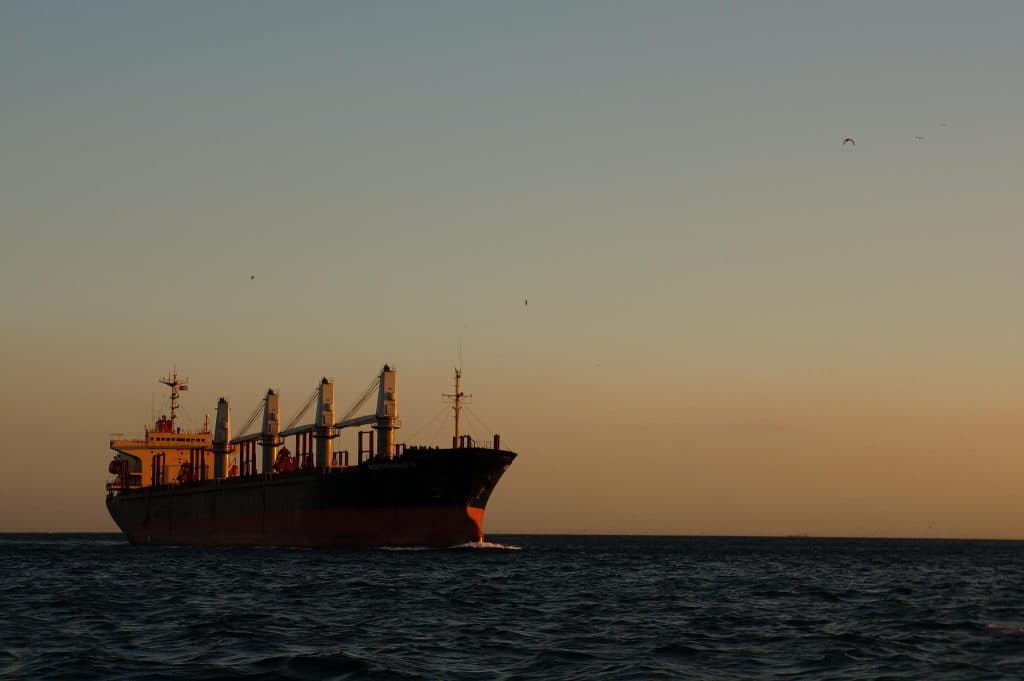
The European Commission has adopted a new temporary state aid framework, METSAF (Middle East Crisis Temporary State Aid Framework), intended to enable member states to provide faster and more targeted support to businesses affected by the impact of the crisis in the Middle East. The framework was adopted on 29 April 2026 and is to remain in force until 31 December 2026. The Commission presents it as a tool for the sectors most exposed to the crisis, notably agriculture, fisheries, transport and energy-intensive industry.
The essence of the framework is relatively straightforward: member states will be able to provide compensation for extraordinary increases in fuel and fertiliser costs. For support based on genuinely documented costs, this may cover up to 70% of the additional costs caused by price rises.
The second option is simplified support of up to EUR 50,000, based on a general estimate of fuel consumption in the sector concerned and relevant proxy indicators. This option is particularly important for smaller businesses, for which the detailed administration of individual costs would be disproportionately burdensome. At the same time, simple schemes will require careful design to ensure that support does not become blanket compensation for ordinary business risk.
From an energy perspective, the most important aspect is the expanded scope for aid to energy-intensive electricity consumers. METSAF makes it possible to increase the aid intensity under electricity price relief schemes approved under section 4.5 of the CISAF framework (Clean Industrial Deal State Aid Framework) from 50% to up to 70% of eligible electricity consumption, without simultaneously increasing the required decarbonisation commitment.
The Commission also allows this to be combined with support under the rules for compensation of indirect costs of the EU ETS (European Union Emissions Trading System), up to half of the aid granted under the relevant CISAF schemes. This is a significant signal that European competitiveness policy is increasingly based on a combination of industrial protection, price stabilisation and managed decarbonisation.
The new framework fits into the broader logic of European crisis policy in recent years. Following the COVID-19 pandemic and subsequently Russia's invasion of Ukraine, the Commission repeatedly used temporary crisis frameworks intended to give member states flexibility while preventing excessive distortions of the single market. In this sense, METSAF is another version of the same instrument and points to the continuing trend of state intervention in the free market. In the long term, however, METSAF cannot be understood as a substitute for investment in energy resilience.
Translation disclaimer
This article is a machine translation of the Czech original and has not yet been fully reviewed. In case of any doubt, please refer to the Czech version.
Sdílejte článek prostřednictvím:
You might also like
23 October 2026, 11:01
23 October 2026, 06:34