23 October 2026, 14:38
Loading...
EWI: Gas production in Europe to halve, new bottlenecks to emerge

Martin Voříšek
22 June 2017, 10:54
According to the German energy institute, natural gas production in Europe will almost halve by 2030. By contrast, gas consumption is expected to rise slightly. As a result of changing natural gas flows in Europe, new bottlenecks may subsequently emerge in the transmission system.
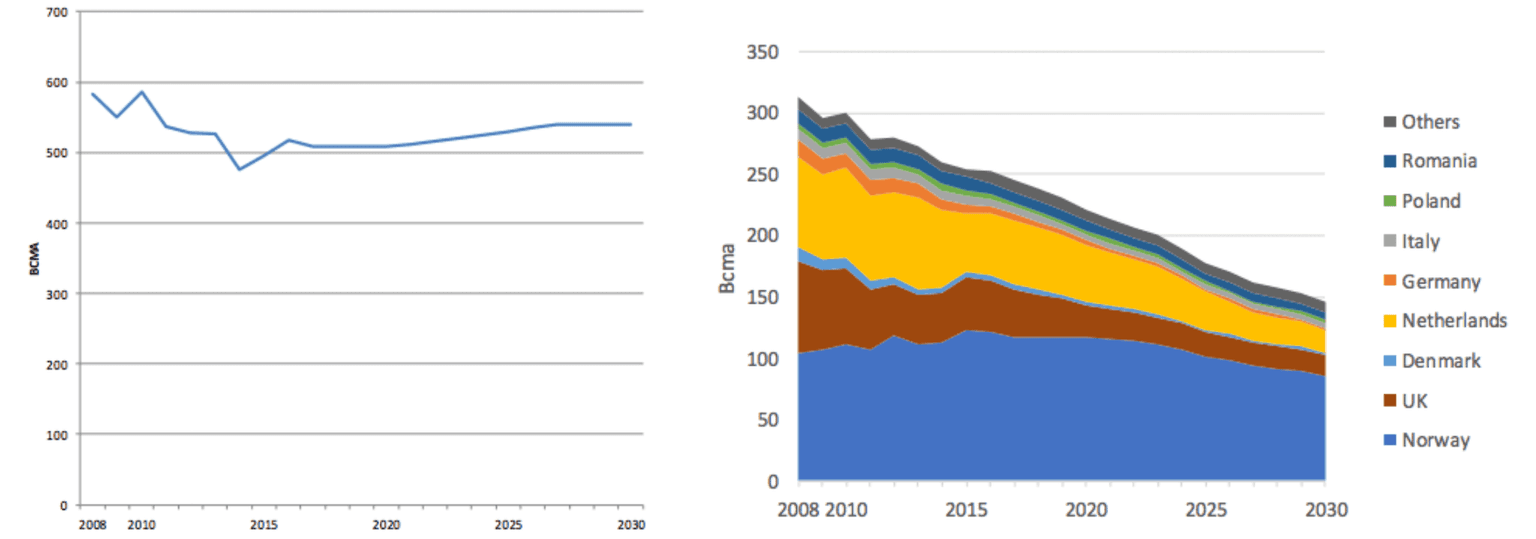
The natural gas market is expected to undergo significant changes in the coming years, according to a study by the Energy Research and Scenarios Institute. The study’s findings indicate that domestic natural gas production in the EU should fall from approximately 254 today to 140 bcm.
Consumption, on the other hand, is expected to continue rising slightly and should reach around 550 bcm by 2030. The analysis cites the trend of reducing installed coal-fired and nuclear power capacity, together with the slowing pace of renewable energy deployment after 2020, as the main reasons for growing natural gas consumption.
These changes will naturally bring not only higher import requirements but also changes to transmission infrastructure in the EU. The main factors identified as shaping European infrastructure are the construction of the Nord Stream 2 pipeline and demand for LNG in Asia.
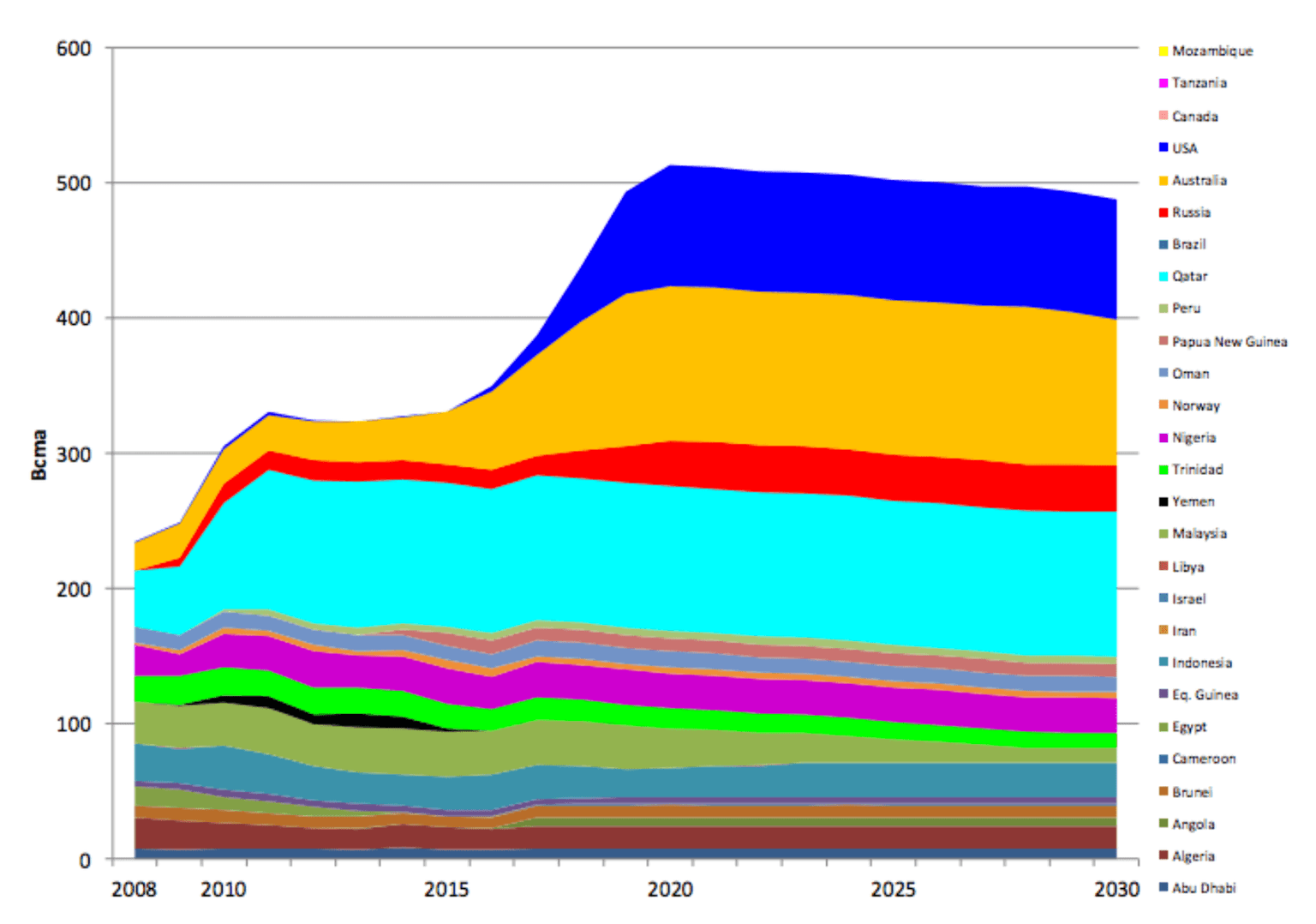
Demand for LNG in Asia will significantly affect import prices and the utilisation of European terminals with a capacity of around 220 bcm. Countries in Western Europe, where most LNG terminals are located, would benefit most from low LNG prices resulting from a market surplus.
In a scenario of low LNG demand in Asia, the study expects only 150 bcm of natural gas per year to flow to Europe from Russia. Of the four viable routes, the least gas would flow through Ukraine (29 bcm), as this route is the most expensive transmission option among the Nord Stream, Yamal and Turkish Stream pipelines considered by the study for supplying gas to Europe.
The study specifically comments on the Nord Stream 2 project, which is still not certain to be completed. However, it notes that its effect would largely be limited to shifting gas transmission away from the Ukrainian route.
The completion of Nord Stream 2 would particularly reduce the utilisation of the Yamal pipeline and gas transmission via Ukraine and Slovakia to the Czech Republic. Conversely, German imports to the Netherlands would increase by around 9 bcm per year. Natural gas production in the Netherlands is expected to decline significantly, while the country is also heavily reliant on natural gas for electricity generation.
{„country“:“NL“,“type“:“AREA“,“from“:“2017-05-01″,“to“:“2017-05-25″,“caption“:“The chart above shows the Netherlands’ dependence on natural gas-fired electricity generation. Natural gas production in the Netherlands is declining, and the country’s import requirements will therefore grow.“,“url“:“https://energodock.cz/energodock/get_online_generation_data.php“,“source“:“shortcode“,“start_date“:“2017-05-01″,“end_date“:“2017-05-25″}
According to the study, Nord Stream 2 would also affect gas transmission between the Czech Republic and Slovakia. Its completion would change natural gas flows between the Czech Republic and Slovakia and could create a bottleneck at the border between the two countries, preventing all required natural gas from being transported.
Another consequence could be differences in natural gas prices for the Czech Republic and Slovakia. However, these could in turn create pressure to build new infrastructure that could eliminate the newly created bottleneck in the transmission system.
Translation disclaimer
This article is a machine translation of the Czech original and has not yet been fully reviewed. In case of any doubt, please refer to the Czech version.
Sdílejte článek prostřednictvím:
You might also like
23 October 2026, 11:01

23 October 2026, 06:34