
23 October 2026, 06:34
Loading...
Gazprom: Russian gas transit through Ukraine to the EU rises to recent levels

oEnergetice.cz, ČTK
13 August 2024, 11:12
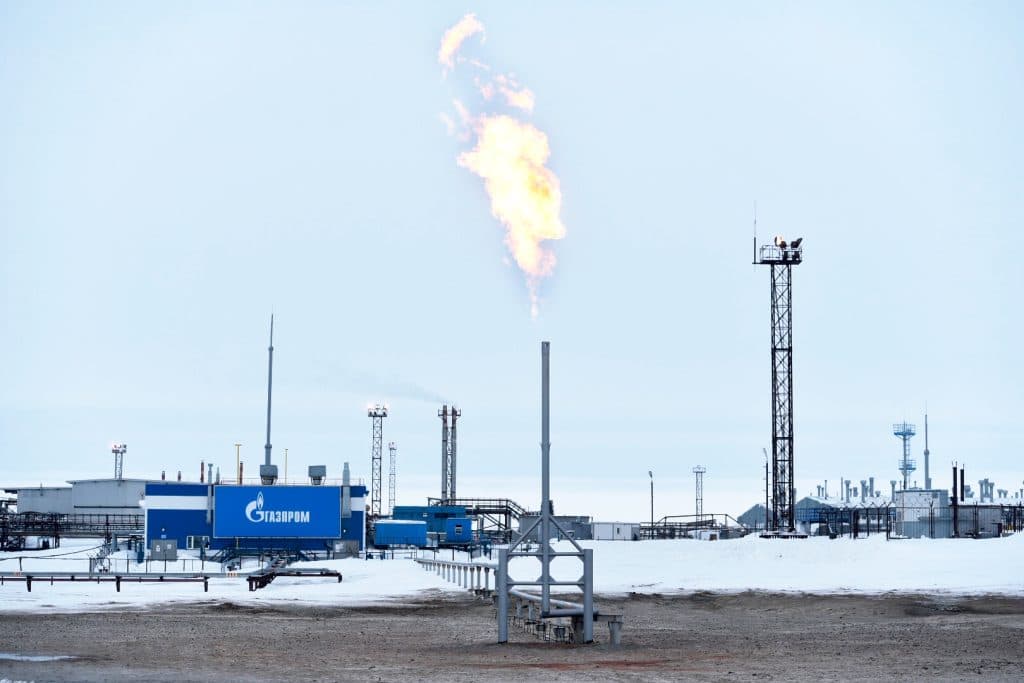
Russian natural gas transit to the European Union through Ukraine has returned to recent levels. Russian company Gazprom said it would send 42.4 million cubic metres of the commodity to EU buyers via Ukrainian territory today, Reuters reported. Last Thursday, transit volumes fell to 37 million cubic metres due to weaker demand.
Gazprom currently sends gas to the EU only via the Sudzha metering station; last year, it transported 14.65 billion cubic metres of the commodity through it. That was roughly half of the natural gas Russia exported to the EU. The gas accounted for about five percent of total EU consumption. The gas Gazprom sends along this route comes from areas of western Siberia.
Until May 2022, Gazprom also sent gas via the Sokhranovka metering station, but Ukraine then decided not to allow transit. It cited fighting in the area, although Gazprom said there was no reason to interrupt transit. Ukraine's move caused Russian gas exports to the EU via Ukrainian territory to fall by about a third from May 2022. Kyiv said at the time that Gazprom could transport the gas via the Sudzha station instead of Sokhranovka, but Gazprom said this was technically impossible.
The fate of the Sudzha metering station is now unclear. Some Russian military bloggers and Ukrainian Telegram channels say Ukraine has control of Sudzha. Reuters said it had been unable to independently verify these claims and that Moscow had not yet commented in detail on the situation in Sudzha.
According to analysts, fighting around Sudzha has been one of the reasons for rising gas prices in recent days. The front-month contract for gas delivery in September was trading at 39.30 euros (about CZK 989) per megawatt-hour (MWh) at the Title Transfer Facility (TTF) virtual trading hub in the Netherlands this morning. On Monday, the price briefly exceeded 41 euros, its highest level since last December. The higher price may be reducing demand, which was the reason gas consumption was lower last week. TTF prices are the benchmark for consumers in Europe.
The European Union began rejecting oil and gas from Russia long before the war in Ukraine, citing mainly a desire to diversify supplies. After the invasion began, the EU restricted purchases of Russian energy commodities even further, although landlocked countries in Central Europe were granted an exemption to give them more time to find alternative suppliers.
Gas prices began rising more noticeably in 2021 and, partly as a result of the war in Ukraine, temporarily reached a record high of more than 300 euros per MWh the following year. In recent months, TTF gas prices have ranged between 30 and 40 euros. At the end of February, the price of gas fell to as low as 22 euros.
Translation disclaimer
This article is a machine translation of the Czech original and has not yet been fully reviewed. In case of any doubt, please refer to the Czech version.
Sdílejte článek prostřednictvím:
You might also like



22 October 2026, 10:45
