High energy prices reignite debate in Czechia over the future of emissions allowances
The war in the Middle East has sent energy commodity prices soaring, setting new highs for this year. Rising energy prices are giving fresh impetus to debate over the EU ETS emissions allowances and their impact on the competitiveness of European businesses.
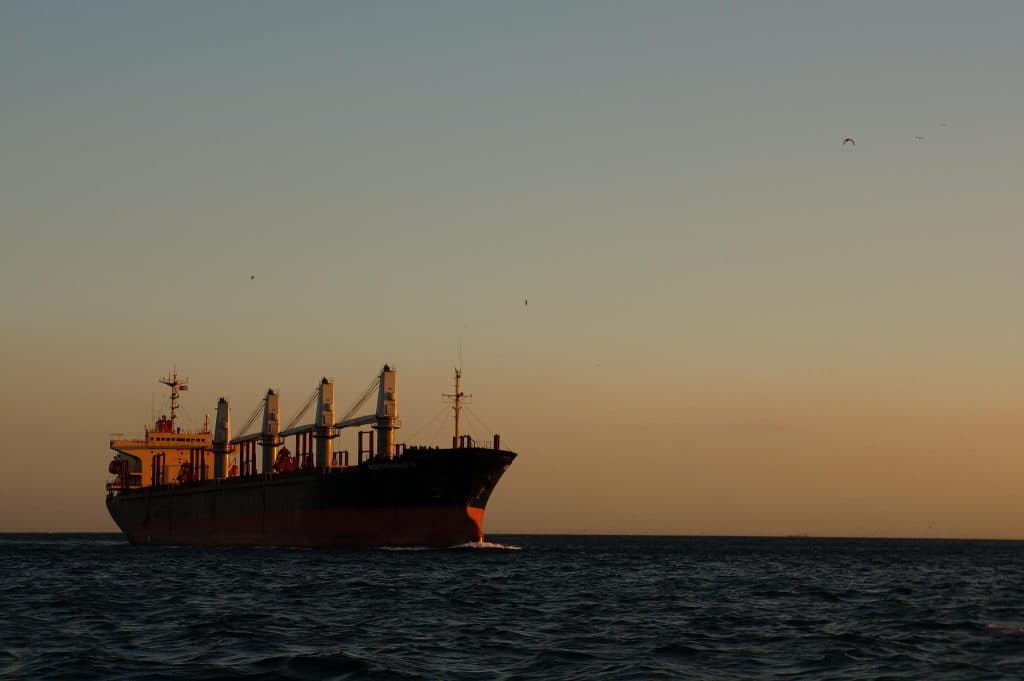
Since 28 February, the Persian Gulf region has been affected by the ongoing conflict with Iran. Restrictions on shipping through the Strait of Hormuz have had a significant impact on commodity prices. Oil is among the main commodities affected, having twice breached the USD 100 per barrel mark since the conflict began. That represents an increase of around 40%. European gas prices have reacted even more sharply, reaching as high as EUR 60/MWh—roughly double their mid-February levels. The TTF contract for delivery in April is currently trading above EUR 50/MWh.
High energy prices have been a longstanding problem for Europe. Compared with other major powers such as the US and China, energy in Europe is two to three times more expensive. The sharp rise in energy prices has drawn strong reactions from politicians and businesses, prompting debate about suspending the EU ETS emissions allowance mechanism. The competitiveness of European industry is a major concern.
European politicians have responded to the current situation as follows:
“With the outbreak of the crisis in the Middle East, the issue of energy prices has become even more important, which is why we are also calling at the European level for an urgent suspension of the ETS for electricity generation,” Italian Prime Minister Giorgia Meloni told Italian lawmakers last week.
Andrej Babiš and Saxony-Anhalt Minister-President Sven Schulze, for example, have also taken a similar position on the EU ETS.
“I am glad that the Prime Minister and I agree that the current situation is unsustainable,”Babiš wrote.
The emissions allowance system, which can be described as the EU’s main lever for decarbonisation, also has its supporters, who point to its benefits for EU member states.
“Since its introduction in 2005, emissions have fallen by 39%, while the economy in sectors covered by the ETS has grown by 71%. This shows that decarbonisation and competitiveness can go hand in hand,” says Commission President Ursula von der Leyen.
The EU’s transition to renewable energy will also bring benefits in the form of energy security. Fatih Birol, executive director of the International Energy Agency, expressed this view at an earlier press conference in Brussels:
“I believe it is in the interest of European countries, for the sake of energy security and sovereignty, to make greater use of their renewable energy sources—solar and wind—and to see nuclear power make a comeback.”
Barriers to abolishing the EU ETS
Even if suspending emissions allowances wins broader political support, it is far from certain that such a step would actually be taken. Suspending the emissions trading market would still face significant legal and political obstacles. Another option is to revise the emissions allowance mechanism, a possibility previously raised by German Chancellor Friedrich Merz.
Jos Delbeke, former director-general of the European Commission’s climate department, also expects legal complications in the process of abolishing the ETS. Delbeke added that scrapping the ETS is practically “impossible,” and predicted that doing so would raise complex liability issues related to compensation for allowances held by companies in the EU.
It is also important to note, for context, that EU member states approved emissions targets for 2040 at the beginning of March this year. EU countries have committed to reducing greenhouse gas emissions by 90% by 2040 compared with 1990 levels.
The sequence of events culminated at Wednesday’s summit, where ten countries, including Czechia, called on the European Union to thoroughly review the EU ETS emissions allowance system.
Translation disclaimer
This article is a machine translation of the Czech original and has not yet been fully reviewed. In case of any doubt, please refer to the Czech version.