3 October 2026, 13:01
Loading...
Nine EU states oppose internal market changes over commodity prices backed by Czech Republic

Martin Voříšek
26 October 2021, 13:37
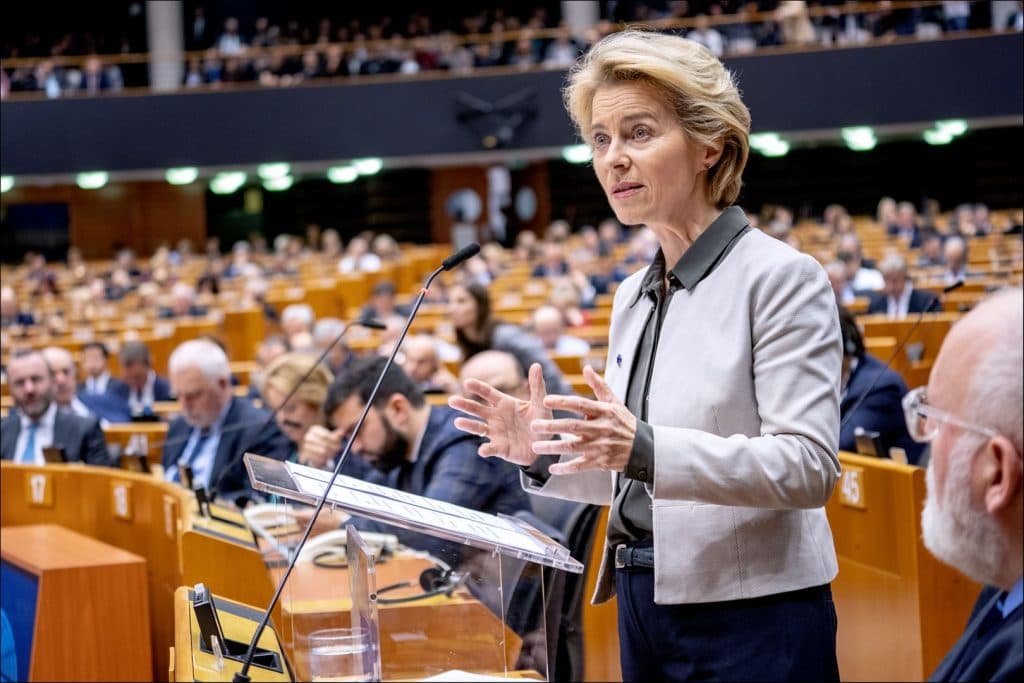
Nine European Union member states issued a statement on Monday opposing hasty interventions in the internal electricity and gas market. These member states, including Germany, Austria, Denmark and the Netherlands, thus opposed an earlier statement by France, Spain and the Czech Republic supporting intervention in the functioning of the internal energy market.
Just ahead of a meeting of European Union ministers, a dispute flared up over how to tackle high energy prices. These are causing member states concern on their path to recovery from the coronavirus crisis while also contributing to rising inflation. The European Union is therefore seeking a solution to limit the impact of the current crisis and strengthen the internal market so that it is more resilient in similar situations in the future.
The EU has split into two camps on the issue. France, Spain, the Czech Republic, Romania and Greece were the first to present a proposed solution. These countries proposed that the EU strengthen its energy independence, coordinate natural gas purchases and establish common rules for natural gas storage. Interestingly, these states want to achieve independence by building low-carbon sources, specifically naming biomass, wind energy and solar energy. Although the statement is signed by representatives of countries considering the construction of nuclear power plants, nuclear energy is not mentioned.
However, as many as nine EU member states led by Germany and Austria have spoken out against any intervention in the internal energy market. While these states support a common approach within the EU-27, they oppose targeted interventions in the internal energy market or climate legislation.
"The internal energy market, which has developed across the EU over recent decades, contributes to innovation and security of supply and is therefore a key element in achieving the transition away from fossil fuels," the joint statement by the nine member states says.
In their view, in the short term, support at member-state level should be targeted, for example in the form of support for vulnerable customers and businesses. At member-state level, this support can be flexible and can be limited once energy commodity prices return to normal.
In the medium term, cost-effective energy-efficiency measures and measures supporting the construction of renewable energy sources should be promoted. At the same time, the preparation and legislative process for the "Fit for 55 package" should be completed without delay.
The states also call for further market interconnection between member states. By 2020, the EU had set a target for member states to have cross-border transmission lines with capacity enabling at least 10 % of generated electricity to be transmitted to neighbouring countries.
It is currently being discussed whether the target for 2030 will be set at 15 %. The joint statement by the nine countries also calls for the adoption of this target.
"A properly managed transition of the energy sector away from fossil fuels is not the cause, but part of the solution to keep prices affordable and predictable," the statement by the nine member states says.
These member states have thus endorsed maintaining the current market rules, arguing that these rules will enable an effective transition to carbon neutrality. According to the states that signed the joint statement, a transparent and competitive environment will lead to an efficient market with low prices for end consumers.
We therefore cannot support any measure that would be contrary to the internal electricity and gas market, such as an ad hoc reform of the wholesale electricity market," the EU member states concluded, referring to the current price crisis in energy markets.
Translation disclaimer
This article is a machine translation of the Czech original and has not yet been fully reviewed. In case of any doubt, please refer to the Czech version.
Sdílejte článek prostřednictvím:
You might also like
3 October 2026, 07:43

2 October 2026, 21:55
2 October 2026, 15:14