23 October 2026, 14:38
Loading...
Only Poland opposed the European Green Deal, Czech Republic satisfied by wording on nuclear energy

Martin Voříšek
16 December 2019, 10:39
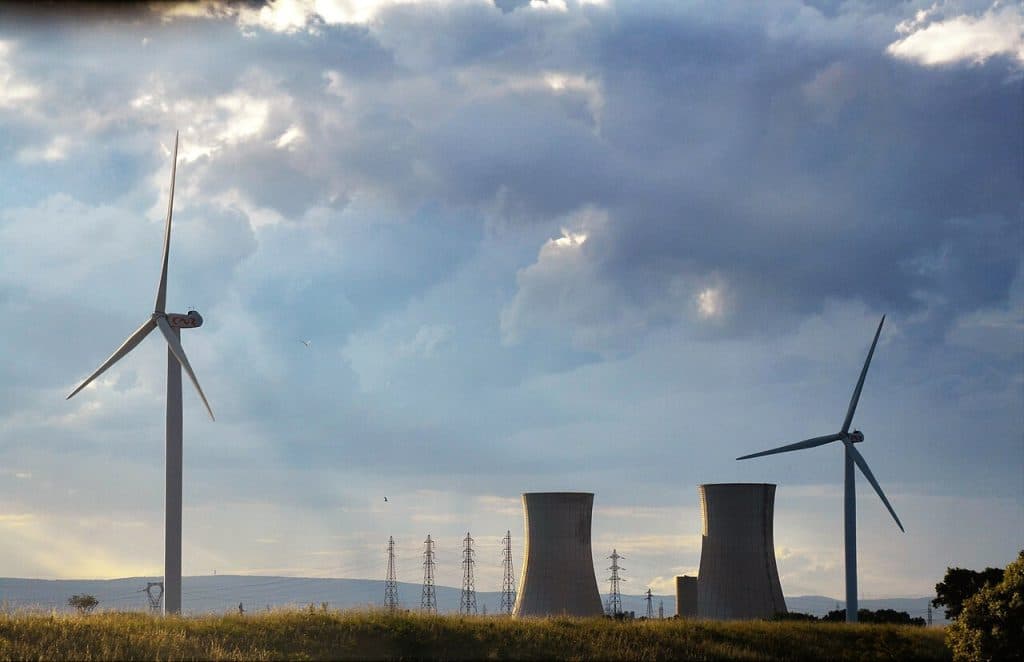
The European Council approved the so-called Green Deal without Poland's consent. The next European Council meeting will take place in June 2020. Until then, EU member states will seek to persuade Poland to accept the Green Deal proposal.
Discussion of the European Green Deal (the EU plan which, among other things, aims for the European Union to achieve climate neutrality by 2050) ultimately did not end with its unanimous adoption by the European Council. The body is made up of the heads of government of individual member states and usually defines the European Union's general political direction and priorities.
While Hungary, the Czech Republic, Estonia and Poland were initially opposed to approving the Green Deal, only Poland maintained its opposition and has so far not agreed to the Green Deal.
The Czech Republic and Hungary were satisfied with the provision that member states have the right to decide on their energy mix and that some member states include nuclear energy in it. However, nuclear energy was not explicitly recognised as a clean source, which may create difficulties in promoting nuclear power under subsequent interpretations.
The right to decide on their energy mix also follows from the EU's founding treaties (specifically Article 194(2) of the Treaty on the Functioning of the European Union), and there was no proposal under the Green Deal to amend this provision in any way. It is therefore worth asking what weight the provision on freedom of choice of energy mix, which prompted the Czech prime minister to agree to the Green Deal, actually carries.
Poland can therefore rather be regarded as the winner of the talks, as it still has an open negotiating position to secure more favourable conditions for its transition to carbon neutrality by 2050. It is a general rule in the EU that key strategies and policies should be approved unanimously and are not enforced without the consent of all member states.
It is clear that Poland is among the countries for which this transition will be most demanding, as it currently generates 80 % of its electricity from coal. Switching to other sources would therefore require a complete transformation of its energy mix.
The related impacts on employment must also be taken into account, as many professions and jobs are tied to the coal industry. If Poland is to switch to nuclear energy or natural gas-fired generation, new jobs will need to be found for these workers.
Translation disclaimer
This article is a machine translation of the Czech original and has not yet been fully reviewed. In case of any doubt, please refer to the Czech version.
Sdílejte článek prostřednictvím:
You might also like
23 October 2026, 11:01
23 October 2026, 06:34