23 October 2026, 14:38
Loading...
Possible consolation for Gazprom: More gas to Czechia
Jan Žižka
23 August 2016, 19:21
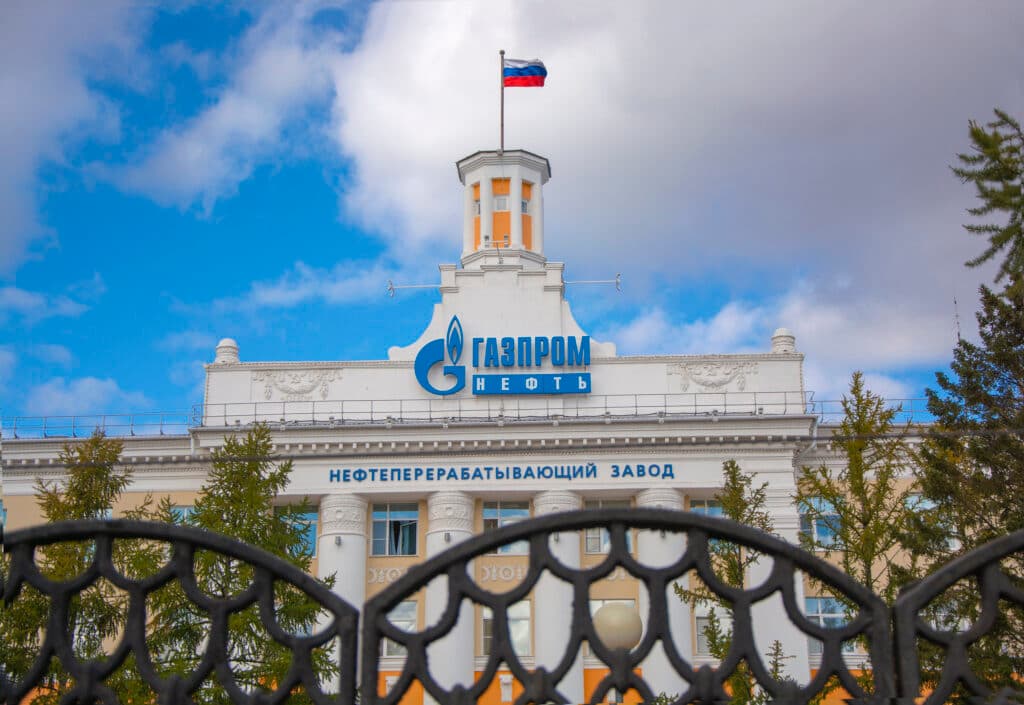
The Poles surprised the entire gas industry. Their antitrust authority succeeded in ensuring that Western European companies withdrew from the consortium for the construction of the Nord Stream 2 subsea gas pipeline. It was intended to double the transport of the strategic commodity beneath the Baltic Sea from Russia directly to Germany.
For the entire project, this means major complications and most likely delays as well, if Russia's Gazprom decides to continue with the project at all. The Russians would have to bear a far greater financial burden for the entire project. For now, however, they insist that they want to continue.
But what will happen next? Moscow has indicated that it will revive the Turkish Stream pipeline – for now, one of the four lines of the planned pipeline from Russia to Turkey. Following a sudden shift in bilateral relations, Ankara is once again more accommodating towards Moscow…
Greater transit through Czechia
And what could happen on the “northern front”? According to available reports, Gazprom could at least gain some consolation for now – the European Commission is expected this year to approve its request for more efficient use of the German Opal gas pipeline. It connects to Nord Stream, runs to the German-Czech border and could theoretically transport up to 35 billion cubic metres of gas per year.
This would mean that Gazprom could also make greater use of the capacity of the existing Nord Stream 1 pipeline. More gas would thus flow into Czechia, with additional capacity potentially exceeding 10 billion cubic metres per year. From the Czech perspective, this would primarily involve transit – most of the gas would most likely continue to Slovakia and then to the major gas hub in Baumgarten, Austria.
The Opal nightmare
The wrangling around the Opal gas pipeline has become something of a “nightmare” for Gazprom. Although the entire purpose of Opal is precisely to provide a connecting route for Russian gas from Nord Stream, in reality Gazprom has only been able to use it at 50% capacity.
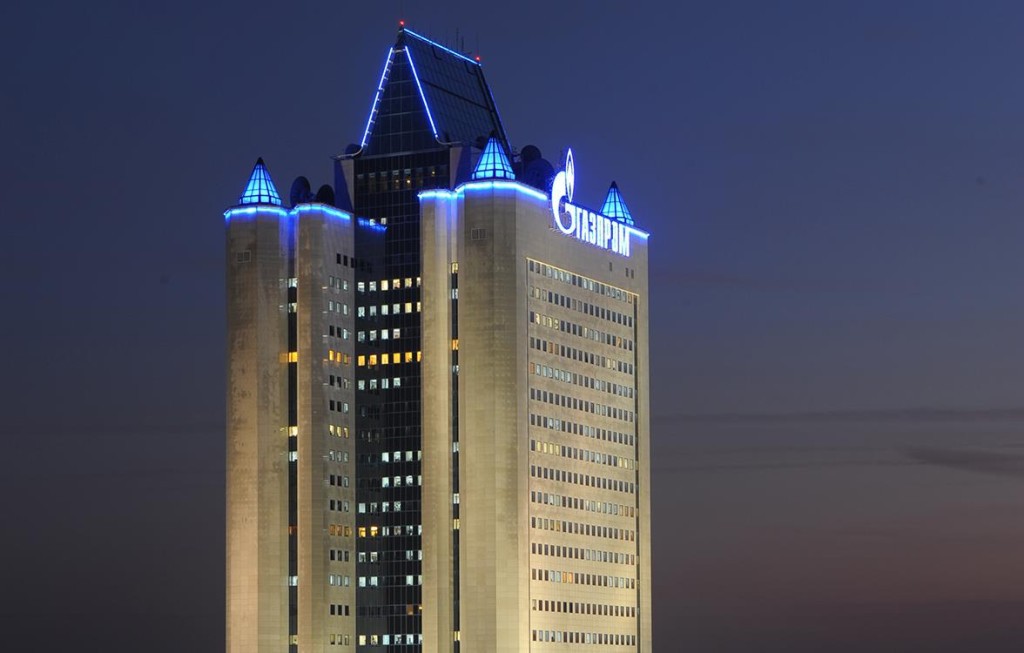
The reason is European Union rules – more specifically, the so-called third energy (liberalisation) package. This largely separates gas transmission from the operation of gas pipelines. As co-owner and operator of the Opal pipeline, Gazprom must therefore hold back and offer capacity in the pipeline to other interested parties. Even though there is not much actual interest in it.
In any case, due to the “problems” with Opal, the Russians have long been unable to fully use the capacity of Nord Stream 1 either, which theoretically reaches up to 55 billion cubic metres. For a long time, it was said that Nord Stream was being used at only around half of its capacity; after the greater integration of another connected German pipeline, NEL, this share rose. For most of 2015, Nord Stream utilisation exceeded 70%. However, spare capacity remained, even though a small portion of unused capacity was sold in auctions.
Crimea slowed the accommodating approach
The possibility that Gazprom would receive permission to make full use of Opal had emerged earlier. According to available information, a favourable position had also come from Prague, which understandably saw no need to reserve Opal capacity for other (effectively non-existent) gas suppliers to Czechia from the same direction.
However, the favourable developments for Gazprom were slowed by Russia's invasion of Crimea two years ago. Europe's willingness to make any compromises with Russia declined, while mutual relations became more strained.
Another turning point came this spring. In May, Gazprom reached an agreement with German regulator Bundesnetzagentur on 100% use of the Opal pipeline. The European Commission must now give its view, having requested further information from Germany.
According to some reports, an agreement on full use of Opal could form part of a broader compromise between the European Commission and Gazprom that would end Brussels' long-running antitrust investigation into the Russian company.
What they will show in the Kremlin
If Gazprom can therefore demonstrate in the Kremlin that it will after all strengthen gas transport via subsea routes in both the north and south (thanks to the Turkish Stream pipeline), it can also claim that it is at least partly fulfilling its political task – gradually pushing Ukraine out of gas transit. On the other hand, Moscow is already aware that without some compromise on retaining at least part of Ukrainian transit, no further compromises with Europeans will be possible.
At the same time, however, it is increasingly possible to hear the “heretical idea” not only in Berlin – but also, for example, in Prague – that transporting gas from Russia under the sea is far safer than via the still equally untrustworthy Ukraine.
The author works as a consultant and energy projects specialist at the HATcom agency.
Translation disclaimer
This article is a machine translation of the Czech original and has not yet been fully reviewed. In case of any doubt, please refer to the Czech version.
Sdílejte článek prostřednictvím:
You might also like

23 October 2026, 11:01
23 October 2026, 06:34