
23 October 2026, 14:38
Loading...
Síkela alerts European Commission to Czech alternative if gas stops flowing through Ukraine

oEnergetice.cz, ČTK
5 September 2024, 12:59
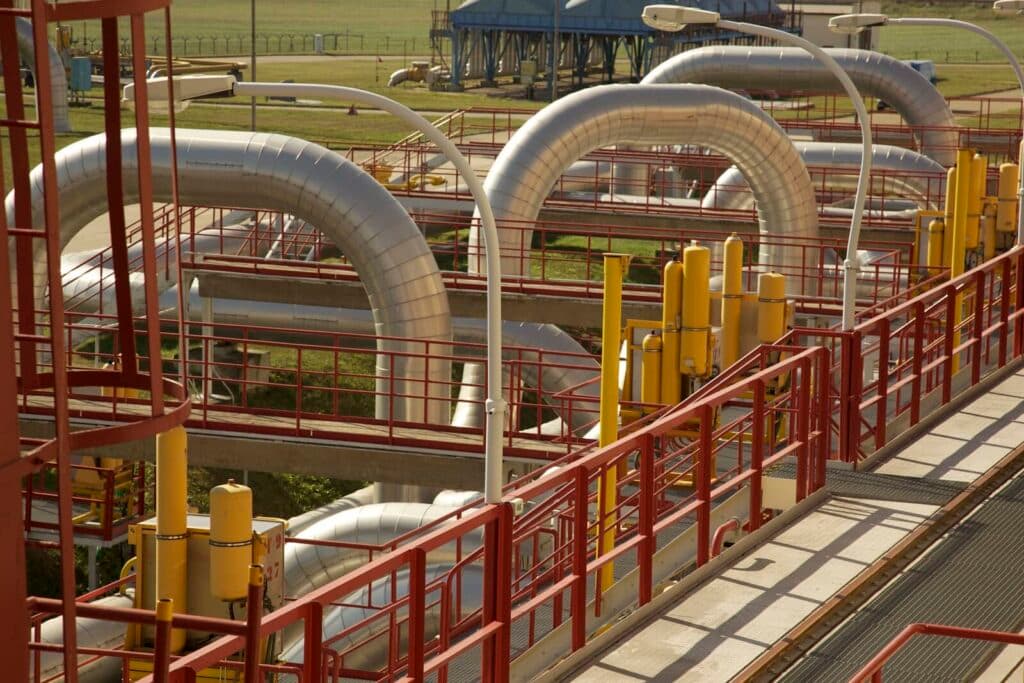
The Czech gas transmission system has sufficient capacity to replace current transit if Russian gas supplies through Ukraine are interrupted. Industry and Trade Minister Jozef Síkela (STAN) wrote this in a letter to European Commissioner for Energy Kadri Simson. He was responding to the fact that the Russian-Ukrainian gas transit agreement expires at the end of this year, which would particularly affect countries east of Czechia. The Ministry of Industry and Trade reported the letter today on its website.
There is currently no indication that the gas transit agreement will be extended, the ministry said. The loss of Russian gas supplies after the contract expires would primarily affect countries east of Czechia. This amounts to approximately 40 to 42 million cubic metres of natural gas per day that would need to be replaced.
If gas transit from Russia through Ukraine ends, alternatives should first be sought from other suppliers, Síkela said. „We must avoid a situation where we buy gas that is formally non-Russian, but which is swapped for Russian gas while being transported to Europe, leaving us no further forward in our efforts to reduce supplies from Russia,“ the minister added.
According to Síkela, the best alternative is to use gas flowing from Western Europe, which could be transported through Czech territory. The minister drew the European Commissioner’s attention to this option in his letter. He said the capacity of the gas pipelines running through Czech territory is sufficient for this. Replacing Russian gas with liquefied natural gas (LNG) imported into terminals being built on the European coast is also in line with the REPowerEU plan, which aims to reduce dependence on Russian energy commodities, the minister noted. Síkela also said that the German government’s decision to abolish the extraordinary gas storage levy from the beginning of next year—which had made natural gas transport through Germany more expensive—would greatly help implement the plan.
The current agreement on the transit of Russian gas through Ukraine to Europe expires at the end of this year. Kyiv has repeatedly said it does not intend to extend it. There are also concerns that supplies could be halted early because of fighting in Russia’s Kursk region, where a transit point for Russian gas exports to Europe via Ukraine is located, Reuters reported at the end of August.
Among EU countries, Austria is currently the most dependent on Russian gas. In a statement on 3 August, the country’s energy regulator E-Control said that even if Russian gas supplies were halted, Austria had enough gas in storage for the winter.
Translation disclaimer
This article is a machine translation of the Czech original and has not yet been fully reviewed. In case of any doubt, please refer to the Czech version.
Sdílejte článek prostřednictvím:
You might also like


23 October 2026, 11:01


23 October 2026, 06:34