21 October 2026, 06:41
Loading...
Energy 2026: New realism in Czech energy and 30 tasks for the next 30 years
oEnergetice.cz
3 September 2026, 05:30
Europe’s energy sector is entering a period in which originally ambitious transformation targets are increasingly colliding with technical, economic and political realities. This does not mean the end of decarbonisation. It does, however, mean the end of the notion that it can be achieved regardless of cost, time, technology availability or the impact on industry and the competitiveness of the European economy.
Energy is ceasing to be solely an environmental issue. It is once again becoming a matter of security, energy affordability, investment realities and the ability to maintain industrial production in Europe. Alongside emissions targets, questions of the physical stability of energy systems, power adequacy, grid resilience and the long-term economic sustainability of the entire system are also returning to the fore.
This very shift from declarations to deliverability will be the main theme of the 30th anniversary edition of the Energy 2026 conference organised by EGU.
Source: EGÚ
New realism: what do we really want to achieve?
The European Commission and individual Member States are increasingly openly acknowledging that the original pace and scale of some decarbonisation targets are running up against practical limits. Delaying key decisions, easing certain regulatory requirements, debates on the flexibility of climate targets and the return of discussions on industrial support show that energy policy is entering a new phase.
It is no longer solely about maximising the pace of decarbonisation, but increasingly about finding a balance between emissions, energy prices, competitiveness and security of supply. After years, the energy sector is thus returning to a fundamental question: what is genuinely feasible in the long term under European conditions?
The experience of recent years has also shown that the energy transition is not merely a matter of building new generation capacity. Increasingly, what matters is the ability of the whole system to function as a whole — from generation through grids to the market, flexibility and the regulatory framework.
Will decarbonisation finally become technology-neutral?
The debate on the future energy mix is gradually shifting from ideological preferences towards the question of technological feasibility. It is becoming clear that relying unilaterally on a narrow group of technologies significantly increases costs, investment risks and pressure on infrastructure.
A number of European countries are therefore gradually reassessing their approach to nuclear power, gas-fired generation, capacity mechanisms, or the use of CCS and low-emission gases. At the same time, doubts are growing as to whether sufficient carbon-free electricity can be secured in the short term for the large-scale electrification of industry, transport and heating.
It is also being confirmed that electrification alone may not always be the most efficient route. Decarbonising the gas system through biomethane, hydrogen or synthetic gases may also play an increasingly important role, particularly where full electrification would entail extreme costs for new generation and grids. Technology neutrality is thus ceasing to be a political slogan and is becoming an economic necessity.
Grids as the backbone of the energy transition
The development of both electricity generation and consumption is now running up against the limits of transmission and distribution grids across much of Europe. Connection capacity is being exhausted faster than grids can be modernised, while the growing share of intermittent sources is increasing the demands on system stability and management.
Grids are therefore becoming one of the key factors that will determine the pace of the entire transition. Experience in some European countries shows that without massive investment, a situation may arise in which the development of new generation and consumption outpaces the infrastructure’s ability to transmit energy safely.
However, alongside the electricity system, gas infrastructure is also returning to the centre of attention. It offers high transmission capacity, significant storage capability and potential for the future transport of low-emission gases. In an environment of growing volatility in renewable generation, flexibility will be one of the most valuable characteristics of energy systems.
The importance of flexibility is also confirmed by current analyses of power adequacy and the business models of assets providing balancing services. These show that, alongside battery systems, flexible gas-fired generation will remain an important part of the system after 2030, particularly for medium-term and longer-term balancing interventions.
The debate on grids has long since ceased to be merely a technical issue. It is a question of how expensive the transition will be and whether European industry will be able to bear it economically.
Is the market a brake on development or a stimulus?
Alongside generation and grids, the energy market itself is also changing ever more significantly. The growing volume of regulation, subsidies, capacity mechanisms, CfD contracts and investment incentives is gradually changing the nature of the European energy sector.
Today, the market is increasingly operating not as a space of pure competition, but as a combination of market signals and regulatory interventions. The question is therefore not only which technologies to support, but also how to ensure that the resulting system remains financeable and predictable for investment in the long term.
Meanwhile, discussion continues on the future of PPA contracts, the role of the state in ensuring investment in new generation, and how to set tariff structures so that they reflect the actual costs of energy systems while not hindering the development of flexibility and new technologies.
What mistakes will we no longer make?
The 30th anniversary edition of the Energy conference does not seek merely to look back on three decades of development in the Czech energy sector. Above all, it aims to open a realistic debate on the mistakes that neither Europe nor the Czech Republic can afford to repeat.
The energy sector today needs fewer slogans and more systemic thinking. It needs realistic investment plans, technology neutrality, robust infrastructure and an open discussion of the real costs of the transition.
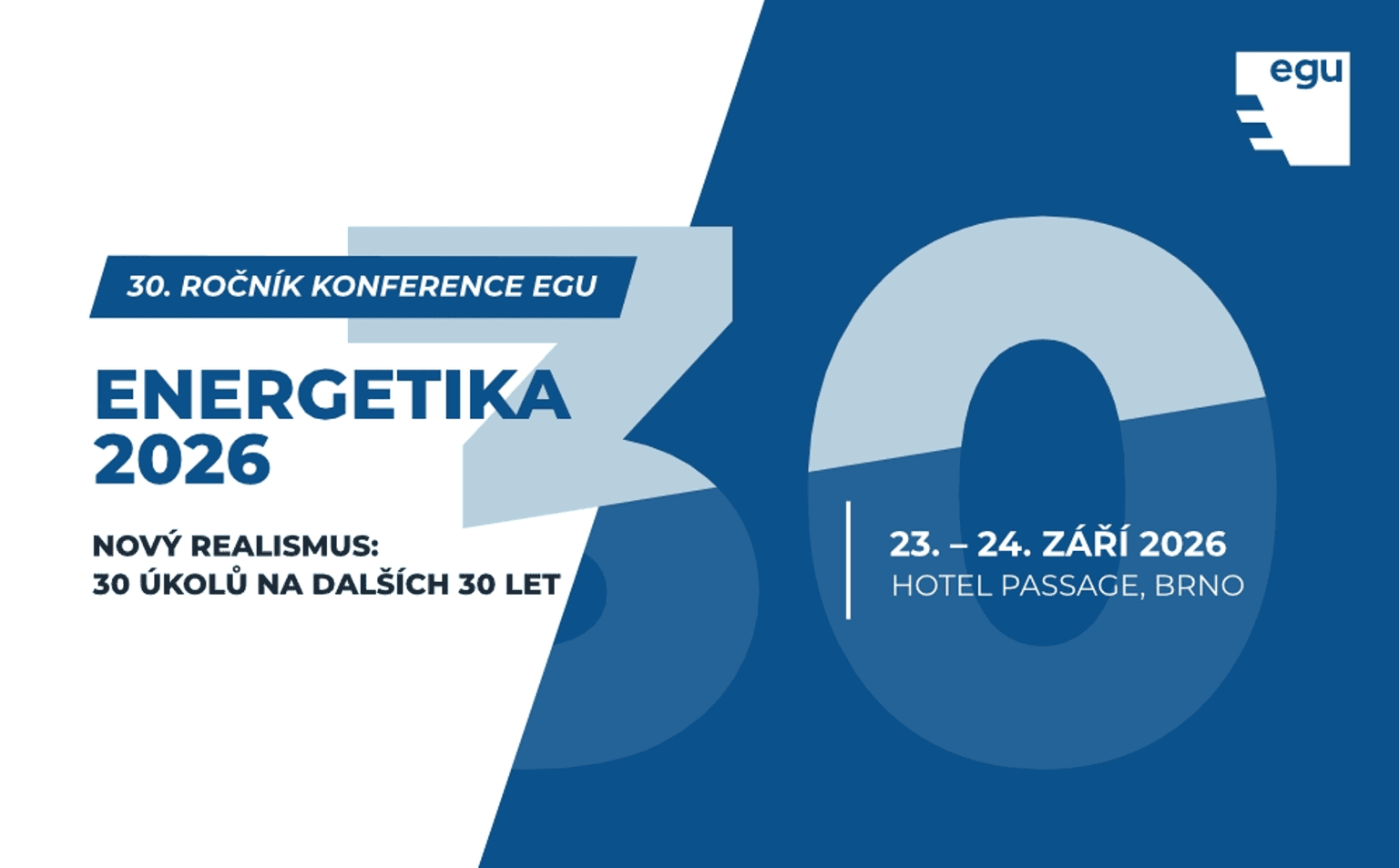
The Energy 2026 conference: New realism in energy – 30 tasks for the next 30 years will take place on 23–24 September 2026 at Hotel Passage in Brno. Four expert sessions and a final discussion panel will open topics that will determine the shape of Czech and European energy in the decades ahead.
Translation disclaimer
This article is a machine translation of the Czech original and has not yet been fully reviewed. In case of any doubt, please refer to the Czech version.
Sdílejte článek prostřednictvím:
You might also like
20 October 2026, 15:34
20 October 2026, 12:55
20 October 2026, 10:49