21 October 2026, 06:41
Loading...
Tilting at windmills: What do the facts say about Czech wind farms?

Martin Voříšek
21 October 2026, 06:41
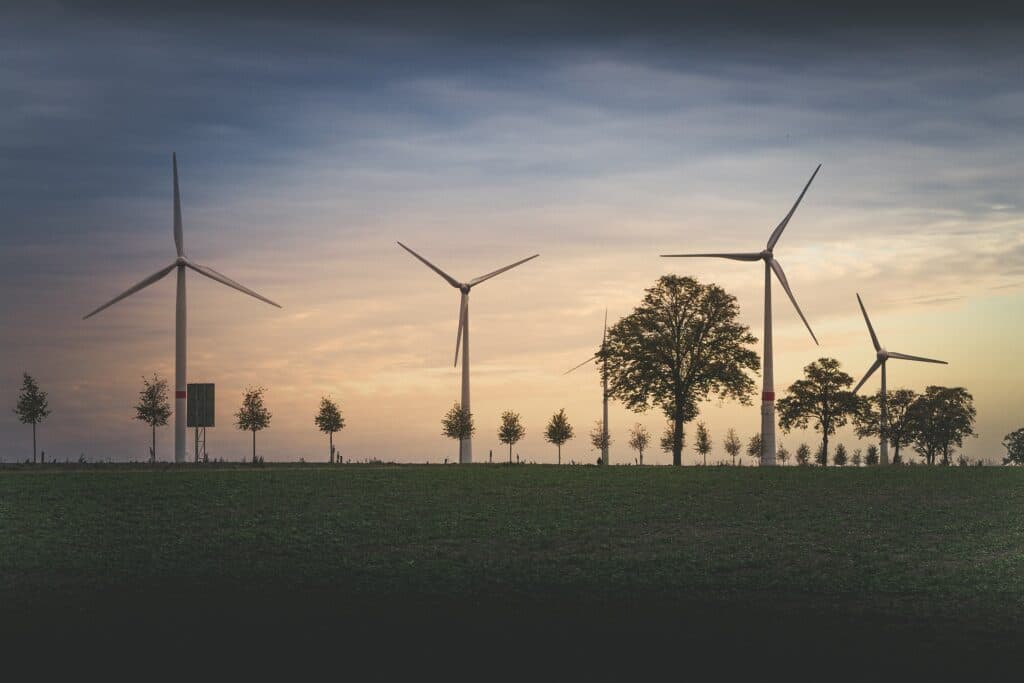
Wind farms are a hot topic in the Czech Republic. Not only in the context of recent referendums, critical voices have been raised in the country about "wind turbines" and infrasound, dead birds, devalued property and changes in the weather. What do studies confirm, what do they refute, and where are scientists still unsure?
We recently wrote about why most of this year’s referendums on wind turbines ended in rejection. This article looks at something else: the arguments that come up in public debate about wind turbines. The reason they matter is simple. Czechia is significantly behind the European average. According to WindEurope, 15.1 GW of new wind capacity was installed in the European Union last year, compared with just 13 MW in Czechia. That is roughly one thousandth of the European increase.
We will therefore look at the most common claims about wind turbines and what the available studies say about them.
Infrasound
Wind turbine opponents say that the turbines emit so-called infrasound, which allegedly causes headaches, sleep disorders and heart problems. Infrasound is sound below approximately 20 Hz, which people cannot normally hear. Turbines emit it, as do traffic and a range of other sources.
However, scientific reviews do not confirm direct health effects at typical levels. In a review published in 2023, the National Institute of Public Health says there is no evidence that infrasound below the hearing threshold has any effects.
Australian scientists conducted an experiment in which neither the participants nor the researchers themselves knew until the end who was being exposed to actual noise. The results showed that even 72 hours of infrasound exposure had no effect on sleep or other health indicators being monitored. A study from Auckland also showed that simply expecting harm can intensify symptoms.
That does not mean people living near turbines have no reason to complain. They do produce sound, but, as the National Institute of Public Health notes in the review cited above, “at sound pressure levels typically below 45 dB, the sound from wind farms is milder than that from other sources, such as transport (road, rail and air) or industry”. Nevertheless, residents find wind farm noise more disturbing than other sources at the same volume, and health concerns increase the level of annoyance.
Birds and bats
It is proven that wind farms kill birds and bats. The debate is about how many and with what consequences. The impact on populations of common bird species is small. However, in a study published in 2026, the Nature Conservation Agency of the Czech Republic says that no published data are yet available on the number of deaths in Czechia. Estimates from other countries are therefore used: from fewer than one to 21 birds per turbine per year, and more than 200,000 bats a year in Germany.
For comparison, according to the US Fish and Wildlife Service, cats are estimated to kill 2.4 billion birds a year in the United States, collisions with glass building surfaces nearly 600 million, and collisions with cars more than 200 million. For wind farms, the agency puts the figure at approximately 234,000 birds killed a year. These are older estimates, however, based on studies from different periods, not current mortality figures.
Other human activities also pose a significant risk in Czechia. According to the Nature Conservation Agency of the Czech Republic, around one million birds die every year just from colliding with glass surfaces on buildings, bus shelters and noise barriers. The Czech Society for Ornithology has also long highlighted this problem, organizing an awareness campaign called Glass Killer Week.
The argument that cars, cats or glass buildings kill more birds than wind turbines does not protect bird populations. What matters is where a turbine is located. That is why the European Renewable Energy Directive (RED III) requires acceleration areas to be designated outside Natura 2000 sites, protected areas and major bird migration routes, and to be based on sensitivity maps. Czech law provides for this and also requires measures to prevent bird and bat collisions. Whether these principles are followed in practice is determined in specific permitting procedures. This is precisely what the ornithologists are pushing for, calling for independent monitoring after construction.
Lower property prices
The concern that a wind turbine will reduce a home’s value is one of the most common arguments in municipalities, and it is not unfounded. Studies from other countries show that proximity to turbines can slightly reduce prices. According to a meta-analysis of 25 studies, the average decrease is just under one per cent at distances of roughly up to three kilometres, while the effect disappears at a distance of four and a half kilometres.
The first Czech analysis of property sales recorded in the land registry between 2014 and 2024, conducted by experts from VSB–Technical University of Ostrava and the Czech Academy of Sciences, found no negative effect. Prices in municipalities with wind turbines rose at a similar rate, by an average of 5% more, but the difference was not statistically significant. However, it compared only six pairs of municipalities. Czech data do not currently confirm a widespread fall in prices, but they are not broad enough to rule one out.
Even if concerns about falling property prices are confirmed in some locations, there are mechanisms that can partly offset the loss. Czech data do not currently confirm a widespread fall in prices, but they are based on a narrow sample and cannot entirely rule out a decline. That is precisely why it matters what the municipality and its residents gain from the project.
Since 1 August 2025, operators of new wind farms have been required to pay a fee of 50 Kč for every megawatt-hour generated, 98% of which goes to the municipality where the wind farm is located. For a typical 4.5 MW turbine, this could amount to around half a million crowns a year. The municipality can use the money for infrastructure or public amenities, or reduce the fee by ordinance and replace it with other agreed benefits.
The lex OZE II has opened up another option: municipalities and citizens can share electricity from renewable sources and obtain it at an agreed price, allowing them to benefit directly from the project. Planning agreements are a specific form of this, in which a municipality and an investor agree on benefits before construction.
Effects on the weather
Opponents often claim that large wind farms block the flow of moist air, and that this is why it supposedly does not rain here. According to the Czech Hydrometeorological Institute, the data do not support this. Meteorologists have long-running records of temperature, wind and humidity, making it possible to compare weather before and after wind farms are built. They say that even the largest wind farms do not have a significant effect on large-scale flows of wind and moisture into Czechia. Climate change is responsible for more frequent extremes, including both dry periods and torrential rainfall. A scientific study by the Czech Academy of Sciences reaches a similar conclusion: no process is known by which turbines could significantly affect precipitation.
That does not mean turbines have no effect on their surroundings at all. They slow the wind and increase turbulence behind them. At night, large wind farms can slightly raise ground-level temperatures, but measurements in Kryštofovy Hamry, home to the largest wind farm in Czechia, have not shown this effect. The Czech Hydrometeorological Institute rejects the claim that wind turbines cause or intensify tornadoes. Their rotors do mix the air near the ground, but tornado formation depends on the specific storm and conditions, which turbines do not affect.
One local effect, on the other hand, is confirmed: wind farms and their surroundings are struck by lightning more often, especially in winter. Tall structures can trigger so-called upward discharges. Measurements from other countries confirm this, and the main risk is to the turbines themselves. Overall, then, wind farms have a measurable but local and small effect on the weather. They do not determine the weather across the country.
Conclusion
The aim of this article was not to take one passage out of context and present only one point of view. On the contrary, the aim was to base the text on scientific studies and distinguish what they confirm, what they refute and where scientists are still unsure. Some concerns are supported by evidence: birds and especially bats really do die, and wind farm noise can be subjectively disturbing. But the noise is no louder than that from other sources. Other concerns, such as the harmfulness of infrasound or effects on precipitation, are not currently supported by scientific evidence. There are not yet sufficiently broad Czech data on property prices.
There will always be someone who claims that the coverage is one-sided and agenda-driven. Unfortunately, no article can avoid such a judgment. There is only one answer: what matters is the facts, their sources and whether they can be verified. That is why each claim is accompanied by a source and a relevant link, as well as a note about its limitations.
Comparison is also worth mentioning. The impact on the landscape, the surrounding environment and wildlife are precisely the questions raised about wind farms, and they can just as legitimately be asked about other energy sources.
The Ministry of the Environment, for example, says that coal mines devastate the landscape and require costly reclamation, and that burning coal releases fine particulate matter and nitrogen and sulphur oxides, which harm health, particularly for people living near power plants. This does not mean concerns about wind turbines are pointless. It simply means that every source of electricity should be assessed by the same criteria.
Translation disclaimer
This article is a machine translation of the Czech original and has not yet been fully reviewed. In case of any doubt, please refer to the Czech version.
Sdílejte článek prostřednictvím:
You might also like
20 October 2026, 15:34

20 October 2026, 12:55
20 October 2026, 10:49