Bloomberg: Russian strikes have knocked out 60 percent of Ukraine's domestic gas production

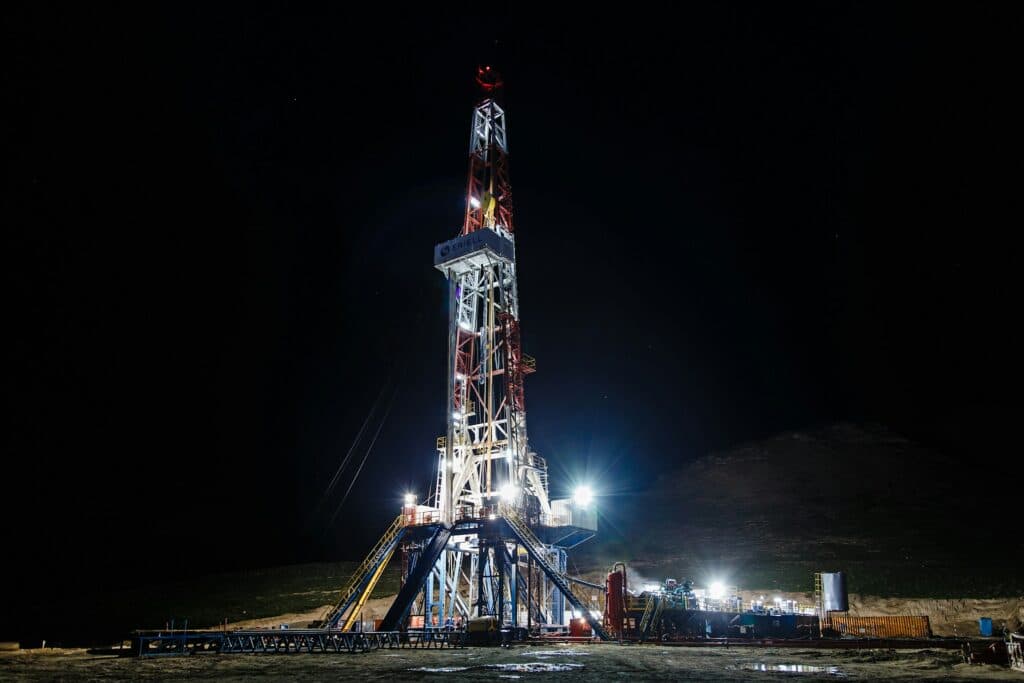
Russian attacks in recent days have destroyed more than half of Ukraine's domestic natural gas production. This is likely to force the government in Kyiv to spend 1.9 billion euros ($2.2 billion) on fuel imports to get the country through the approaching winter. Bloomberg reported this today. Ukraine has been defending itself against Russia's military invasion since February 2022 and has recently also been trying to target energy infrastructure in Russia.
Kyiv told its allies earlier this week that a massive Russian barrage targeting the Kharkiv and Poltava regions on October 3 destroyed about 60 percent of Ukraine's gas production, Bloomberg reports, citing people familiar with the matter. The sources requested anonymity because the discussions are private.
Before the war began, Ukraine's gas infrastructure was capable of meeting domestic demand. But since the start of this year, it has faced increasingly intense missile and drone attacks. If the attacks continue, Ukraine expects it will have to buy about 4.4 billion cubic meters of gas by the end of March next year, at a cost of almost two billion euros, people familiar with the details said. That is equivalent to nearly 20 percent of Ukraine's annual consumption.
Since the attacks began, Kyiv has urgently asked its partners in the Group of Seven (G7) advanced economies for equipment to repair its energy system. Ukraine has also long been calling for more air defense systems to help protect its energy infrastructure. At the same time, it is seeking financial support to cover gas imports.
"Russia will do everything it can to stop us from producing our gas," Ukrainian President Volodymyr Zelenskyy told reporters in Kyiv on Monday. "They will do everything. It will be difficult to protect all of this. The task is to have the money to import gas so that people have gas," he added.
Gas is essential for heating, especially during the winter months, when Ukraine is very cold. Households there rely almost exclusively on this fuel for heating. Russia has targeted Ukraine's energy infrastructure every winter since the invasion in an effort to undermine civilian morale.
Ukraine has so far bought 4.58 billion cubic meters of gas from foreign suppliers this year, including 3.67 billion since the end of the last heating season. Kyiv had estimated that it would need to import 5.8 billion cubic meters by the end of this year, but told allies earlier this week that it might need more because of Russian attacks, the sources said.
Increased gas supplies to Ukraine from the European Union could worsen market conditions in the region. These concerns already contributed to rising gas prices in Europe at the beginning of the week. EU gas reserves are still below their long-term averages, leaving the region vulnerable to potential supply disruptions. A cold winter could quickly deplete stocks and make prices even more volatile, creating another problem for consumers.
Zelenskyy told reporters in Kyiv today that Ukraine would first try to rely on increased domestic production. But if there is a "major attack on all gas infrastructure," it will resort to imports and will know where to find the money it needs, Zelenskyy said. The exact amount of gas Ukraine needs will depend on a number of factors, including how quickly damaged facilities are repaired and the impact of any future airstrikes, Energy Minister Svitlana Hrynchuk said on Tuesday.
Ukraine's national energy company Naftogaz declined to comment on the situation, but its CEO, Serhiy Koretskyi, said in a LinkedIn post that he had held talks with G7 representatives and had also spoken with people from the International Monetary Fund (IMF) and other partners. He described the talks with G7 representatives as productive. "Our partners fully understand the complexity of the situation," he wrote.
A key risk for Kyiv is that the damage to domestic production could worsen as Ukraine and Russia continue to intensify their mutual strikes on each other's energy infrastructure. Ukraine has also targeted Russian refineries in an effort to curb the huge revenues Moscow earns from energy exports and then uses to finance its war effort.
Russia stepped up its strikes after Ukraine halted the transit of Russian gas through pipelines to the European Union earlier this year. While Ukraine made it through previous winters with generators and helped civilians during winter power outages, there are growing concerns that damage caused by a series of recent attacks may not be repaired before the end of winter.
And the costs are rising. The bill for emergency repairs to energy systems is estimated at 758 million euros (18.4 billion Czech crowns), according to people familiar with the matter. Kyiv estimates the cost of direct physical damage to the energy sector since the start of the invasion at $20.51 billion (429.2 billion Czech crowns), including $14.8 billion in the electricity sector, $1.35 billion in the gas sector and $1.7 billion in the oil sector. The figures do not include losses related to the Zaporizhzhia nuclear power plant, which Russian forces seized at the start of the war.
Ukraine is also seeking funds to buy anti-drone equipment and defend against attacks. On Monday, Zelenskyy urgently called on allies to help pay for additional US weapons. The European Bank for Reconstruction and Development (EBRD), the European Investment Bank (EIB) and the European Commission (EC) are already considering additional assistance to support Ukraine's energy sector, according to sources. Naftogaz secured a 500 million euro loan from the EBRD in August to finance emergency purchases and received a 300 million euro loan from the EIB earlier this month.
Translation disclaimer
This article is a machine translation of the Czech original and has not yet been fully reviewed. In case of any doubt, please refer to the Czech version.