
23 October 2026, 14:38
Loading...
Germany to raise gas transit fee; whether it will affect Czechia remains unclear

oEnergetice.cz, ČTK
20 November 2024, 15:15
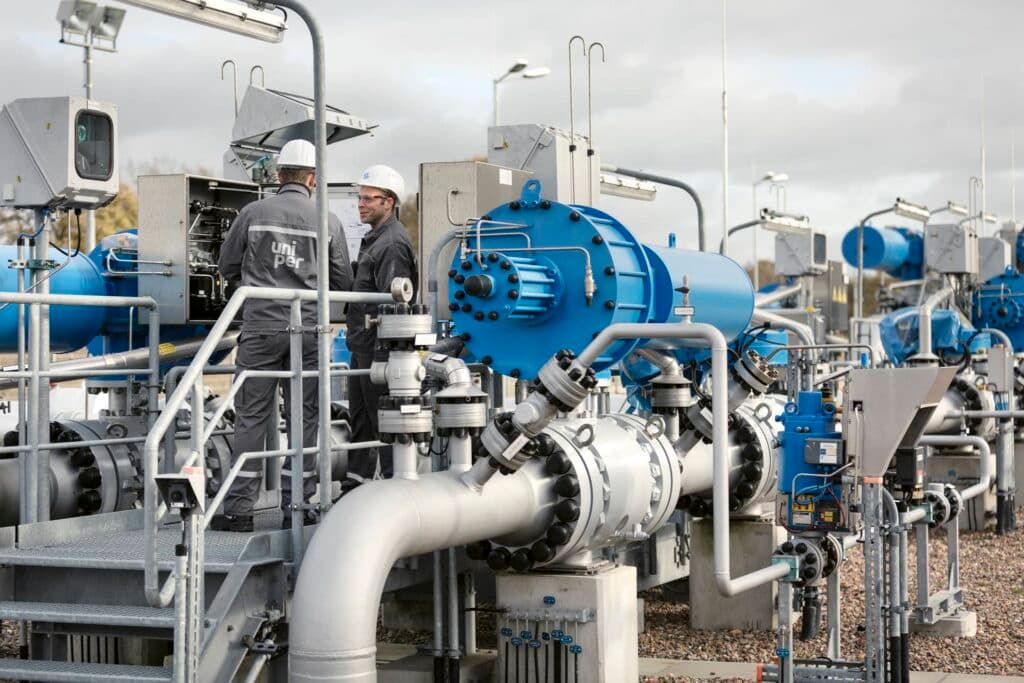
From January, Germany will raise the gas transit fee from the current 2.50 to 2.99 euros (almost CZK 76) per megawatt-hour (MWh). Trading Hub Europe GmbH (THE), the operator and coordinator of the German gas market, announced this today in a press release . It is not yet entirely clear whether Czechia will also have to pay the fee. That depends on whether the Bundestag can pass an amendment to the Energy Industry Act by the end of the year. The Czech Ministry of Industry and Trade (MPO), according to its spokesperson Marek Vošahlík, still expects the fee to be abolished entirely from next year.
In May, following criticism from the Czech Republic and other countries, Germany pledged to abolish the controversial fee from January. It prepared an amendment for this purpose, which the Bundestag approved at first reading in September. The bill is now before the Committee on Climate Action and Energy.
At the beginning of November, however, Germany’s governing coalition of the Social Democrats (SPD), the Greens and the Free Democrats (FDP) collapsed, complicating the work of the Bundestag. After the FDP left the government, Germany is governed by an SPD-Green cabinet that does not have a parliamentary majority. Chancellor Olaf Scholz would like to pass some laws before the snap election, which is expected to take place on 23 February, that he says cannot be delayed. In recent days, however, he has not listed the so-called third amendment to the Energy Industry Act as a priority. It is therefore unclear at this point whether it will be passed and enter into force by the end of the year.
The amendment is intended to change the part of the act under which fees are levied on gas volumes at cross-border points. In its explanatory note, Scholz’s government said the change was necessary because the European Commission (EC) had concluded that part of the current law was incompatible with EU law. The German government also says the fees make it harder for Central and Eastern European countries to diversify their gas supplies. “This makes the fee contrary to the EU’s common effort to become independent of Russian natural gas,” the description of the bill on the Bundestag website states.
The Czech Republic, Slovakia, Austria and Hungary stepped up pressure on the EC until this spring to take action against the disputed fee. They also criticised it because, in their view, it makes efforts to move away from Russian gas supplies more difficult by disproportionately increasing the cost of importing gas from Western Europe.
In calculating the fee, THE is assuming that a new law will take effect on 1 January next year, meaning it will no longer receive revenue from gas volumes at cross-border points. It is not clear at this point what the operator would do if the amendment to the law were not passed in time.
Nevertheless, the Czech Ministry of Industry and Trade, according to spokesperson Vošahlík, still expects fees for transit to the Czech Republic to be abolished entirely from the beginning of next year. “According to information from the MPO, the fee increase has been calculated without taking volumes at cross-border points into account. This means that the increase in question does not apply to gas supplies to the Czech Republic. The ministry also expects the fee to be abolished at cross-border points from 1 January 2025, as German government representatives have stated several times. So, based on this announcement, nothing changes for Czechia,” he said.
Germany introduced the fee in autumn 2022. It was intended to cover the costs of storing gas and ensuring security of supply. The fee applies to companies and consumers in Germany, as well as importers in neighbouring countries that purchase gas through German pipelines.
The gas market changed significantly following Russia’s military invasion of Ukraine in February 2022, when the European Union imposed sanctions on Russia and, among other measures, began rejecting Russian commodities, including oil and gas. The price of natural gas in Europe surged in summer 2022, briefly exceeding 300 euros per MWh, and has since returned to levels seen around early 2022. This afternoon it was above 46 euros/MWh.
Translation disclaimer
This article is a machine translation of the Czech original and has not yet been fully reviewed. In case of any doubt, please refer to the Czech version.
Sdílejte článek prostřednictvím:
You might also like


23 October 2026, 11:01


23 October 2026, 06:34