30 September 2026, 12:31
Loading...
Reuters: German gas importer SEFE instructed by government to increase reserves

oEnergetice.cz, ČTK
30 September 2026, 12:31
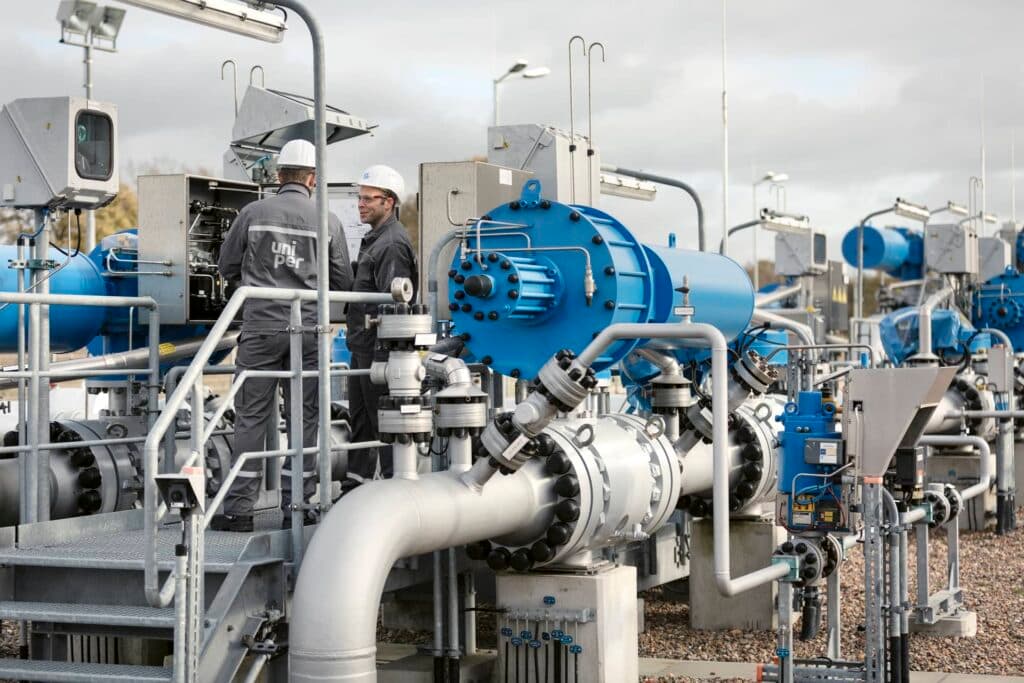
Germany’s state-owned gas importer SEFE has been instructed by the Ministry for Economic Affairs to increase its natural gas stocks by eight terawatt-hours (TWh) by 15 December and to start buying gas accordingly. The Reuters news agency reported this today, citing a company statement. According to Reuters, this points to increased concerns about stock levels ahead of the winter heating season. Germany’s storage facilities are significantly less full than the European Union average.
As of 29 September, Germany’s storage facilities were around 57 percent full, equivalent to less than 143 TWh, data from Gas Infrastructure Europe show. The EU-wide average exceeded 71 percent.
The government issued the instruction to increase natural gas stocks in its capacity as SEFE’s owner. The company had previously said that its supply-related actions were solely the result of “independent commercial decisions”.
Europe is entering the winter heating season with its lowest stock levels in several years. Global conflicts have pushed up energy costs. European countries, which reduced their dependence on cheap Russian gas after Russia’s military invasion of Ukraine in 2022, are now facing disruptions to supplies from the Middle East as they seek to replenish depleted stocks.
German Economy Minister Katherina Reiche has so far relied on market incentives to bolster gas stocks and avoided direct state purchases. Such purchases have contributed to price increases in the past.
SEFE was created by renaming Gazprom Germania, which separated from Russia’s Gazprom after the start of Russia’s invasion of Ukraine. On 14 November 2022, the German government announced that it would take a 100 percent stake in the company.
SEFE, an abbreviation of the English name Securing Energy for Europe, is not just a natural gas trader. SEFE operates across the entire value chain—it buys and trades gas and liquefied natural gas (LNG), supplies gas to customers, transports it and stores it.
The company says it has more than 50.000 customers, around 2000 employees and sells approximately 200 TWh of gas and electricity a year. According to its own figures, it operates and commercially uses more than 25 percent of Germany’s gas storage capacity.
As of 29 September, the volume of gas in storage across the EU was around 807 TWh. Total capacity is approximately 1132 TWh. A year ago, EU storage facilities were around 82 percent full, while the five-year seasonal average is around 87 percent. The Czech Republic’s storage facilities are more than 76 percent full, compared with around 96 percent a year ago.
Translation disclaimer
This article is a machine translation of the Czech original and has not yet been fully reviewed. In case of any doubt, please refer to the Czech version.
Sdílejte článek prostřednictvím:
You might also like
30 September 2026, 12:13
30 September 2026, 12:10
30 September 2026, 10:32

30 September 2026, 06:17