
23 October 2026, 14:38
Loading...
Russian gas exports to the EU are three percent lower than in recent months

oEnergetice.cz, ČTK
2 December 2024, 11:36
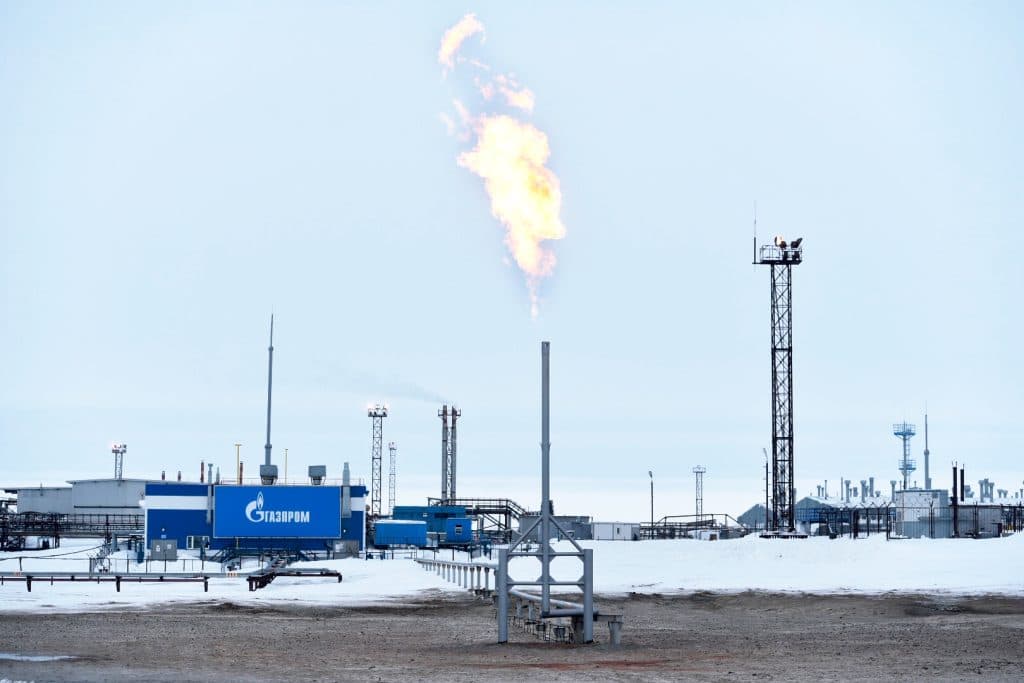
Russian gas exports via Ukraine to European Union countries are set to reach 40.8 million cubic metres today, down by more than three percent from levels in recent months. This is according to data from Russian gas company Gazprom, reported by Reuters. Exports nevertheless edged up from 40.6 million cubic metres on Sunday.
The nearest gas contract for delivery in January briefly traded for more than 49 euros (around CZK 1,240) per megawatt-hour (MWh) at the Title Transfer Facility (TTF) virtual trading hub in the Netherlands today shortly before 9:00 CET. The price later fell to 48.80 euros per MWh, up by more than two percent. Prices at TTF are the benchmark for consumers in Europe.
So-called nominations for gas deliveries to Slovakia and onward through its territory remained stable, however. Nomination is the technical term for requests to deliver a commodity.
Russia halted gas supplies to Austrian company OMV in mid-November. Austria is still receiving gas, however, because other gas traders asked the Russian company for higher deliveries, which they then send on to Austria.
Austrian company OMV suspended payments for gas to Russian state-owned company Gazprom in order to recover the 230 million euros (CZK 5.8 billion) awarded to it in arbitration in a dispute with the Russian company. OMV sought compensation for irregular gas deliveries and for the complete halt to supplies to Germany in August 2022. The Austrian company is also involved in several other disputes with the Russian state-owned company.
Russia, which was Europe’s largest gas supplier before its invasion of Ukraine, has lost most of its European customers amid sanctions and the EU’s efforts to reduce its dependence on Russian energy.
Since late February 2022, when Moscow launched its military invasion of Ukraine, Western countries have gradually imposed a series of sanctions on Russia, including measures targeting the energy sector. Landlocked countries in Central Europe were granted an exemption for gas supplies to give them more time to find alternative suppliers. The contract for the transit of Russian gas to the EU via Ukraine will expire at the end of this year, however, and is not expected to be extended.
Translation disclaimer
This article is a machine translation of the Czech original and has not yet been fully reviewed. In case of any doubt, please refer to the Czech version.
Sdílejte článek prostřednictvím:
You might also like


23 October 2026, 11:01


23 October 2026, 06:34