
17 October 2026, 13:09
Loading...
BDEW: New German government should use prepared draft law for new gas-fired power plants

Jan Budín
23 May 2025, 06:24
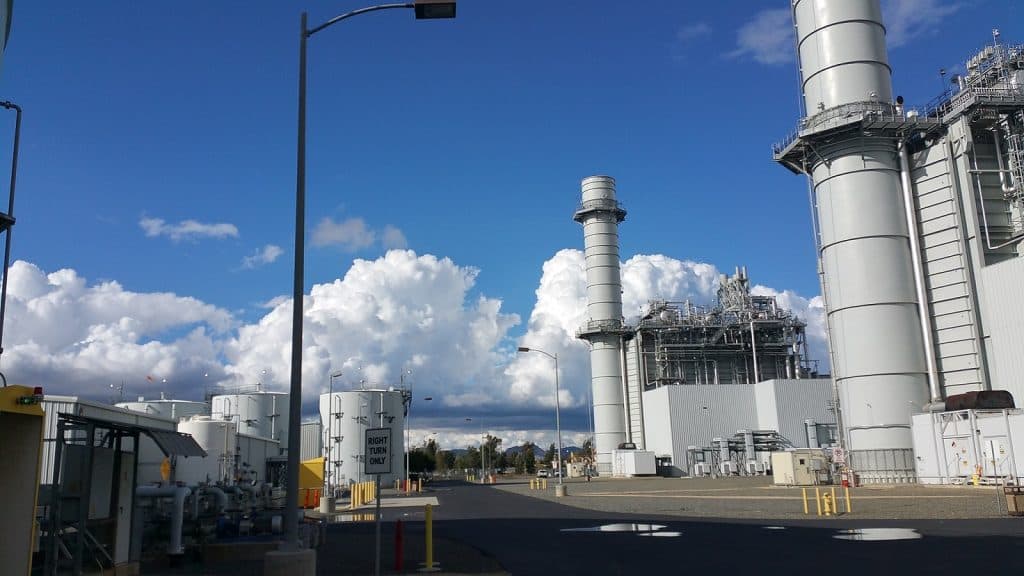
The German Association of Energy and Water Industries (BDEW) is calling on Germany’s new government to use the prepared draft law to support the construction of new gas-fired power plants, which the previous German government ultimately failed to pass despite considerable efforts. The association argues that auctions to support these plants need to be launched quickly as the use of coal-fired power plants is set to end. Clean Energy Wire reported.
Germany’s planned scheme to support the construction of new gas-fired power plants fell through at the end of last year when the previous government collapsed. These power plants are intended to provide the capacity needed in the German electricity system in the future during periods when the sun does not shine sufficiently and the wind does not blow.
To launch auctions for support for new dispatchable power plants as soon as possible, the new German government should, according to BDEW, use the draft law already prepared. Germany has repeatedly consulted the European Commission on it, although the Commission has not yet given its final approval.
The draft prepared by former economy minister Robert Habeck envisaged the construction of 12,5 GW of new gas-fired power plants, while the new German government raised this target to 20 GW in its coalition agreement. The approach to making the new gas-fired plants “greener” also differs. While the previous government relied exclusively on hydrogen, the new government also wants to give carbon capture and storage technologies a chance.
Seeking to reach agreement with the Commission quickly
After talks on Monday with European Commission Executive Vice-President for a Clean, Just and Competitive Transition Teresa Ribera, German Minister for Economic Affairs and Energy Katherina Reiche said she was aiming to reach agreement with the European Commission within weeks or months. She added that up to 20 GW of new dispatchable capacity would be provided primarily by gas-fired power plants.
After the meeting, Ribera said Germany first needed to provide information about its plans to finance new dispatchable power plants.
“We need to be much more precise in defining what we are talking about,” Ribera said when asked whether Germany’s plans comply with European state aid rules.
BDEW chief Kerstin Andreae said that time was now the main concern.
“If auctions began at the start of 2026, the first power plants could be commissioned at the end of 2030 or the beginning of 2031. That is why it is important for us to act quickly now,” Andreae added.
Translation disclaimer
This article is a machine translation of the Czech original and has not yet been fully reviewed. In case of any doubt, please refer to the Czech version.
Sdílejte článek prostřednictvím:
You might also like




16 October 2026, 10:16