
23 October 2026, 14:38
Loading...
European Commission wants to split Germany’s electricity market over grid constraints

Martin Voříšek
31 May 2016, 13:55

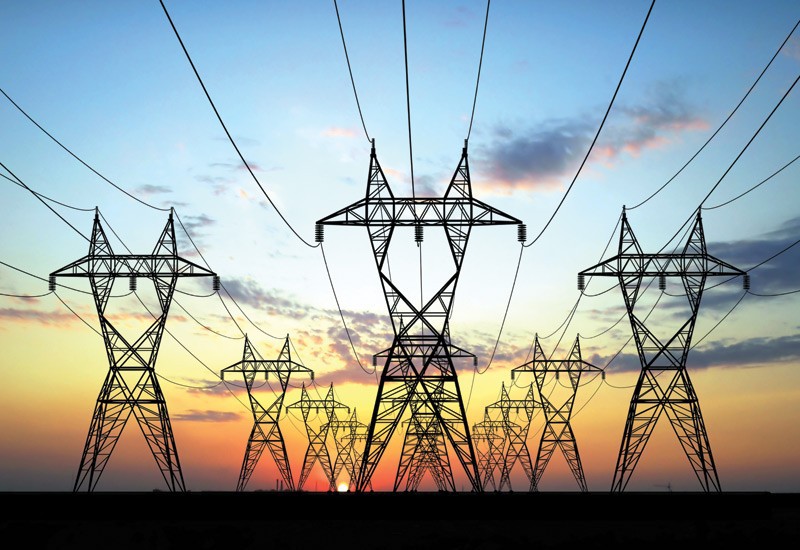
According to the newspaper Welt, the European Commission is considering splitting Germany’s electricity market into northern and southern parts, which would lead to higher electricity prices in southern Germany. The main reason for considering a division of the German market is the insufficiently rapid construction of transmission lines.
In the European Commission’s view, Germany is not expanding its transmission system quickly enough, which is also „a cause of political conflicts and complicates the possibility of linking electricity markets in eastern and western Europe.“
Countries most affected by the insufficient development of Germany’s grid include Poland and the Czech Republic. Austria, on the other hand, benefits, as cheap electricity from Germany allows it to save up to EUR 300 million a year on electricity overall.
By the end of the year, the European Commission is expected to present a plan for a new design of the German electricity market, which should include the aforementioned division into two electricity price zones.
As a preliminary measure, the European Commission has reportedly already proposed introducing a regionally differentiated charge for feeding electricity into the grid. The aim would be to create incentives to build power plants in regions with insufficient installed capacity.
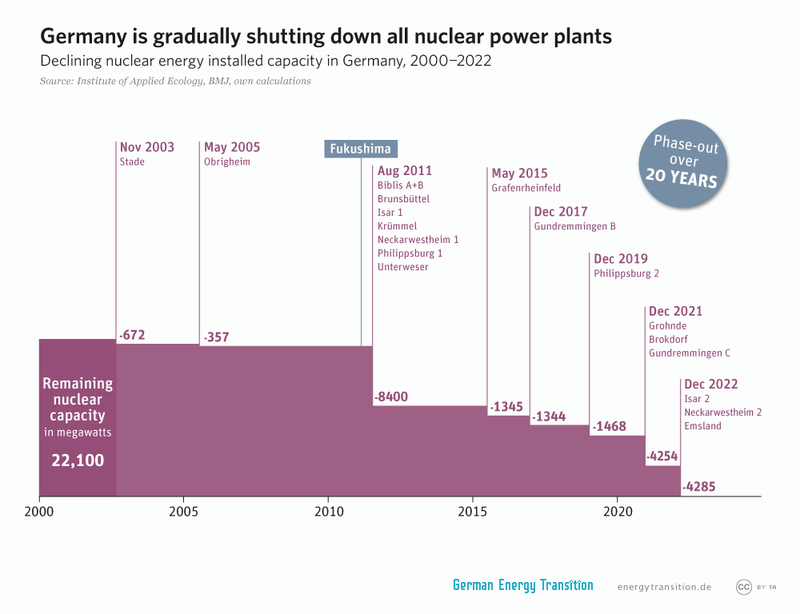
The main problem will not arise now, but in 2021 and 2022, when the last German nuclear units are scheduled to be shut down (a total of around 8.5 GW over two years).
Most of the remaining power plants are located in southern Germany (Isar, Gundremmingen B and C, Neckarwestheim and Philippsburg 2), where a capacity shortage is expected.
BNetzA: Required lines will not be ready before 2025
The German Ministry for Economic Affairs and Energy plans to build lines from north to south. However, the pace of line construction is inadequate, and completion before the shutdown date of the last power plants is highly unlikely (under the EnLAG law, only 151 km of lines were built in 2015).
Moreover, due to the newly introduced priority for building lines in the form of underground cables, the construction process is effectively returning to the beginning. Previous transmission system development plans must be redrawn to take cable construction into account, which will affect line routes.
According to Welt, Germany’s regulatory authority also expects the lines to be completed no earlier than 2025.
Translation disclaimer
This article is a machine translation of the Czech original and has not yet been fully reviewed. In case of any doubt, please refer to the Czech version.
Sdílejte článek prostřednictvím:
You might also like
23 October 2026, 11:01
23 October 2026, 06:34