5 November 2026, 06:36
Loading...
German offshore sector under threat? State premiers warn government over planned reform
Adam Sosna
5 November 2026, 06:36
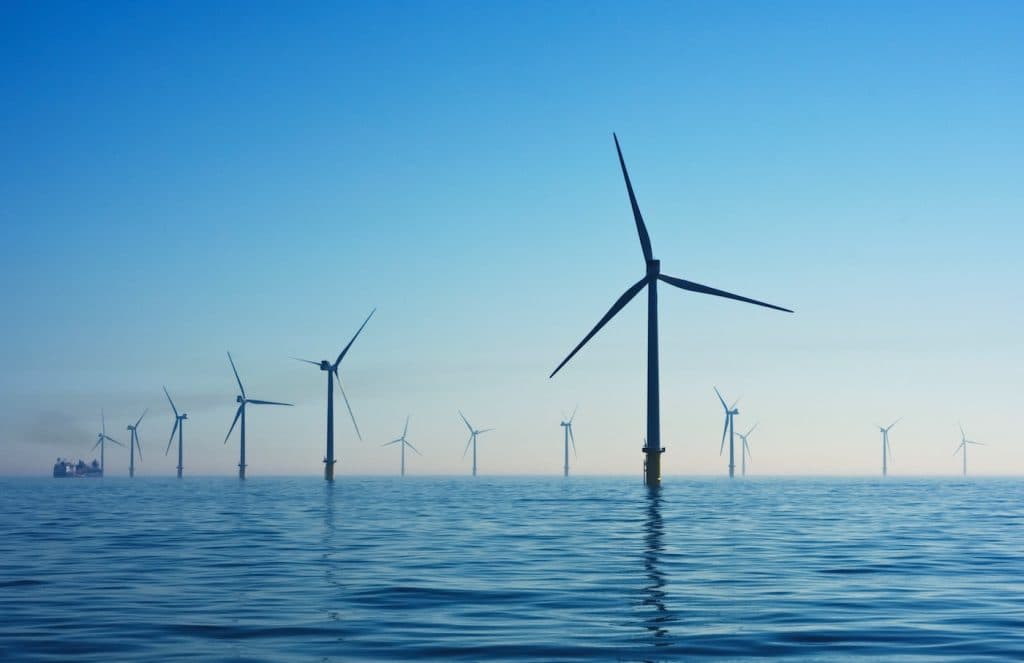
Eight of Germany’s 16 state premiers are calling on Federal Minister for Economic Affairs and Energy Katherina Reiche to amend the proposed revision of the Offshore Wind Energy Act (WindSeeG). They oppose a two-stage auction model under which contracts for difference would only come into play if an auction round without state backing fails. In their view, the current draft of the law will lead to a further slowdown in construction, potentially putting as many as 23,000 jobs at risk.
Eight of the 16 state premiers signed the letter, representing a broad political spectrum. They include the leaders of all the coastal states, as well as the southern industrial centres of Bavaria and Baden-Württemberg.
They are warning the federal government about the reform of the Offshore Wind Energy Act (WindSeeG). The law, which is currently being debated in the Bundestag, threatens the future of new offshore projects and the sector as a whole, they say.
They warn that the amendment in its current form will jeopardise future tenders and lead to a contraction of the sector and the deindustrialisation of the country. As many as 23,000 jobs are at risk, they say.
“The proposed two-stage structure is harmful and should be dropped without replacement. Only a pure CfD model can prevent a repeat of the current situation, in which projects win contracts but are never built,” the letter says.
Contracts for difference only in the second round
The government approved the proposal on 2 September 2026. The Bundestag debated it for the first time on 8 October and then referred it to committees. The Committee on Economic Affairs and Energy will take the lead.
The new auction design is the main source of disagreement. The first round is intended to establish whether anyone is willing to build a wind farm purely on a market basis, without state support—for example, with a long-term power purchase agreement (PPA).
Only if no such investor is found would a second round follow, with two-way contracts for difference (CfDs). A CfD guarantees the operator the auctioned price. If the market price falls below it, the state pays the difference. If it rises above it, the operator pays the surplus back.
The ministry says the model prioritises the market and uses the state-backed safety net only where the risks are too great. Critics from companies and industry associations say the first round, without any backing, leaves investors with all the market risk, which they would have to factor into more expensive financing.
The law changes more than the auctions themselves. The proposal extends the standard permitted operating period from 25 to 35 years. From 2027, it sets annual auction volumes at 2,000 to 4,800 MW. It will allow installed capacity to exceed grid connection capacity by up to 20%. Better planning is also intended to reduce the mutual “shadowing” of wind farms, when turbines located close together take wind from one another.
Germany currently has just under 11 GW of offshore capacity in operation. The government’s long-term targets—30 GW by 2030 and at least 70 GW by 2045—are unchanged by the amendment.
From billion-euro bids to an auction with no bidders
Two-way contracts for difference have not yet been used in German offshore auctions. The most recent rounds took place without operating support. In 2023, investors not only refrained from seeking support but even offered the state money for the sites.
Since then, however, construction and financing costs have risen, while revenues from electricity sales have become less certain. BP has effectively halted work on its 4 GW projects. TotalEnergies wants to return some of the sites it won. The law does not allow this, however. The state can revoke companies’ rights only if they fail to meet construction deadlines.
In August 2025, not a single bidder even entered an auction round. This year’s tenders have been postponed until 2027, when the new law is due to come into force.
States, industry groups and unions want contracts for difference only
The Bundesrat opposed the two-stage model on 16 October. Its position is not binding, however. The state governments are now calling for auctions to use contracts for difference only. They are also lobbying for price flexibility to reflect cost trends and for binding construction deadlines. They want to cap the capacity that a single bidder can win.
The offshore association BWO, energy association BDEW and trade unions have long made the same demands. Their main argument is jobs. If construction does not get underway, around 23,000 of the sector’s 49,000 jobs could disappear within four years, according to critics of the law. Some companies are already laying off staff. Companies’ lost revenue could reach as much as 24 billion euros.
Some projects could be “returned”
In response to the letter, the Minister for Economic Affairs and Energy said she plans to allow the “managed return and reassignment” of projects that are not viable to build. Companies would not thereby escape their financial obligations, she said. According to the minister, the 2023 and 2024 auctions suffered from “fundamental shortcomings”.
The concession applies only to projects from those two years. Existing holders would have to pay a penalty to transmission system operators and be excluded from a new auction for the same site. The states had also sought the option to return projects from 2025. The minister has not yielded on the two-stage auctions.
A final vote is expected by the end of the year. It remains uncertain whether all MPs from the governing SPD will support the proposal in its current form, particularly those from the coastal states.
Translation disclaimer
This article is a machine translation of the Czech original and has not yet been fully reviewed. In case of any doubt, please refer to the Czech version.
Sdílejte článek prostřednictvím:
You might also like

4 November 2026, 14:17

4 November 2026, 12:34

4 November 2026, 09:09