15 October 2026, 14:19
Loading...
Price tag for German carbon neutrality: six trillion euros by 2045

Eduard Majling
15 October 2026, 13:30

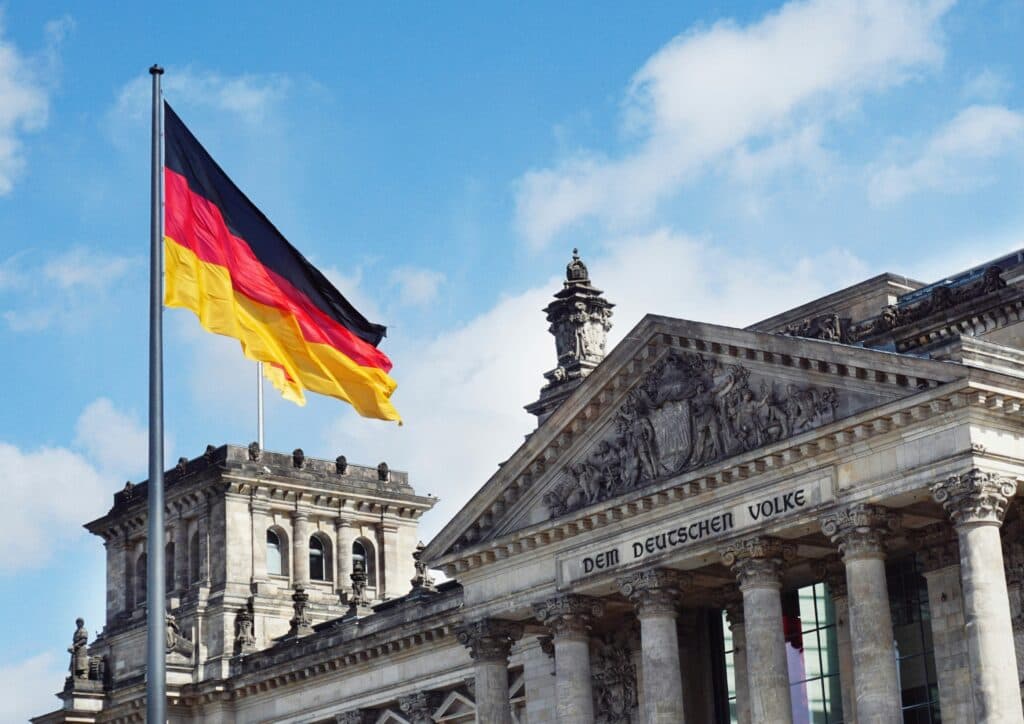
Germany will have to invest six trillion euros to achieve climate neutrality by 2045, or an average of 290 billion euros a year. Germany’s state development bank Kreditanstalt für Wiederaufbau (KfW) warns, however, that the total amount is not the only thing that matters. After deducting the investments that would be needed to continue with a fossil-fuel-based economy, the additional requirement comes to 65 billion euros a year.
The largest share will go to transport and energy
The calculation for KfW was prepared by consultancy Prognos. The largest share of investment, 45%, is expected to go to transport. Energy will require a quarter, buildings 22% and industry eight percent. The breakdown shows that the transition to carbon neutrality will not be solely a matter of transforming the electricity generation sector. Changes in transport and the modernisation of buildings also account for a significant part of the bill.
Compared with the previous study in 2021, the estimate has risen from five to six trillion euros. KfW attributes the difference to price increases in recent years and the postponement of investments to date. The higher figure therefore reflects not only the increased cost of individual projects, but also the need to catch up on steps that could have been taken earlier.
Germany’s private sector, households and the state invested an average of 110 billion euros a year in climate protection between 2018 and 2023. If that pace continued, the country would fall short of its target by around 180 billion euros each year. This comparison is based on the total investment needed for the transition. Compared with the fossil-fuel alternative, the additional amount is considerably lower, according to KfW: 65 billion euros a year, or less than two percent of Germany’s gross domestic product.
Businesses face an overhaul of energy and industry
Private and public companies are expected to provide almost half of the total, just under three trillion euros. KfW estimates their annual investment needs at approximately 140 billion euros. In 2024, companies spent 80 billion on climate protection. The cost of the transition will therefore not be felt only in public budgets. Businesses will have to substantially increase investment, which is expected to pay off through more modern production and lower energy costs.
The energy sector faces the biggest task on the business side. According to the study, companies will need to invest around 1.3 trillion euros, mainly in grids, district heating and renewable energy sources. In industry, this will involve overhauling energy-intensive processes. KfW cites the shift to hydrogen technologies in steel production and the electrification of process heat as examples.
Households will contribute mainly through building renovations and the shift from cars with internal combustion engines to electric vehicles. Public investment is expected to reach 33 billion euros a year, while private entities will account for 257 billion, according to the study. The state will therefore not only provide support, but also have to fund infrastructure such as distribution grids, heating, railways and electric vehicle charging networks.
Climate policy is also a matter of competitiveness
KfW contrasts the investment needs with the costs of inaction. It estimates that extreme weather has caused more than 50 billion euros in property damage in Germany over the past five years, and says this year’s heatwave has significantly reduced the country’s economic output. Climate investment is therefore not merely expenditure associated with meeting a target, according to KfW, but also an effort to limit growing economic risks.
Another motivation is the industrial opportunity. Germany is the world’s second-largest exporter of goods related to climate protection, according to the bank, and KfW expects this market to grow rapidly. If German companies succeed in supplying technologies to foreign markets, some of the costs of the transition could be turned into contracts and export revenues. KfW also expects the shift to more climate-friendly technologies to reduce energy costs for businesses and households.
The European dimension is reflected in the source material mainly in the competition for markets in climate technologies. At the UN COP31 conference in Antalya in November, KfW plans to discuss with partner countries and international organisations, among other things, access to foreign markets for German and European companies. The study, however, concerns Germany, so the figures should not be understood as an estimate of the needs of the European Union as a whole.
Public finances as a catalyst for private investment
The German calculations are not a Czech investment plan, but their central conclusion is relevant to the debate in Czechia. The costs of the transition cannot be assessed solely on the basis of the total amount without taking into account how much it would cost to continue with the current system.
The German study also shows that building new generation capacity alone is not enough. An investment plan must also account for grids and other infrastructure, without which new generation capacity cannot operate. This increases the importance of the state’s role in planning and financing public infrastructure.
That does not mean, however, that public money can replace private capital. KfW acknowledges that achieving climate neutrality will require mobilising private capital. The bank says it intends to work with the German government through the Deutschlandfonds to support transition projects and encourage private investment.
Translation disclaimer
This article is a machine translation of the Czech original and has not yet been fully reviewed. In case of any doubt, please refer to the Czech version.
Sdílejte článek prostřednictvím:
You might also like
15 October 2026, 13:30
15 October 2026, 10:51
15 October 2026, 10:01