
28 October 2026, 15:10
Loading...
Germany's offshore wind expansion could affect up to a quarter of its exclusive economic zones

Jan Budín
17 March 2024, 08:18
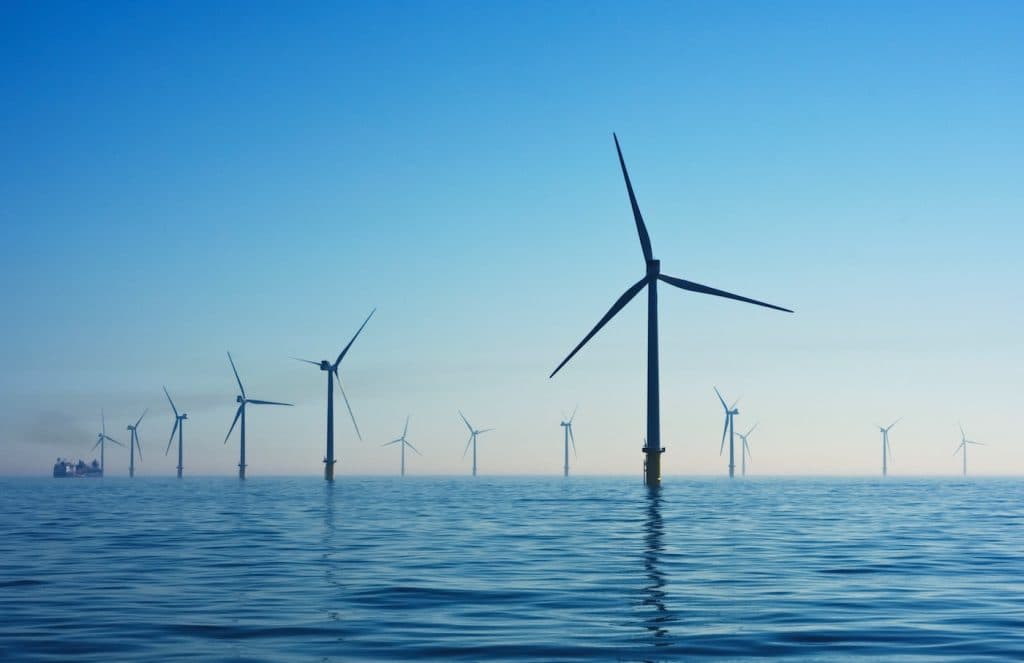
Planned offshore wind farm development in Germany could affect up to a quarter of its exclusive economic zones. This is according to an analysis by the German Federal Maritime and Hydrographic Agency (BSH), reported by the international website Clean Energy Wire.
Offshore wind farms are expected to become one of the pillars of Germany's power system in the future, thanks to their relatively stable electricity generation. Germany currently has around 8.5 GW of installed capacity in these sources; this is expected to reach 30 GW by 2030 and as much as 70 GW by 2045.
According to the BSH analysis, the space required to achieve these installed capacities would affect 20 to 25% of the exclusive economic zones Germany has in the North and Baltic Seas.
"The energy transition is changing how the sea is used in a way we have never seen before," said agency director Helge Heegewaldt.
An exclusive economic zone extends from a country's baseline up to a distance of 200 nautical miles (370.4 km, 230.2 miles). Coastal countries control all economic resources within their exclusive economic zones (i.e. fisheries, mining and oil exploration), as well as all pollution affecting these resources.
According to the international website Clean Energy Wire, Germany's exclusive economic zones cover an area of 33 thousand square kilometers. The country currently has around 1,500 offshore wind turbines installed there, and this figure will need to increase almost tenfold to meet government targets.
"It should be noted that wind farms comprise turbines spaced 800 to 1,000 meters apart," said Nico Nolte, head of offshore organizational affairs at the BSH, adding that the increased use of offshore areas for electricity generation would not lead to lower environmental protection standards.
Project shortages and generation curtailment
Although Germany recorded a record year last year in terms of new installed capacity in renewable energy sources (RES), the offshore wind sector still lags considerably behind onshore wind farms and solar power plants. In addition to a shortage of new projects, operators of existing ones are grappling with electricity generation curtailment caused by insufficient transmission capacity.
According to Tim Meyerjürgens, CEO of German transmission system operator TenneT, transmission grid development has finally accelerated over the past two years. However, "many lost years" are now affecting electricity generation from these sources, which has to be curtailed due to a lack of transmission capacity in the grid.
Another reason for curtailing output from offshore wind farms in the North and Baltic Seas is the shortage of large dispatchable power plants in northern Germany that could reduce their output when needed. Instead, according to Meyerjürgens, it is the large offshore wind farms that are being curtailed.
Translation disclaimer
This article is a machine translation of the Czech original and has not yet been fully reviewed. In case of any doubt, please refer to the Czech version.
Sdílejte článek prostřednictvím:
You might also like

28 October 2026, 13:08

28 October 2026, 11:10

28 October 2026, 09:08
