9 November 2026, 06:13
Loading...
Long-running dispute over LNG terminal on German island of Rügen continues

oEnergetice.cz, ČTK
7 June 2023, 19:15
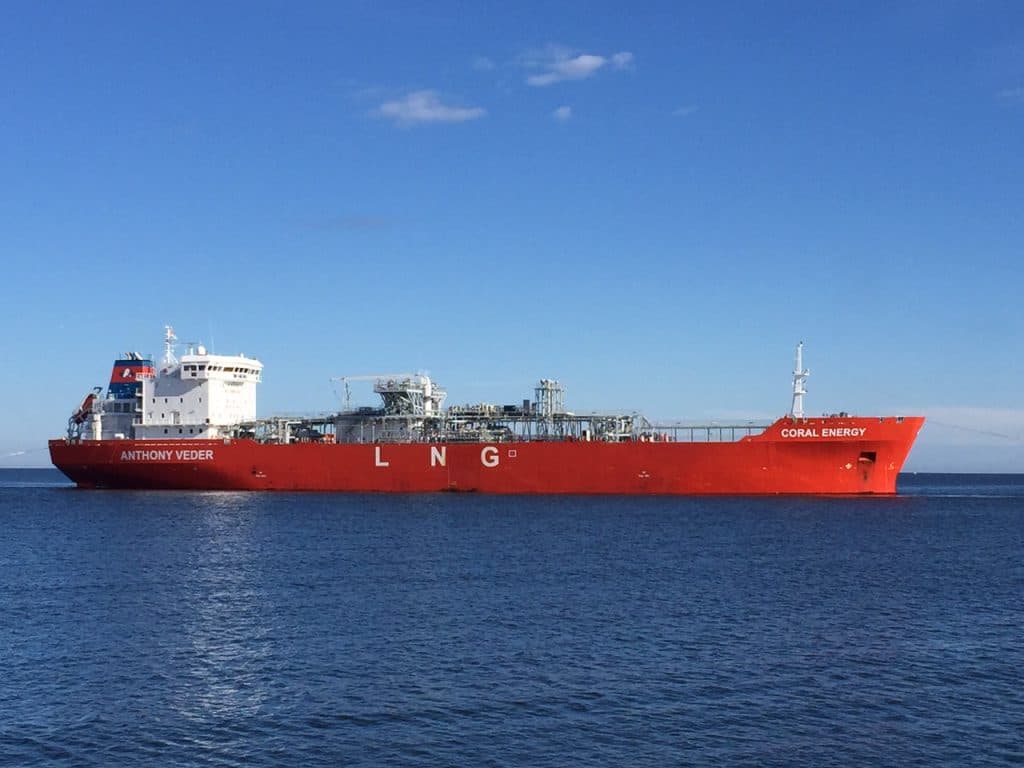
Berlin, June 7 (CTK correspondent) – A months-long dispute over the construction of a liquefied natural gas (LNG) terminal on the German Baltic island of Rügen shows no sign of abating. German environmental group Deutsche Umwelthilfe (DUH) is now calling for all preparatory work to be halted and all approval procedures to be terminated. The LNG regasification facility is to be operated by Deutsche ReGas, replacing RWE, which withdrew from the project.
Germany faced a supply crisis after Russian troops invaded Ukraine last year, having relied heavily on Russia for its gas supplies. In response, it began rapidly building LNG terminals, focusing on the North Sea region. The government of Mecklenburg-Western Pomerania therefore sought to have a terminal built on the Baltic Sea coast as well. Among other arguments, it said that the now-inactive Nord Stream pipelines end there, meaning the region has infrastructure in place to distribute gas not only to eastern Germany but also, for example, to the Czech Republic.
The federal government approved a Baltic terminal and initially selected a site near the seaside resort of Sellin, prompting opposition from local residents, environmentalists and local authorities. Berlin therefore turned its attention to the port of Mukran on Rügen. But the new location did not ease the dispute. The Federal Ministry for Economic Affairs also complained that while the government of Mecklenburg-Western Pomerania had strongly pushed for the terminal to be located in its state, it later demanded additional financial support in exchange for its approval.
Preparations for the terminal are now in full swing. German gas transmission system operator Gascade announced a week ago that it was beginning surveys for laying an offshore gas pipeline from Mukran to the distribution hub in Lubmin, where the Nord Stream pipelines come ashore. Environmental group DUH strongly objected, calling on Tuesday for all such activity to be stopped.
„Until a permit is issued for Mukran, no construction work or preparatory work on the connecting pipeline may be carried out,“ said DUH chief Sascha Müller-Kraenner.
The group also called on the relevant authorities to halt not only preparatory work but also the approval procedures.
The terminal on Rügen was originally to be operated by RWE on behalf of the federal government, but the company withdrew from the project. Deutsche ReGas is expected to take its place. The company already operates a floating LNG regasification unit in Lubmin. That terminal, however, is entirely private, with no state involvement.
Germany’s Ministry for Economic Affairs wants to station two floating LNG regasification units in Mukran, which it hopes to use to supply Germany as early as the coming winter. The federal government is planning a total of five terminals with state involvement. Two facilities have so far entered service, in Wilhelmshaven, Lower Saxony, and Brunsbüttel, Schleswig-Holstein. Others will be built in Stade, again in Wilhelmshaven, and at Lubmin, which was selected as the fifth site. In this case, an offshore terminal near Rügen is planned, with the gas flowing through a pipeline to Lubmin after being converted back into gaseous form.
The approximately 50-kilometre pipeline between Rügen and Lubmin will be built using surplus materials from the construction of the Nord Stream 2 pipeline. The German government purchased pipes originally manufactured for Nord Stream 2 that had remained unused.
In its criticism of the LNG terminal on Rügen, DUH argues not only that it will damage the local environment but also that the facility is unnecessary. The question of whether it is needed has also been raised by INES, the German association of gas and hydrogen storage operators, which recommended that the federal government reconsider the use of all the terminals. According to INES, capacity could be excessive once they are completed. Instead, it proposes building storage facilities that Germany will later need to store hydrogen.
Translation disclaimer
This article is a machine translation of the Czech original and has not yet been fully reviewed. In case of any doubt, please refer to the Czech version.
Sdílejte článek prostřednictvím:
You might also like

8 November 2026, 20:02

8 November 2026, 13:59

8 November 2026, 08:10