9 November 2026, 06:13
Loading...
Romania reconnects its nuclear power plant after more than 3 months of drought

Jiří Salavec
9 November 2026, 06:13

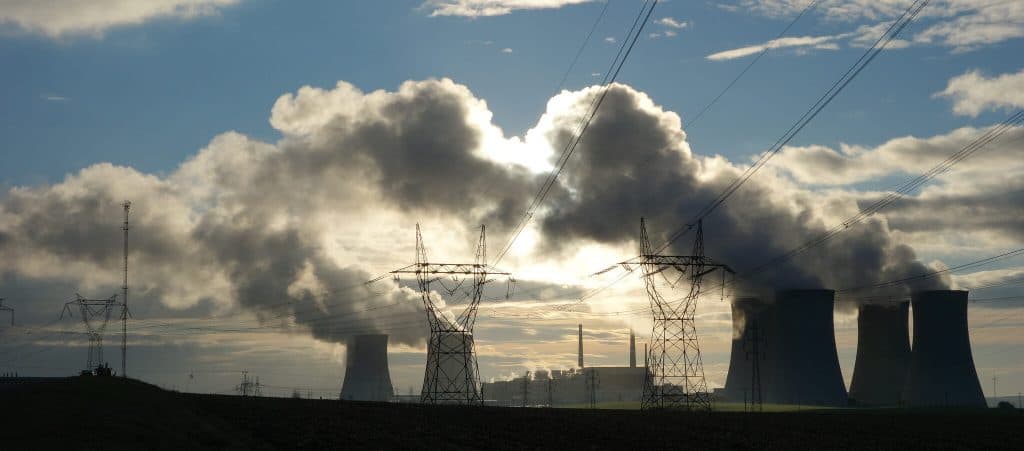
The first unit of Romania’s only nuclear power plant, Cernavoda, is returning to operation after more than a quarter of a year. In mid-summer, the operator had to shut it down because of low flows in the Danube, from which the plant draws water for cooling. In mid-August, the two-unit plant, with an installed capacity of 1,3 GW, stopped generating electricity altogether. The second unit is still waiting for hydrological conditions to improve. Drought-affected nuclear power plants in Hungary and Bulgaria are operating and preparing for a potential recurrence of the situation in the future.
Romanian company Nuclearelectrica announced that it reconnected the first unit of its Cernavoda nuclear power plant to the grid on Friday, 6 November. This came after more than 3 months of waiting for favourable hydrological conditions in the adjacent Danube. The operator shut down the first unit of the Cernavoda plant because of the drought on 28 July. The second unit generated electricity for two weeks longer, but it too had to be shut down on 12 August.
“The specific actions involved in bringing Unit 1 of the Cernavoda nuclear power plant back into operation had no impact on nuclear safety, staff or the general public, as they were carried out in strict accordance with the applicable procedures,” Nuclearelectrica said in a press release.
As recently as the end of October, the company did not expect the unit to return to operation soon, but the rising water-level trend made it possible to restart at least one unit. With two CANDU-6 units, the Cernavoda nuclear power plant is Romania’s only nuclear power plant. Each unit has an installed capacity of 651 MW (net), and together they account for roughly one-fifth of Romania’s generation mix.
“Throughout the period when Units 1 and 2 were shut down, nuclear safety was ensured through redundant cooling systems, specific procedures and teams of specialists who were available at all times. The situation affected electricity generation only,” Nuclearelectrica added.
Under the original plans, the plant was to have a total of 5 nuclear units, construction of which began in the 1980s. However, only the first unit, in 1996, and the second, in 2007, were completed. Romania halted construction of the remaining units in 1990 and definitively cancelled the fifth-unit project in 2014. The country is working to complete Units 3 and 4, which are expected to enter operation in the early 2030s.
Low Danube levels = a problem for several power plants
In addition to Romania’s Cernavoda plant, Hungary’s Paks nuclear power plant also faced problems with a shortage of cooling water during the summer. In mid-August, it looked as though Paks would also have to shut down completely, but that scenario did not come to pass. Bulgaria’s Kozloduy nuclear power plant faced the same problem.
During the drought, the countries resorted to emergency measures, including sinking several river barges and blasting riverbanks in an effort to direct the river’s flow in the right direction. All three countries are now working on long-term solutions and procedures in case this year’s drought recurs.
“We are using the controlled shutdown period to carry out maintenance and strengthen resilience while waiting for the Danube’s water level to rise enough to allow the units to be safely restarted. At the same time, we have begun consultations with experts to identify the best medium- and long-term solutions to minimise the impact of similar situations in the future,” Nuclearelectrica CEO Mihai Laurențiu Gioară said before the first unit was reconnected.
Translation disclaimer
This article is a machine translation of the Czech original and has not yet been fully reviewed. In case of any doubt, please refer to the Czech version.
Sdílejte článek prostřednictvím:
You might also like

8 November 2026, 20:02

8 November 2026, 13:59

8 November 2026, 08:10