1 November 2026, 07:59
Loading...
Temelín hot-water pipeline supplied Budweis in Czechia with 258 TJ of heat last year, mostly during frosts

oEnergetice.cz, ČTK
10 January 2024, 10:40

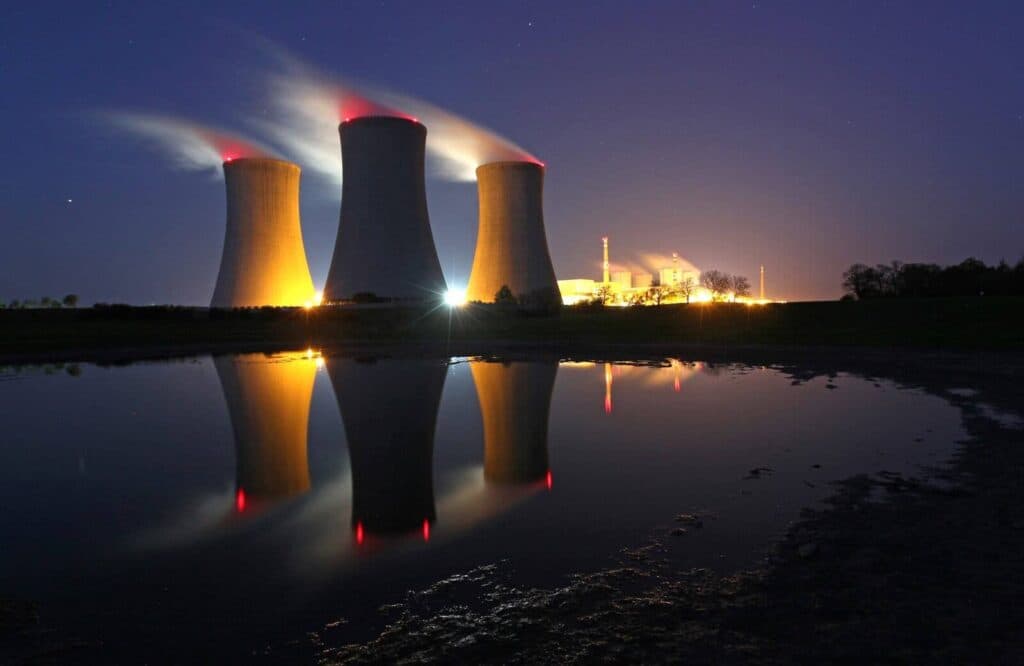
The Temelín nuclear power plant supplied 258 terajoules (TJ) of heat during just under three months of operation of the hot-water pipeline to České Budějovice last year. That is roughly a third of the planned annual supply to the city, which is expected to total 750 TJ. The pipeline is also supplying heat at full capacity during the current cold spell. On Tuesday, when temperatures fell far below freezing, Temelín exceeded last year’s daily record for the pipeline, delivering 5.6 TJ of heat to Budweis. Temelín spokesman Marek Sviták told reporters today. Temelín has been supplying heat to Budweis since the middle of last October.
„We supply as much heat as České Budějovice needs. Heat supplies depend on outdoor temperatures and consumption in the city. We adjust the temperature and volume of water flowing to Budweis accordingly,“ said Jan Kruml, director of the Temelín power plant.
The average daily heat supply from the pipeline was 2.8 TJ last year. The most heat flowed through the pipeline to Budweis on December 8, when temperatures fell below minus four degrees Celsius; Temelín delivered 4.9 TJ to the city that day. The lower the outdoor temperature, the more heat the pipeline supplies.
Temelín was connected to Budweis by two 26-kilometer-long pipes with an external diameter of 80 centimeters. Both are at least 1.3 meters underground. In winter, water flows to Budweis at temperatures of up to 140 degrees Celsius; in summer, it is around 90 degrees Celsius, ČEZ said. The plant uses some of the steam intended for electricity generation. „Combined heat and power generation is highly efficient and environmentally friendly,“ said ČEZ board member Bohdan Zronek.
ČEZ is expected to supply České Budějovice with 750 TJ of heat annually. The pipeline is expected to supply heat to the Budweis district heating plant for at least 20 years. Thanks to heat from Temelín, the plant’s emissions, including greenhouse gases released into the atmosphere, will fall by about a third. The municipal company will thus save more than 80.000 tonnes of coal-related carbon dioxide emissions each year by not burning the coal, it said.
ČEZ originally announced that the pipeline would begin supplying heat to Budweis at the turn of 2020 and 2021. Construction of the Temelín heat pipeline began in spring 2019. The project was delayed by about two years. Work stopped for about a year from late 2020 after construction company Tenza went bankrupt. At the end of 2021, ČEZ selected companies to complete the pipeline. Costs amounted to 2.4 billion Kč.
Temelín has also supplied heat to Týn nad Vltavou since 1998. Last year, it delivered 170 TJ of heat there. Thanks to heat supplies from the Temelín power plant, 22 medium-sized coal-fired heating plants and three large boiler houses were shut down in Týn, Sviták said.
Temelín is the country’s largest electricity producer, covering about a fifth of domestic consumption. Last year it generated 16,1 terawatt-hours (TWh) of electricity; so far this year, it has generated 0,5 TWh. The Budweis district heating plant supplies heat to around 30.000 apartments and more than 400 companies, institutions, schools, healthcare facilities and shops. In 2022, it sold 1463 terajoules of heat, had revenues of 1,3 billion Kč and posted an after-tax profit of 23,1 million Kč. This is according to its annual report.
Translation disclaimer
This article is a machine translation of the Czech original and has not yet been fully reviewed. In case of any doubt, please refer to the Czech version.
Sdílejte článek prostřednictvím:
You might also like

31 October 2026, 12:55

31 October 2026, 08:21
30 October 2026, 20:16