1 November 2026, 07:59
Loading...
Czech households' interest in heat pumps stagnates, lowest in three years

oEnergetice.cz, ČTK
18 December 2023, 15:48
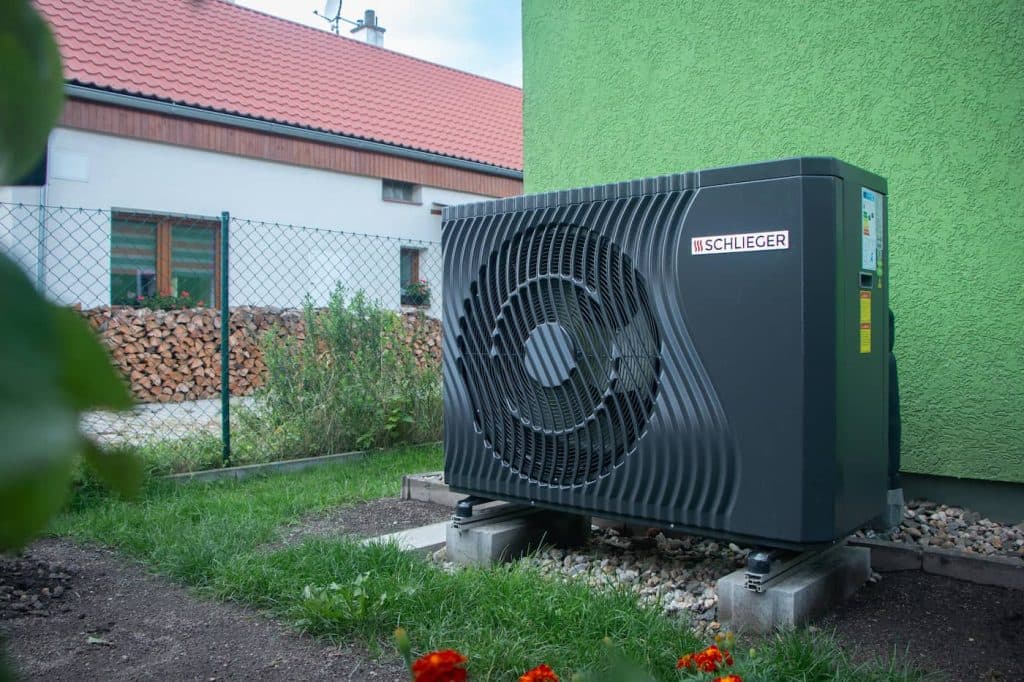
Household interest in heat pumps is stagnating. So far in the second half of the year, 4111 households have applied for a subsidy to buy one, the lowest figure in the past three years. The amount of subsidies requested is also falling, down 11 percent year on year. This is according to information from the Association for the Use of Heat Pumps (AVTČ), provided to the Czech News Agency (ČTK). The association says the weak demand is putting manufacturers' investments at risk.
„The subsidy hiatus and considerable delays in calls for applications, both under the New Green Savings (NZÚ) programme and, above all, the boiler replacement subsidy scheme, have unfortunately done nothing to boost interest. On the one hand, we hear about growing support for green solutions; on the other, we are failing to provide the truly extensive support for renewable energy sources promised, for example, in the government's policy statement,“ said association head Radek Červín.
„The constant assurances that gas supplies are sufficient, investment in gas pipelines and, most recently, the Energy Regulatory Office's draft price decision are not helping either,” he said. He added that Czechia's commitments to the EU are also at risk.
The Ministry of the Environment (MŽP) said it was open to discussions on a more effective support system. „We are constantly simplifying the conditions of the NZÚ programme. In the latest changes, in 2021 and 2023, we made adjustments that greatly reduced the administrative burden and further expanded the options for obtaining subsidies for heat pumps,“ spokesperson Lucie Ješátková said. According to ministry data, it currently receives an average of around 1500 applications a month.
According to the association, most households buying a heat pump now are choosing cheaper models. The association has warned about lower-quality products in this regard.
According to the association, manufacturers are currently relying mainly on business orders. „I can confirm that interest from companies is growing, but these are long-term projects, and there simply aren't enough of them to make up for losses in the residential segment. Manufacturers are genuinely worried about the future,“ Červín noted.
He said Czech manufacturers had invested several billion crowns in heat pump production capacity over the past two years, which could ultimately go unused. Some are therefore adapting their production to new trends. For example, Czech manufacturer Master Therm has expanded production to include premium products for foreign markets and business and industrial applications.
„As for the share of standardised air-to-water heat pumps going to Czech households, they now account for only around 50 percent of our sales,“ said company director Jiří Svoboda.
„The rest comprises ground-source heat pumps, primarily for low-energy new buildings, which we export to Western Europe, and larger heat pumps with an output of more than 30 kW for business and industrial use, including heat recovery,” he said.
The association hopes that demand from companies could be further boosted by a new Energy Savings subsidy programme, which is due to launch at the beginning of 2024. Companies are expected to receive funding to reduce their energy consumption and improve efficiency. „Financial support is intended, for example, for replacing energy-intensive machinery with more modern solutions, as well as for insulation and distribution systems. Support for heat pumps and photovoltaic systems will certainly also be very attractive,” said Tomáš Buzrla, executive director of the Modern Energy Union.
The current situation on the heat pump market differs from last year. Czech households bought more than 60.000 heat pumps then. The number of installations last year rose to as much as double the year-earlier figure. The installed capacity of the equipment more than quadrupled, reaching 289 kilowatts (kW).
Translation disclaimer
This article is a machine translation of the Czech original and has not yet been fully reviewed. In case of any doubt, please refer to the Czech version.
Sdílejte článek prostřednictvím:
You might also like

31 October 2026, 12:55

31 October 2026, 08:21

30 October 2026, 20:16